
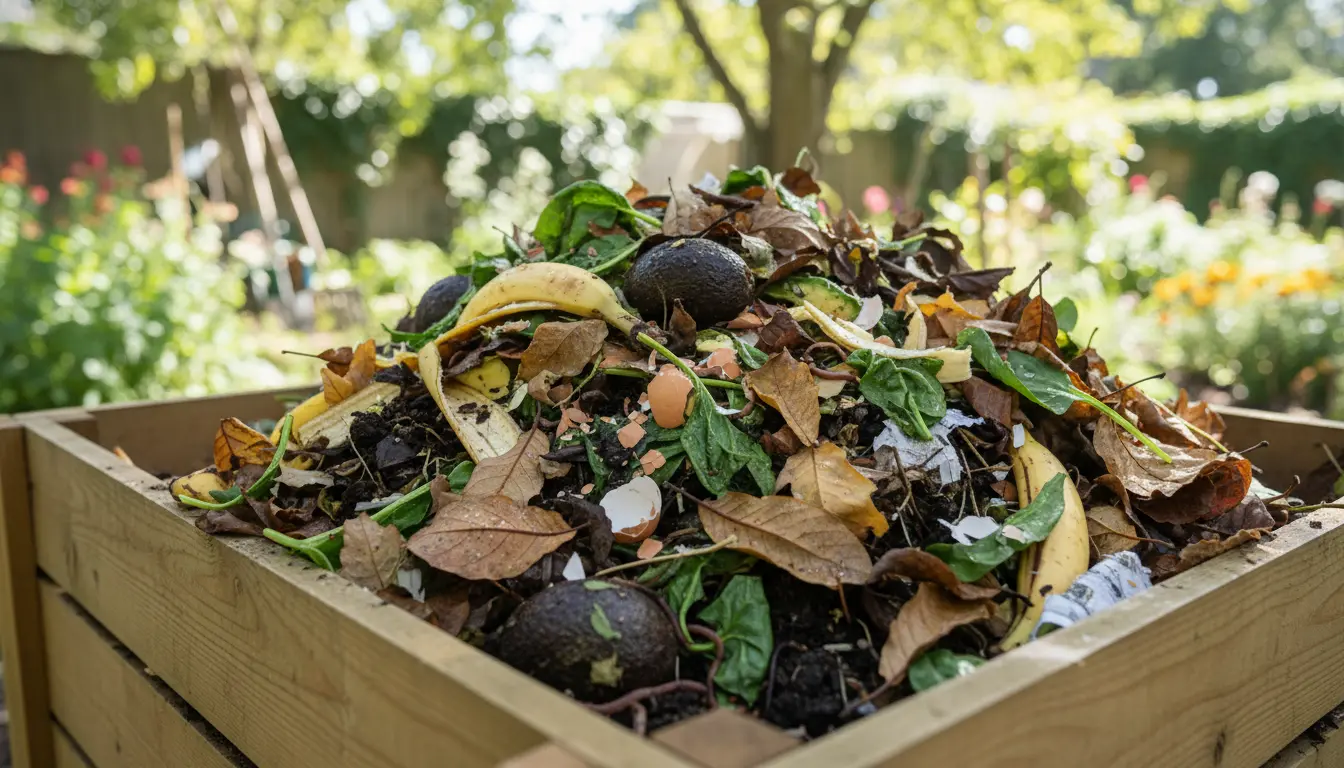
Why Home Composting Matters
Home composting reduces kitchen and yard waste while producing nutrient-rich soil for plants. It lowers landfill waste and helps retain moisture in garden beds.
This guide gives practical, step-by-step instructions for home composting for beginners, including systems, materials, and common problems.
Choose a Home Composting System
Select a system that fits your space and routine. The right choice makes composting simple and consistent.
- Compost bin: A basic, secure container for backyard use. Good for low-maintenance piles.
- Tumbler: Enclosed drum you rotate. Faster decomposition and easier turning.
- Worm bin (vermicompost): Uses red worms to break down food scraps. Ideal for apartments and fast results.
- Bokashi: Fermentation bucket for all food waste. Works indoors but needs a follow-up soil burial or composting step.
What to Compost: Greens and Browns
Balanced inputs speed breakdown and prevent odors. Use a mix of green (nitrogen) and brown (carbon) materials.
Green materials (use often)
- Kitchen scraps: fruit and vegetable peels, coffee grounds, tea bags (without staples)
- Fresh grass clippings, plant trimmings
Brown materials (add regularly)
- Dry leaves, shredded paper, cardboard
- Straw, sawdust (small amounts), wood chips
Aim for a loose guideline of roughly 2–3 parts brown to 1 part green by volume. Adjust as needed based on smell and moisture.
Step-by-Step: Start Home Composting
Follow these practical steps to set up and maintain your compost system.
- Pick a location: Choose a well-drained, partly shaded spot for outdoor bins, or a cool indoor spot for worm bins.
- Prepare the base: Add coarse material like twigs or straw to improve airflow.
- Add materials in layers: Alternate greens and browns. Chop larger items to speed decomposition.
- Manage moisture: Keep compost as damp as a wrung-out sponge. Add water or dry browns to adjust.
- Turn or aerate: Every 1–2 weeks for open bins or tumblers; gently stir worm bins to avoid harming worms.
- Monitor temperature: A warm pile (110–140°F / 43–60°C) breaks down faster. Smaller piles may not heat but will still compost slowly.
Troubleshooting Common Problems
New composters often face a few predictable issues. Quick fixes keep the process on track.
- Bad smell: Add more brown material and aerate the pile. Odors usually mean too much wet green waste or poor airflow.
- Too dry: Add water and more greens. Dry piles decompose slowly.
- Slow breakdown: Chop materials, add nitrogen (greens), or mix to introduce oxygen.
- Pests: Avoid meat, dairy, and oily foods in open bins. Use a closed tumbler or bury food scraps in the pile.
When Is Compost Ready?
Finished compost is dark, crumbly, and earthy-smelling. Most backyard systems yield usable compost in 3–12 months.
Use finished compost as a soil amendment, top dressing, or potting mix ingredient at roughly 10–30% compost by volume.
Small Real-World Case Study
Case: Sarah, a small urban gardener, started a 50-liter worm bin under her kitchen counter. She added shredded paper, vegetable peels, and coffee grounds.
Within eight weeks, the worms produced dark, fine compost. Sarah mixed 20% vermicompost into potting soil and saw faster seedling growth and stronger leaf color over one season.
Composting can cut household waste by up to 30 percent and return nutrients to your soil without chemical fertilizers.
Tips to Succeed with Home Composting
- Keep a small indoor scrap container and empty it into your system every 2–3 days.
- Chop or shred larger items to speed decomposition.
- Record your mix and adjustments for a few months to learn what works in your climate.
- Use a compost thermometer if you want to manage faster breakdown in backyard piles.
Final Checklist for Home Composting Beginners
- Choose a system: bin, tumbler, worm, or bokashi.
- Balance greens and browns and maintain moisture.
- Aerate regularly and monitor for odors.
- Harvest finished compost and use it to boost garden soil.
Home composting is low-cost and scalable. Start small, observe, and refine your routine. Within months you’ll turn everyday waste into a valuable soil resource.