
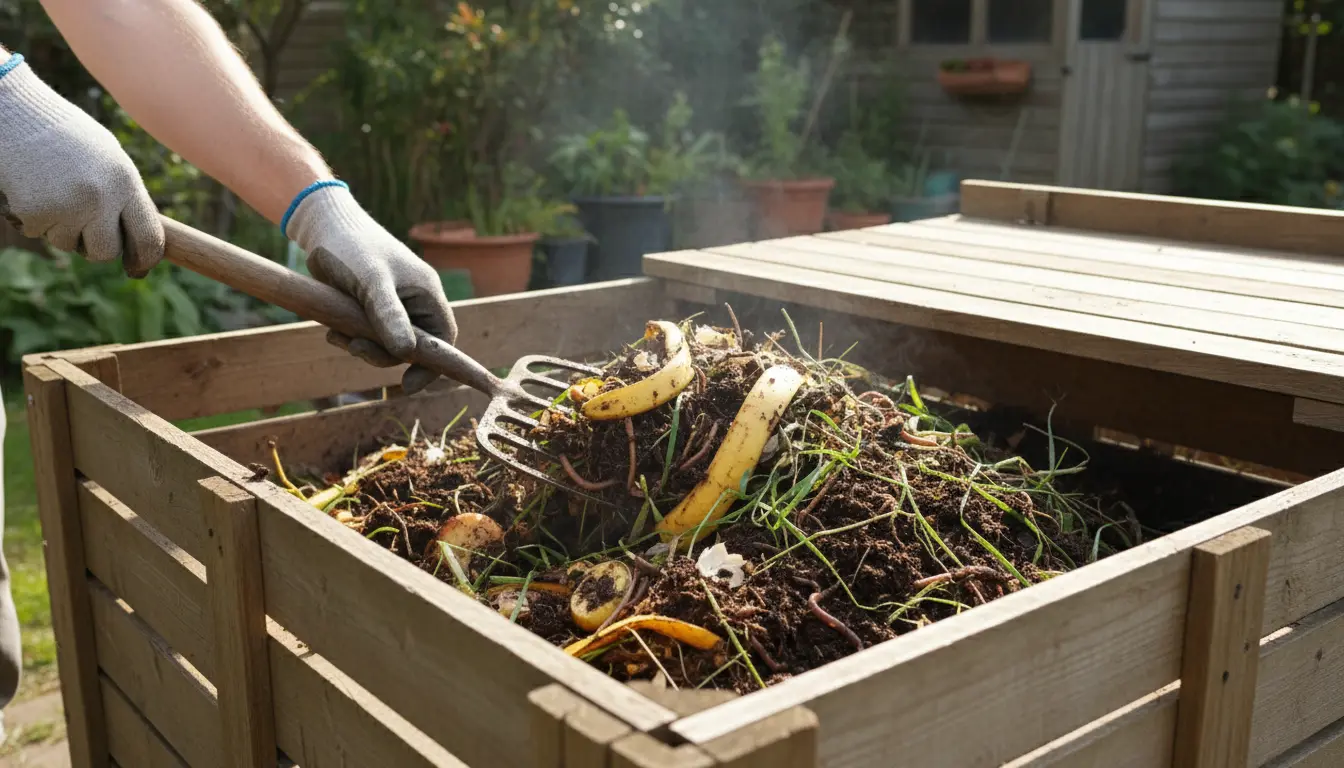
Home Composting Basics
Home composting is a simple way to recycle kitchen and yard waste into nutrient-rich soil. It reduces landfill trash and improves garden health.
This guide explains practical steps to start home composting, what to compost, and how to avoid common problems. No special equipment is required to begin.
Why choose home composting
Composting reduces waste and returns organic matter to the soil, improving water retention and structure. It also cuts greenhouse gas emissions from landfills.
Home composting can be adapted to gardens, balconies, and small yards. The method you choose depends on space, effort, and how quickly you want finished compost.
Choosing a Compost Bin for Home Composting
Select a compost bin that fits your space and budget. Options include open piles, tumblers, plastic bins, and DIY wooden bins.
Consider these factors when choosing a bin:
- Space available and where it will sit (sun vs. shade).
- How often you want to turn the pile (tumblers make turning easier).
- Capacity needed based on household food and yard waste.
Recommended equipment
Basic items help maintain a healthy compost pile but are not strictly necessary. Useful tools include a pitchfork or turning tool, a coarse shredder for yard waste, and gloves.
A thermometer is optional and useful for monitoring temperature in large piles. For most home systems, visual checks and smell are enough to tell if things are working.
What to Compost: Greens and Browns
Successful home composting balances nitrogen-rich “greens” with carbon-rich “browns.” The right mix speeds decomposition and prevents odors.
- Greens (nitrogen): kitchen scraps, coffee grounds, fresh grass clippings, plant trimmings.
- Browns (carbon): dry leaves, straw, shredded paper, cardboard, woody prunings.
A common guideline is roughly 2–3 parts browns to 1 part greens by volume. Adjust the mix if the pile is too wet or smelly.
How to Start Home Composting Step by Step
Follow these steps to set up and maintain a basic compost pile at home. Each step is short and actionable.
- Choose a level spot with good drainage and partial shade.
- Place a 4–6 inch layer of coarse browns (twigs or straw) on the base for airflow.
- Add alternating layers of greens and browns, keeping layers 2–6 inches thick.
- Moisten the pile until it feels like a wrung-out sponge; avoid soaking it.
- Turn or mix the pile every 1–2 weeks to add oxygen and speed breakdown.
In warm months, a well-managed pile can mature in 2–3 months. In cooler conditions or low-maintenance piles, expect 6–12 months for finished compost.
How to tell when compost is ready
Finished compost is dark, crumbly, and smells earthy. You should not be able to identify original materials like leaves or food scraps.
Screen the compost through a coarse sieve for garden use. Larger pieces can go back into a new pile to continue decomposing.
Compost can increase soil water retention by up to 20 percent, reducing the need for frequent irrigation. Adding just 1 inch of compost to a garden bed improves soil structure and nutrient availability.
Troubleshooting Common Compost Problems
Problems are usually simple to fix if you check moisture, aeration, and materials. Smell, pests, and slow breakdown are common issues.
- Bad smells: Usually too wet or too many greens. Add browns and turn the pile.
- Pests: Avoid meat, bones, and oily foods; bury food scraps and use a closed bin if needed.
- Slow decomposition: Increase surface area by shredding materials and ensure regular turning.
Quick maintenance checklist
- Monitor moisture: should be damp but not soggy.
- Turn the pile every 1–2 weeks to add oxygen.
- Balance greens and browns; add bedding or paper during heavy food-scrap periods.
Small Real-World Case Study
Anna, an apartment gardener, started a small worm compost bin on her balcony. She used a plastic two-tier bin and added shredded newspaper, vegetable scraps, and coffee grounds.
Within three months she produced usable compost and reduced her kitchen waste by half. The compost improved the potting mix for her tomato plants, which showed healthier foliage and better fruit set.
Key actions that led to success: maintaining moisture, feeding small pieces, and harvesting worm castings every two months.
Practical Tips to Keep Going
Start small and scale up as you learn what works for your household. Consistency is more important than speed—small, regular additions keep the pile active.
- Chop or shred large items to speed decomposition.
- Store food scraps in a small countertop container and empty daily.
- Use finished compost as a top dressing, potting mix amendment, or soil conditioner.
Home composting is a practical, low-cost way to manage waste while improving soil health. With basic care—balance, moisture, and aeration—you can turn household scraps into valuable garden compost.