
Why Home Composting Matters
Home composting reduces kitchen and yard waste while producing nutrient-rich soil for plants. It lowers landfill volumes and cuts greenhouse gas emissions from organic waste decomposition in landfills.
This guide walks beginners through practical steps to set up and maintain a home compost system. You will learn what to compost, how to balance materials, and how to troubleshoot common issues.
Choosing a Compost System for Home Composting
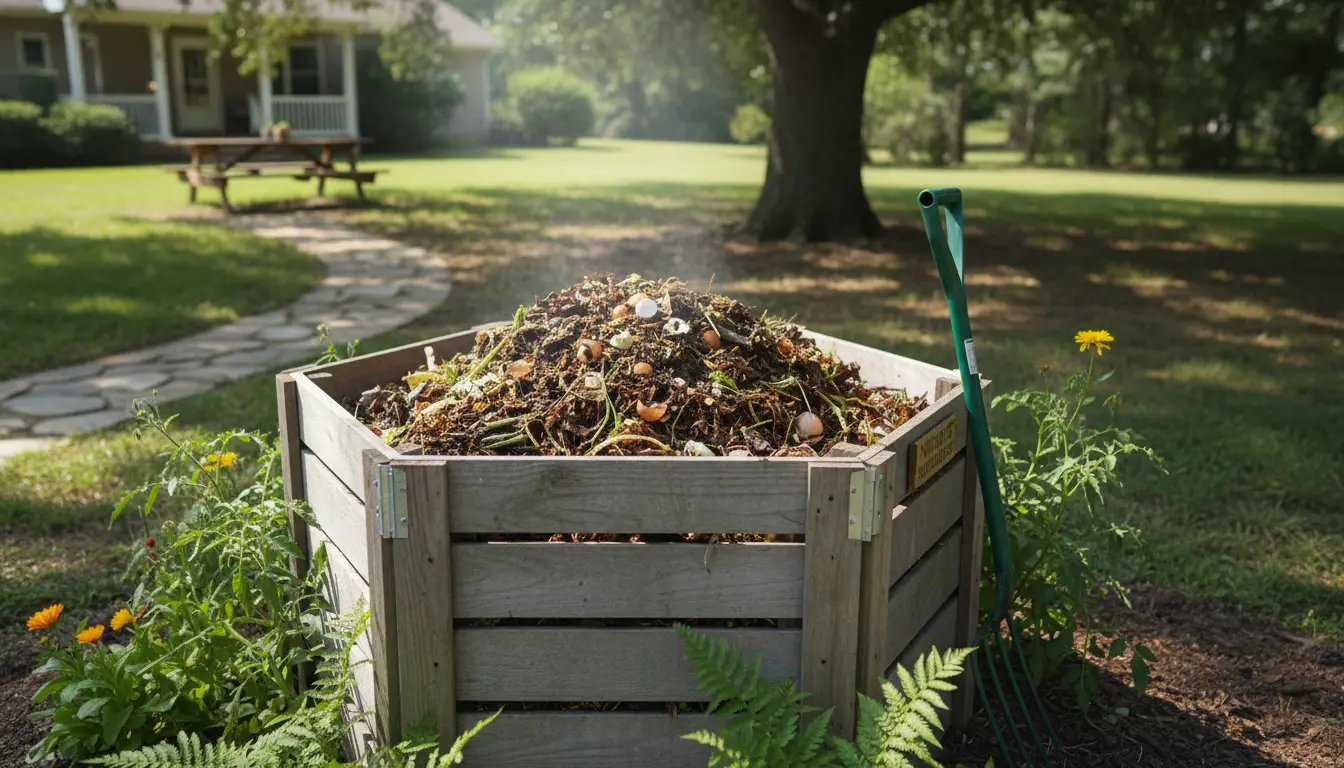
Select a system that matches your space, lifestyle, and budget. Common options include a simple pile, a tumbler, and a stationary bin.
- Compost Pile: Low cost, flexible size, suitable for larger yards.
- Compost Bin: Neat and contained, good for suburban backyards.
- Tumbler: Faster turning, cleaner, ideal for small gardens and patios.
Place your compost in partial shade with good drainage. A level, accessible spot simplifies turning and monitoring.
What to Compost: Greens and Browns
Understanding the carbon to nitrogen ratio helps your compost break down efficiently. Think in categories: ‘greens’ are nitrogen-rich and ‘browns’ are carbon-rich.
- Greens: fruit and vegetable scraps, coffee grounds, fresh grass clippings.
- Browns: dry leaves, shredded paper, cardboard, straw.
A good rule is roughly 2 to 3 parts browns to 1 part greens by volume. Adjust as needed when you notice odors or slow decomposition.
Starting Your First Batch
Begin with a base layer of coarse browns to improve airflow. Alternate layers of greens and browns, keeping pieces small to speed decomposition.
Moisture should feel like a wrung-out sponge. Too dry and decomposition slows; too wet and the pile can smell.
Tools and Supplies for Home Composting
- Pitchfork or compost aerator for turning.
- Kitchen compost pail for collecting scraps.
- Garden gloves and a thermometer (optional) to monitor internal temperature.
Maintaining Your Compost: Turn, Monitor, Use
Turning the compost every 1–2 weeks mixes oxygen into the pile and speeds up breakdown. Tumblers simplify this step with a rotation action.
Temperature gives a clue to activity: 40–65°C (104–149°F) indicates active decomposition in well-managed piles, though backyard piles often run cooler.
- If it smells rotten: add more browns and turn to increase air.
- If it’s dry and slow: add water and some greens.
- If pests are present: bury food scraps deeper or use a sealed bin.
Troubleshooting Common Problems
Home composting can encounter issues, but most are easy to fix by adjusting basic conditions like air, moisture, and material mix.
Bad Odor
Cause: too much nitrogen or poor aeration. Fix: add dry browns and turn the pile to introduce air.
Slow Decomposition
Cause: too large pieces, dryness, or lack of nitrogen. Fix: chop materials, water lightly, and add some greens.
Pests or Fruit Flies
Cause: exposed food scraps. Fix: bury scraps, use a closed bin, or cover with a layer of browns after adding food waste.
Composting one pound of food scraps saves the equivalent of about one pound of carbon dioxide emissions compared with sending it to a landfill. Small household habits add up over time.
When Is Compost Ready to Use?
Finished compost is dark, crumbly, and smells earthy. Most home compost becomes usable in 3–12 months depending on management and system type.
Use finished compost to enrich garden beds, potting mixes, or as a top dressing for lawns. It improves soil structure and nutrient content.
Small Real-World Case Study
Case: A family of four in a suburban home started a 200-liter compost bin. They added kitchen scraps and yard trimmings, aiming for a 3:1 brown to green ratio.
Within six months they produced about 80 liters of finished compost. They used it to top-dress vegetable beds, resulting in visibly healthier tomato plants and a 20% reduction in store-bought fertilizer use the first season.
Quick Start Checklist for Home Composting
- Choose a bin or pile location with partial shade and drainage.
- Collect kitchen scraps in a covered pail to reduce odors and pests.
- Layer browns and greens, keep material small, and keep moist.
- Turn regularly and monitor smell and moisture.
- Use finished compost in gardens when dark and crumbly.
Final Tips for Sustainable Home Composting
Start small and improve your system as you learn. Keep records or photos to track progress and changes you make.
Composting saves money on waste disposal and garden amendments, and it returns nutrients to your soil. With a few simple habits, beginners can build a reliable compost routine that supports a healthier garden and planet.