
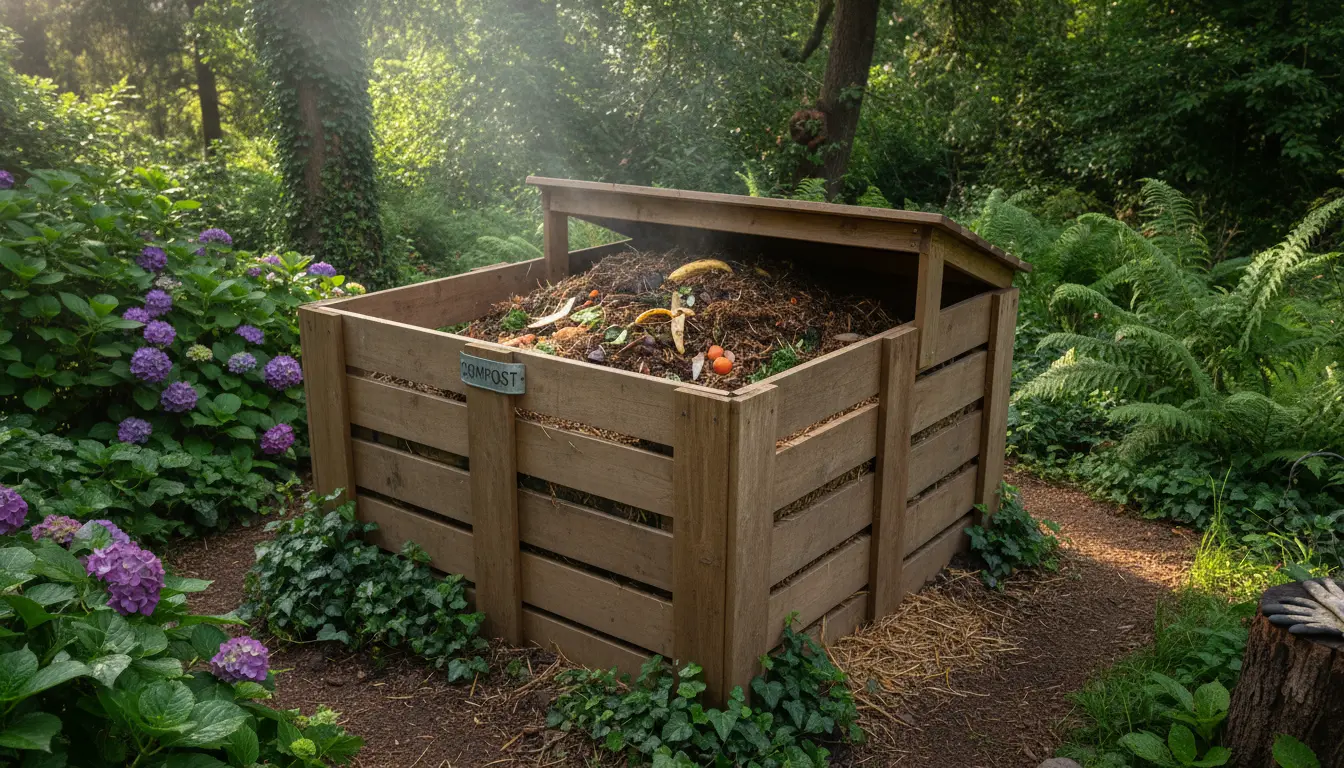
Why Home Composting Matters
Home composting turns kitchen scraps and yard waste into usable soil while reducing household waste. It improves soil structure, boosts plant growth, and lowers your carbon footprint.
This guide explains simple, practical steps you can follow to start composting at home, whether you have a backyard, a balcony, or limited space.
Basics of Home Composting for Beginners
Composting is the controlled decomposition of organic materials by microbes. The process needs three basics: carbon, nitrogen, and air.
Balance these elements and maintain moisture to keep the pile active and odor-free.
Key Ingredients
- Carbon (brown): dry leaves, straw, shredded paper, cardboard.
- Nitrogen (green): vegetable scraps, coffee grounds, fresh grass clippings.
- Air and moisture: regular turning and keeping the mix as damp as a wrung-out sponge.
Choosing a Method: Bin, Tumbler, Pile, or Worms
Pick a method that matches your space, time, and needs. Each method has pros and cons.
Backyard Compost Bin
Simple and low-cost. A stationary bin works well for yard waste and kitchen scraps if you have outdoor space.
Turn the pile monthly for aeration and even decomposition.
Compost Tumbler
Fast and neat. Tumblers are sealed and easy to rotate to mix material. They are ideal if you want quicker results and less odor.
Open Pile
Best for large volumes of yard waste. Requires more space and occasional turning. Good for rural or suburban properties.
Vermicomposting (Worm Bin)
Perfect for small spaces and indoor setups. Red wiggler worms consume kitchen scraps and produce rich worm castings.
Maintain moderate temperatures and avoid citrus or oily foods in worm bins.
Step-by-Step: How to Start Composting at Home
Follow these core steps to set up a reliable compost system.
- Choose a location: shaded, level, and convenient to access.
- Select a container: bin, tumbler, or designated pile area.
- Layer materials: start with coarse browns for drainage, alternate greens and browns.
- Maintain moisture: aim for damp but not waterlogged conditions.
- Turn regularly: every 1–2 weeks for faster results, monthly if less active.
What You Can and Cannot Compost
Knowing what to add prevents pests and delays. Keep a short list handy.
Compostable Items
- Fruit and vegetable scraps
- Coffee grounds and filters, tea bags (paper only)
- Eggshells, shredded paper, cardboard
- Grass clippings and dry leaves
Items to Avoid
- Meat, fish, bones, dairy — attract pests and create odors
- Oily or greasy foods — slow decomposition
- Diseased plants or persistent weeds — may survive the process
- Pet waste from carnivores — potential pathogens
Troubleshooting Common Problems
Simple fixes get your compost back on track quickly.
- Bad smell: add more dry brown material and turn the pile to increase aeration.
- Too dry: sprinkle water and mix to restore moisture.
- Pile not heating: add more green nitrogen material and ensure adequate size (at least 1m3 for active heating).
- Pests: bury food scraps in the center and secure the bin lid; avoid meat and dairy.
Small Real-World Case Study
Emma, a city apartment dweller, started vermicomposting in a 40-liter worm bin on her balcony. She fed the worms small amounts of kitchen scraps and shredded paper twice a week.
Within three months Emma was harvesting dark, crumbly worm castings and had reduced her weekly trash by nearly half. Her balcony herbs grew stronger when she mixed castings into potting soil at planting time.
How to Use Finished Compost
Finished compost smells earthy and is dark and crumbly. Use it to improve soil structure and provide slow-release nutrients.
- Mix into garden beds at planting time (2–4 inches worked into the topsoil).
- Use as a potting mix amendment for container plants.
- Top-dress lawns or flower beds to add nutrients gradually.
Final Tips for Successful Home Composting
Start small and build your pile or system over time. Monitor moisture and aeration rather than obsessing about exact ratios.
Keep a small bin or compost caddy in the kitchen for easy collection. Consistency is the most important factor for success.
With basic steps and a little patience, home composting is an achievable, rewarding step toward a greener household.