
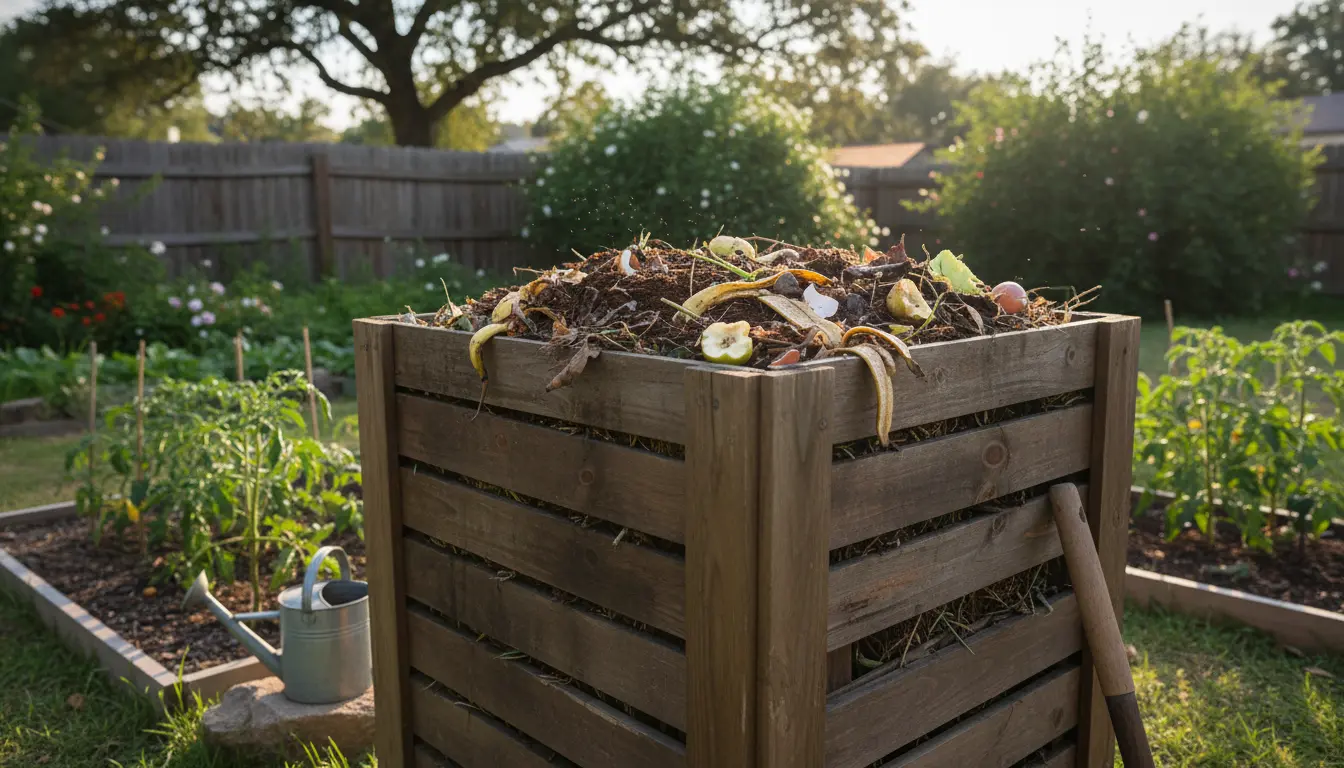
Home composting turns kitchen scraps and yard waste into rich soil. This guide gives clear, practical steps for beginners to start composting at home without fancy equipment.
Home Composting for Beginners: Getting Started
Choose a simple system based on your space and time. Options range from a closed bin on a patio to a small backyard pile. Each system requires the same basic inputs and regular attention.
Place the bin in a convenient, well-drained spot that is easy to reach year-round. A partly shaded area helps maintain moisture without overheating the pile in summer.
Essential Materials for Home Composting
Use two categories of materials: “greens” (nitrogen-rich) and “browns” (carbon-rich). Balance these to speed decomposition and reduce smells.
- Greens: vegetable scraps, coffee grounds, fresh grass clippings, tea bags.
- Browns: dried leaves, shredded paper, cardboard, straw, wood chips.
A good starting ratio is about 2 to 3 parts browns to 1 part greens by volume. Adjust if the pile is too wet or too dry.
Basic Tools and Supplies
You do not need expensive tools. Useful items are a garden fork or pitchfork, a sturdy bin or tumbler, and a small rake or shovel for turning.
- Optional: thermometer to check internal pile temperature.
- Optional: wire mesh or a lid to keep rodents out.
Step-by-Step Composting Process
Follow these steps to build and maintain a healthy compost pile. Each step takes only a few minutes if done regularly.
- Layering: Start with coarse browns at the base for airflow. Alternate layers of greens and browns in 3–6 inch layers.
- Moisture: Keep the pile as damp as a wrung-out sponge. Add water if dry, add browns if too wet.
- Turning: Every 1–2 weeks, turn the pile to introduce oxygen. Turning speeds decomposition and prevents odors.
- Monitoring: Watch for temperature, odor, and pests. A hot center (120–160°F or 49–71°C) means active decomposition.
What to Avoid Putting in Your Home Compost
Certain items cause problems in small home systems. Keep these out to prevent pests, bad smells, and slow breakdown.
- Meat, dairy, oily foods
- Diseased plants or invasive weeds with seeds
- Pet waste from carnivores
- Large woody branches that take too long to break down
Troubleshooting Common Issues
Beginner composters often face a few predictable problems. Simple adjustments usually fix them quickly.
Bad Odor
Cause: too many greens or anaerobic conditions. Fix: add more browns, turn the pile, and increase airflow.
Slow Decomposition
Cause: pile too dry, too cold, or lacking nitrogen. Fix: moisten the pile, add green materials, and turn to raise temperature.
Pests
Cause: food scraps exposed or bin not sealed. Fix: bury food under browns, use a rodent-resistant bin or lid, avoid meat and dairy.
Composting can reduce household waste by up to 30 percent. Properly managed compost piles also capture carbon and improve soil water retention.
How to Know When Compost Is Ready
Finished compost is dark, crumbly, and smells earthy. Most home systems produce usable compost in 3 to 12 months depending on materials, heat, and turning frequency.
Screen the compost to remove large undecomposed pieces and return them to the pile for more time. Use finished compost as mulch or soil amendment.
Simple Uses for Finished Compost
- Mix into potting soil at 10–30 percent by volume.
- Top dress vegetable beds and lawns.
- Use as mulch around trees and shrubs to retain moisture.
Small Real-World Case Study
Case: A small urban household in Portland started a 60-liter tumbler three years ago. They collected kitchen scraps and yard trimmings and turned the tumbler weekly.
Result: Within six months they produced compost for potted herbs and reduced their weekly trash by about 40 percent. Minor adjustments—more browns in winter—kept the system odor-free.
Quick Checklist for Home Composting for Beginners
- Choose a bin or space and set it up in a convenient location.
- Collect greens and browns and aim for a balanced mix.
- Keep the pile moist and turn it regularly.
- Avoid meat, dairy, and pet waste.
- Use finished compost to enrich soil and reduce waste.
Starting small and staying consistent is the best approach. With simple care, home composting for beginners becomes an easy, rewarding habit that benefits gardens and reduces waste.