
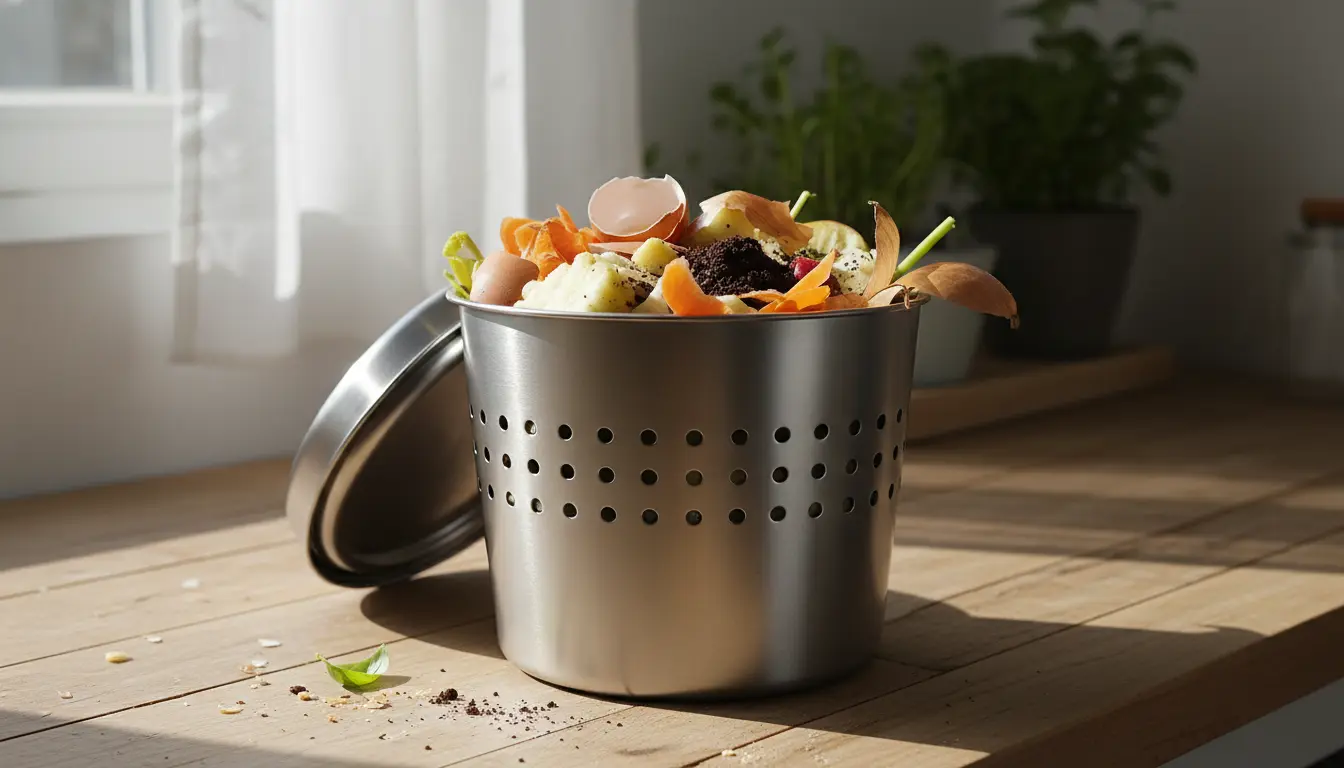
Why start home composting
Home composting turns kitchen and yard waste into a useful soil amendment. It reduces trash, lowers greenhouse gas emissions, and improves garden soil.
This guide gives clear, practical steps for beginners to build and maintain a simple compost system at home.
How home composting works
Composting is a controlled decomposition process carried out by microbes, worms, and other organisms. The organisms need three basic inputs: carbon, nitrogen, and moisture.
Balance these inputs, maintain airflow, and the pile will heat up and break down into dark, crumbly compost in weeks to months.
Key elements in home composting
Keep these elements in mind when you start a compost pile or bin. They are the simplest way to ensure success.
- Carbon (browns): dry leaves, shredded paper, straw
- Nitrogen (greens): fruit and vegetable scraps, coffee grounds, fresh lawn clippings
- Airflow: turn or aerate the pile every 1–2 weeks
- Moisture: should feel like a wrung-out sponge
Choosing the right bin for home composting
Pick a bin that fits your space and waste volume. Options include countertop compost pails, backyard tumblers, and open bins.
Countertop pails are convenient for collecting scraps. Tumblers speed decomposition and are low maintenance. Open bins are low cost and work well for large gardens.
Recommended features
- Good drainage and ventilation
- Secure lid to deter pests
- Accessible for turning or rotating
Step-by-step home composting process
Follow these practical steps for a reliable compost system. Each step keeps the process balanced and efficient.
- Choose a location with partial shade and easy access.
- Start with a 4–6 inch layer of coarse browns for drainage.
- Add food scraps and fresh greens in small layers.
- Cover each green layer with browns to reduce odor and flies.
- Turn or aerate the pile every 1–2 weeks to add oxygen.
- Keep the pile moist but not waterlogged.
- Harvest finished compost when dark and crumbly, usually 2–6 months.
Troubleshooting common home composting problems

Beginners often face the same issues. Small adjustments fix most problems quickly.
Bad smell
Cause: too much nitrogen or poor airflow. Fix: add dry browns and turn the pile.
Slow decomposition
Cause: pile too dry, too small, or lacking nitrogen. Fix: moisten, add greens, or increase pile size to at least 1 cubic foot.
Pests
Cause: exposed food scraps or meat products. Fix: avoid meat and dairy, bury scraps, use a closed bin, and secure the lid.
Practical tips for apartment and small-space composting
Even with limited space, you can compost effectively. Use small electric composters, bokashi systems, or worm bins.
Worm bins work well indoors. Bokashi ferments food waste and then requires a small outdoor burying step for finishing.
Composting reduces household waste weight by up to 30 percent on average. Rich finished compost can reduce the need for chemical fertilizers.
Case study: Small apartment composting success
Sam, a city resident, used a 10-liter worm bin under the sink. He added kitchen scraps and shredded newspaper daily. He processed approximately 1.5 liters of scraps per week.
In six months Sam reduced his kitchen waste that went to the trash by about 25 percent. He produced two buckets of finished vermicompost to use on balcony plants.
How to use finished home compost
Finished compost is versatile. Mix it into potting soil, use as a top dressing, or mix into garden beds to improve structure and fertility.
- Seed starting: mix 10–20 percent compost into seed mixes
- Vegetable gardens: apply 1–3 inches as a top dressing in spring
- Houseplants: blend small amounts into potting mix
Quick checklist before you start home composting
- Choose a bin size and type that fits your home
- Gather browns like shredded paper and dry leaves
- Start saving kitchen greens in a small pail
- Plan to turn or aerate regularly
- Keep a simple record of pile progress for the first month
Home composting is a practical step toward reducing waste and improving soil health. Start small, learn with each batch, and adjust the balance of browns and greens. With a little attention, even beginners can produce high-quality compost for their plants.