
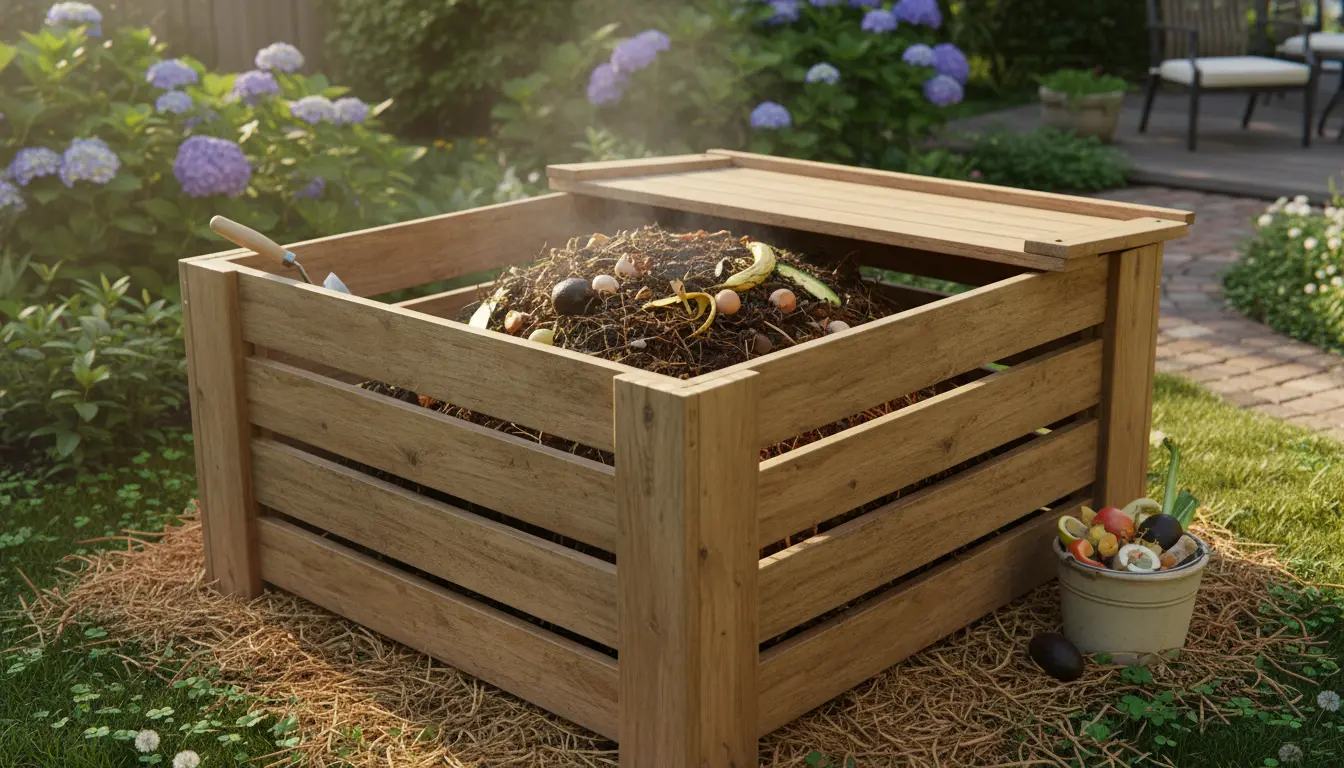
Home Composting for Beginners: The Basics
Home composting turns kitchen scraps and yard waste into nutrient-rich soil. It reduces waste and improves garden health with minimal cost.
This guide covers what you need, how to start, common problems, and a short real-world example to help you succeed.
Why Home Composting for Beginners Is Worth Trying
Composting lowers household waste and supplies free soil amendment for lawns and gardens. It’s a simple, natural recycling process anyone can learn.
Beginners will appreciate low startup needs and quick benefits when they follow basic rules for balance and moisture.
Home Composting for Beginners: Key Benefits
- Less trash and lower waste pickup costs
- Improved soil structure and water retention
- Reduced need for chemical fertilizers
- Opportunities to grow healthier plants
What You Need to Start Home Composting for Beginners
Starting composting requires a container, basic tools, and a selection of organic materials. You can begin with a simple bin or a pile in a corner of your yard.
Gather these items before you start to make the process smoother.
- A bin or designated compost area
- Kitchen scraps and yard waste
- A pitchfork or garden fork for turning
- A water source for adjusting moisture
Materials to Compost and Materials to Avoid
Good compost needs a balance of carbon-rich and nitrogen-rich materials. Aim for shredded leaves, straw, or cardboard plus fruit and vegetable scraps.
Avoid meat, dairy, oily foods, and pet waste to prevent odors and pests.
Examples of Compostable Materials
- Browns (carbon): dry leaves, shredded paper, cardboard, straw
- Greens (nitrogen): vegetable scraps, coffee grounds, fresh grass clippings
- Optional: small amounts of wood ash or garden plant trimmings
Step-by-Step Setup for Home Composting for Beginners
Follow simple steps to create a healthy compost pile. Consistency matters more than perfection when you’re starting out.
Use the steps below to establish a routine and keep your pile active.
- Choose a shady spot with good drainage, close to a water source.
- Place a bin or mark a 3×3 foot area for a pile and add a 4-6 inch base of coarse material for airflow.
- Layer greens and browns in roughly equal volumes, aiming for a 2:1 ratio of browns to greens by volume.
- Moisten the layers so they feel like a wrung-out sponge; avoid soaking.
- Turn the pile every 1–2 weeks to add oxygen and speed decomposition.
Troubleshooting Home Composting for Beginners
Common problems are usually easy to fix with small adjustments to balance or moisture. Use this checklist to diagnose issues quickly.
- Odor: Add more browns and turn the pile; reduce wet food scraps temporarily.
- Too dry: Add water evenly and mix to rehydrate material.
- Slow decomposition: Increase surface area by shredding materials and ensure regular turning.
- Pests: Avoid meat and dairy, secure the bin, and bury fresh food scraps under brown layers.
Compost can reach temperatures of 120 to 160 degrees Fahrenheit in an active pile, which helps kill weed seeds and pathogens when properly managed.
How to Use Finished Compost
Finished compost looks dark, crumbly, and earthy, and it no longer smells like the original materials. Use it in several practical ways around the yard.
- Mix into garden beds at a ratio of 1:4 compost to soil
- Top-dress lawns with a thin layer to improve soil health
- Use as a potting mix ingredient for container plants
Small Real-World Example: A Simple Case Study
Maria, a homeowner with a small vegetable garden, started composting with a 50-gallon bin. She saved kitchen scraps and yard trimmings for six months.
By following a routine of layering, moistening, and turning, Maria produced rich compost used to top-dress her tomato plants. She reported healthier growth and reduced fertilizer purchases the following season.
Last Tips for Home Composting for Beginners
Start small and build your composting habit. Success comes from regular addition, occasional turning, and keeping the pile balanced.
Track progress and make adjustments based on smell, temperature, and decomposition rate. Over time you’ll refine a system that fits your household and garden needs.
If you want a simple starter plan: collect scraps in a covered caddy, add to an outdoor bin twice a week, alternate layers of greens and browns, and turn the pile every two weeks.