
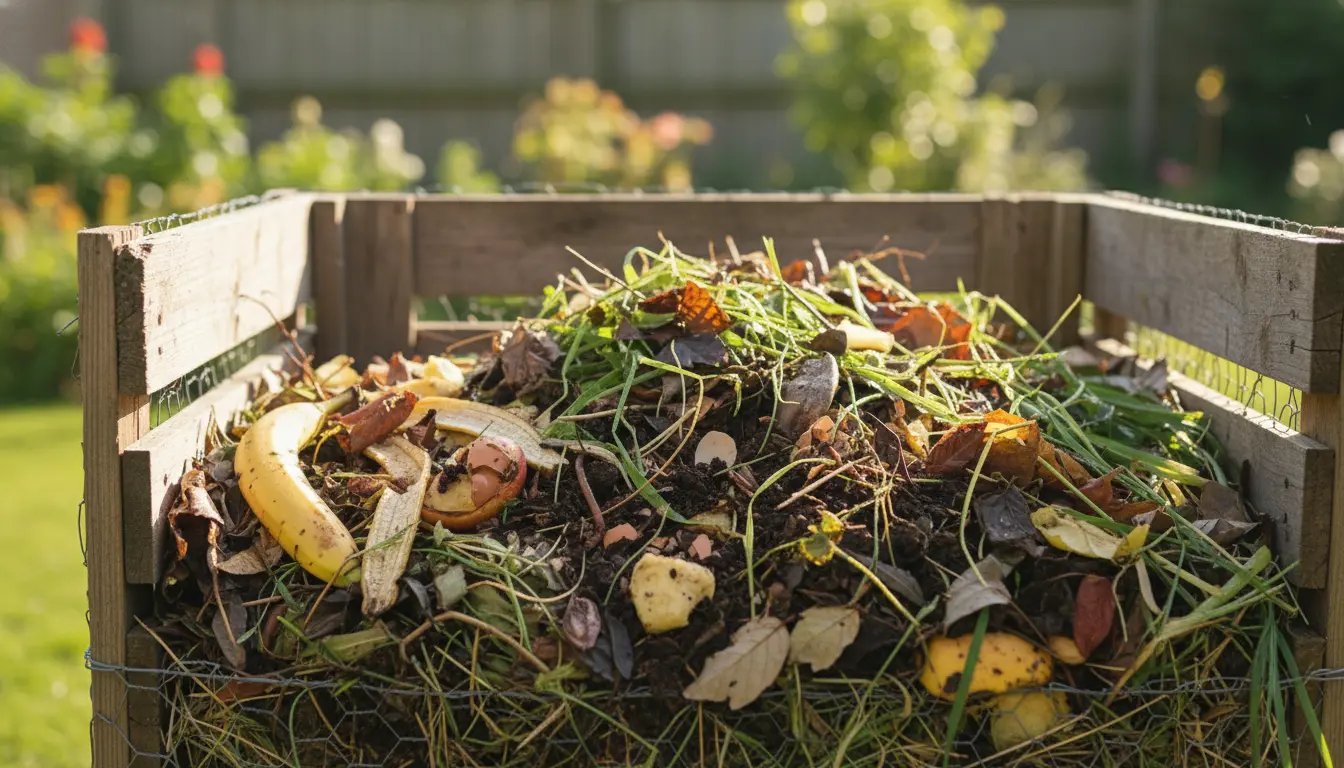
Why Home Composting for Beginners Matters
Home composting turns kitchen scraps and yard waste into valuable soil amendment. It reduces landfill waste, lowers household costs, and improves garden health.
This guide gives clear, practical steps so beginners can start a successful compost bin and keep it running with minimal fuss.
Basic Principles of Home Composting for Beginners
Composting is a controlled decomposition process. Microbes break down organic material into dark, crumbly compost you can add to soil.
Balance, moisture, and airflow are the key elements for a healthy pile.
Balance Green and Brown Materials
Greens are nitrogen-rich and include kitchen scraps and fresh grass clippings. Browns are carbon-rich and include dry leaves and shredded paper.
A good rule of thumb is about 2 to 3 parts browns to 1 part greens by volume.
Moisture and Aeration
Your compost should feel like a damp sponge — moist but not dripping. Too dry slows decomposition, while too wet creates odors.
Turn the pile or use a tumbling bin to add oxygen. Aerobic microbes need air to work efficiently.
Choosing a Bin for Home Composting for Beginners
Select a bin based on space, budget, and how quickly you want compost. Options range from simple piles to tumblers and enclosed bins.
Consider ease of turning, pest resistance, and drainage when choosing your system.
- Compost pile: Low cost, good for large yards, requires manual turning.
- Stationary bin: Neat and contained, moderate cost, may need a pitchfork to turn.
- Tumbling bin: Easy to aerate, faster results, higher upfront cost.
What to Compost: Do’s and Don’ts
Knowing what to add prevents pests and smells. Use safe items and avoid problematic ones.
Safe Items to Compost
- Fruit and vegetable scraps
- Coffee grounds and tea bags (remove staples)
- Eggshells, shredded cardboard, and paper
- Yard waste: leaves, small twigs, grass clippings
Items to Avoid
- Meat, fish, dairy, and oily foods (attract pests)
- Diseased plants or invasive weeds that can survive decomposition
- Pet waste from carnivores
- Coal ash or treated wood
Step-by-Step: Starting Your First Bin
Follow these steps to build a simple, effective compost pile that beginners can maintain easily.
- Pick a spot: partial shade, level ground, and near a water source.
- Layer a base of coarse browns for drainage (twigs or straw).
- Add alternating layers of greens and browns, aiming for 2–3:1 browns to greens.
- Keep the pile moist like a wrung-out sponge and turn every 1–2 weeks.
- Wait 2–6 months depending on conditions; finished compost is dark and crumbly.
Troubleshooting Common Problems in Home Composting for Beginners
Beginners often face issues like odors, slow breakdown, or pests. Simple fixes usually get things back on track.
Bad Smell
Smells indicate anaerobic conditions or too many greens. Turn the pile and add dry browns to restore balance.
Pests
To prevent rodents and flies, avoid meat and dairy. Use a closed bin or layer finished compost over fresh scraps.
Slow Decomposition
Increase surface area by shredding materials and ensure adequate moisture and aeration. Smaller pieces decompose faster.
Composting can cut household waste by up to 30 percent. Adding compost to soil improves moisture retention and nutrient content, reducing the need for fertilizers.
How to Use Finished Compost
Finished compost enriches garden beds, improves potting mixes, and can be used as a top dressing for lawns. It should smell earthy and contain no recognizable food scraps.
Work compost into the top few inches of garden soil or mix 1:3 with potting soil for containers.
Small Real-World Example
Sara, a city homeowner, started a 60-liter tumbling bin on her balcony. She added kitchen scraps and shredded cardboard and turned the bin twice a week.
After four months she harvested rich compost and used it to top-dress container tomatoes, which produced noticeably more fruit the next season.
Quick Maintenance Checklist for Home Composting for Beginners
- Check moisture weekly — adjust with water or dry browns.
- Turn or tumble the pile every 1–2 weeks for faster results.
- Add a mix of greens and browns as you collect waste.
- Harvest finished compost after 2–6 months depending on system and conditions.
Final Tips for Success
Start small and be consistent. Composting is forgiving; small adjustments typically solve most problems.
Keep a small countertop caddy for scraps to make adding materials easy and reduce food waste immediately.
With the right balance and simple maintenance, home composting for beginners becomes an efficient, low-cost way to recycle organic waste and feed your garden naturally.