
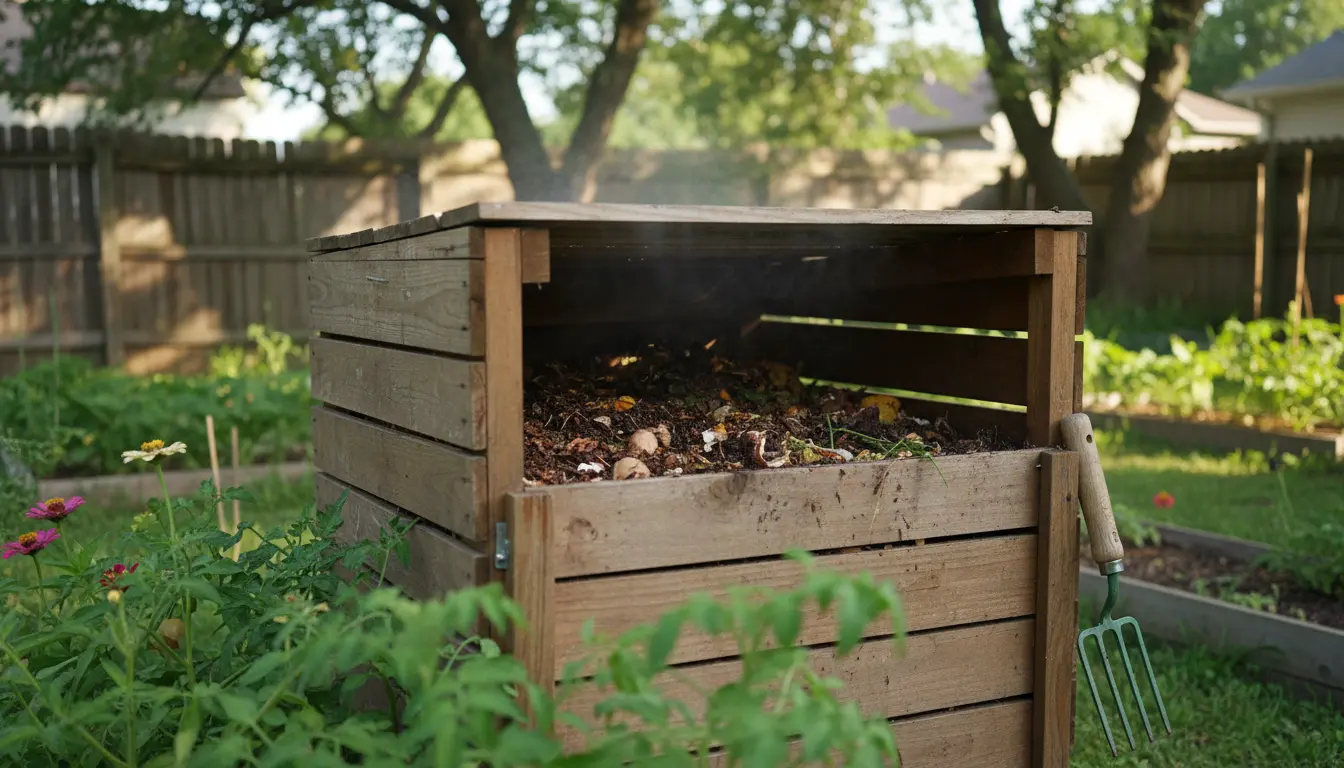
Home Composting Basics
Home composting turns everyday organic waste into a valuable soil amendment. It reduces trash, improves garden soil, and saves money on fertilizers.
This guide gives clear, practical steps to start composting at home, including bin options, what to compost, basic maintenance, and troubleshooting.
Why Choose Home Composting
Composting reduces landfill waste and greenhouse gas emissions from organic matter. It also returns nutrients to your soil, improving plant health and water retention.
Even small households can produce enough compost for a balcony planter or a backyard garden patch.
Choosing a Compost Bin for Home Composting
Pick a bin that fits your space, budget, and activity level. A good choice encourages airflow and retains heat while keeping pests out.
- Cold bin or pile: Low maintenance, slower breakdown, best for large yards.
- Rotating tumbler: Faster composting, easier turning, ideal for small yards.
- Worm bin (vermicompost): Great for kitchens and balconies, produces nutrient-rich castings.
- DIY wooden or wire bin: Cost-effective and customizable for larger volumes.
Bin Placement and Size for Home Composting
Place the bin on soil or a well-drained surface to allow worms and microbes in. Choose a size that matches how much organic waste you generate.
A 3×3 foot bin suits an average family, while one or two smaller bins work well for couples or singles.
What to Compost at Home
Balance ‘greens’ (nitrogen-rich) and ‘browns’ (carbon-rich) for efficient decomposition. Aim for roughly a 1:2 ratio of greens to browns by volume.
- Greens: fruit and vegetable scraps, coffee grounds, fresh grass clippings.
- Browns: dry leaves, shredded paper, straw, small wood chips.
- Avoid: meat, dairy, oils, diseased plants, and pet waste from carnivores.
Quick Examples of Home Compost Mixes
- Kitchen scraps + shredded newspaper + dry leaves.
- Garden trimmings + straw + vegetable peelings.
How to Start Home Composting
Start with a base layer of coarse browns to improve airflow. Add food scraps in thin layers and cover with browns to limit odors and pests.
- Layer materials: start with twigs or straw, then alternate greens and browns.
- Maintain moisture: compost should feel like a wrung-out sponge.
- Turn the pile: aerate weekly or every two weeks for faster results.
- Harvest finished compost: after 2–12 months depending on method and conditions.
Troubleshooting Home Composting
Common problems have simple fixes. Most issues come from imbalanced ingredients, poor airflow, or incorrect moisture.
- Bad smell: add more browns, mix the pile, and ensure proper drainage.
- Slow breakdown: chop materials smaller, increase green content, and turn more often.
- Pests: bury food scraps, use a closed bin, and avoid meat and dairy.
- Too dry: add water and greens; cover pile during hot, dry weather.
Compost can improve soil structure and increase water retention by up to 20%, reducing the need for frequent watering in gardens.
Simple Routine for Home Composting
Consistency matters more than perfection. Set a weekly routine to add scraps, check moisture, and turn the pile.
Use a kitchen caddy for scraps and empty it into the bin every 2–3 days. This keeps odors in check and makes composting habitual.
Small Case Study: Urban Balcony Composting
Anna, a city apartment resident, started vermicomposting in a 20-liter bin under her kitchen counter. She collected fruit and vegetable scraps and shredded office paper as bedding.
Within three months she produced enough worm castings to top-dress her balcony tomato pots. The tomatoes showed stronger growth and fewer signs of nutrient stress.
Using Finished Compost from Home Composting
Finished compost is dark, crumbly, and smells earthy. Use it to mulch, mix into potting soil, or top-dress garden beds.
Apply a 1–2 inch layer as mulch, or mix 10–30% compost into new potting mixes for seedlings and transplants.
Final Tips for Successful Home Composting
- Start small and learn by doing; scale up as you gain confidence.
- Keep a simple balance of greens and browns rather than obsessing over exact ratios.
- Use a thermometer if you want to monitor heat for faster, pathogen-safe composting.
- Share excess compost with neighbors or community gardens to close the nutrient loop.
Home composting is accessible, low-cost, and effective. With a small bin, a few basic rules, and a weekly habit, you can turn household waste into a valuable resource for your plants.