
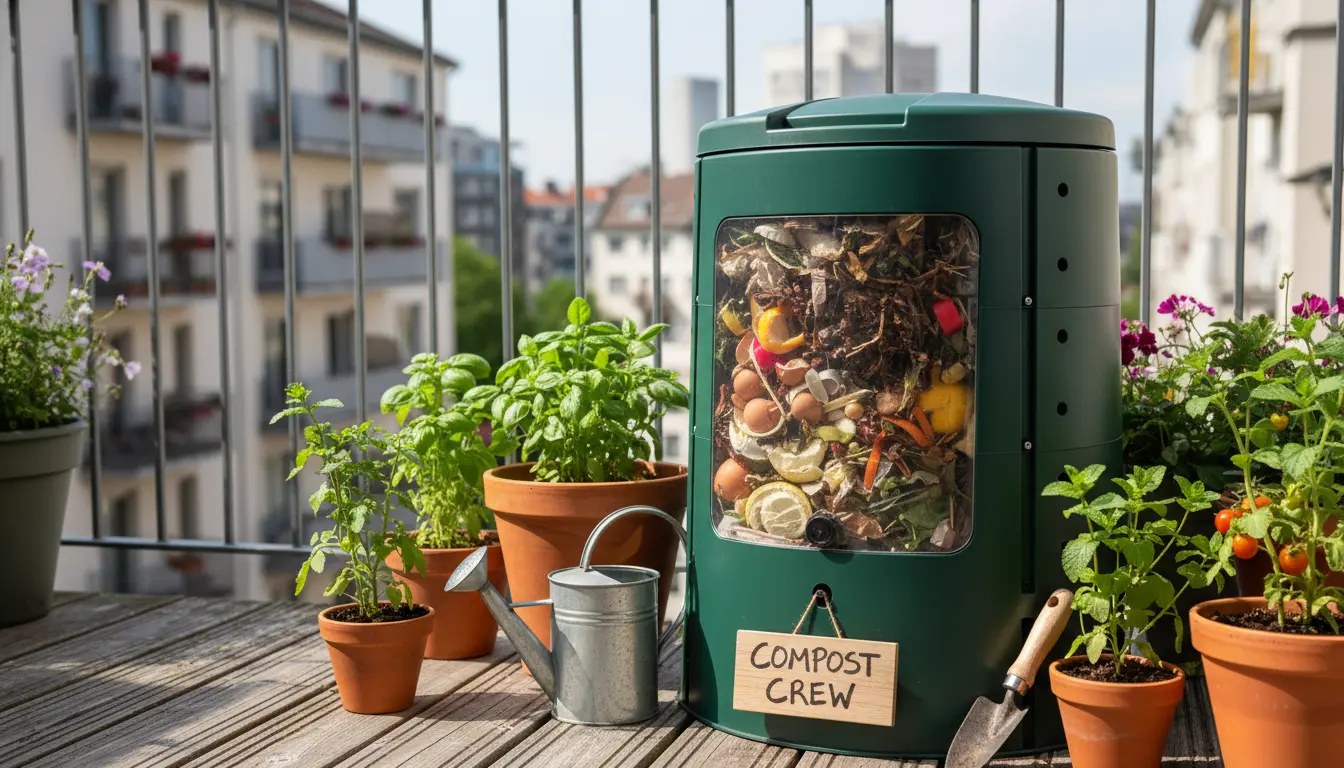
Home composting turns kitchen scraps and yard waste into nutrient-rich soil you can use in pots, raised beds, and garden beds. This guide explains simple, practical steps for home composting for beginners so you can start with confidence.
Why Home Composting for Beginners Works
Composting speeds organic matter breakdown through microbes, air, moisture, and the right mix of materials. You don’t need a large space or special equipment to get useful compost.
Beginners succeed by keeping a few core rules: balance carbon and nitrogen, manage moisture, and allow airflow. Follow these basics and problems like odors or pests are easy to avoid.
Getting Started with Home Composting for Beginners
Choose the simplest system that matches your living situation, then commit to regular, small actions. Frequent, light maintenance is better than rare, intense fixes.
Choose a Compost System
Pick one system based on space and effort level. Each option is suitable for home composting for beginners.
- Tumbler: Good for quick mixing and fewer pests. Turn every few days.
- Open bin: Low cost and easy to add materials. Requires occasional turning.
- Worm bin (vermicomposting): Ideal for apartments and small indoor spaces. Produces castings quickly.
What to Compost and What to Avoid
Compost inputs fall into two groups: greens (nitrogen) and browns (carbon). Aim for roughly 2–3 parts browns to 1 part greens by volume.
- Greens: fruit and vegetable scraps, coffee grounds, fresh grass clippings.
- Browns: dried leaves, shredded paper, cardboard, wood chips.
- Avoid: meat, dairy, oily foods, diseased plants, and pet waste from carnivores.
How to Maintain Your Compost Bin for Home Composting for Beginners
Maintenance includes turning, checking moisture, and monitoring temperature. These tasks keep decomposition active and prevent issues.
Turning and Aeration
Turning introduces oxygen, which helps microbes break down materials faster and reduces odor. For tumblers, turn every 2–4 days; for bins, turn with a pitchfork every 1–2 weeks.
If your pile becomes compacted, add bulky browns like twigs to restore airflow.
Moisture and Temperature
The compost should feel like a wrung-out sponge: damp but not soggy. If it’s too dry, add water and fresh greens. If too wet, add dry browns and increase aeration.
Temperatures between 120–160°F (50–71°C) indicate active decomposition for hot compost piles. Cold piles still work but take longer, which is fine for beginners.
Troubleshooting Common Problems in Home Composting for Beginners
Most problems have simple fixes. Use this checklist to diagnose and resolve common issues quickly.
- Bad odor: Add more browns and turn the pile to add air.
- Pests: Avoid meat and oily foods; use a closed bin or cover greens with browns.
- Slow breakdown: Chop materials smaller, maintain moisture, and turn more often.
How to Use Finished Compost from Home Composting for Beginners
Finished compost is dark, crumbly, and smells earthy. It’s ready when original materials are unrecognizable and it no longer heats up after turning.
Use finished compost in these ways:
- Mix into potting soil: up to 25% compost by volume for containers.
- Topdress lawns and garden beds: light layer to improve soil structure and nutrients.
- Make compost tea: steep compost in water for a mild liquid feed for plants.
Compost can reduce household waste by up to 30 percent. Proper composting also returns nutrients to soil and helps retain moisture, reducing the need for synthetic fertilizers.
Small Case Study: Apartment Balcony Composting
Maria, a city renter, started with a 20-liter worm bin on her balcony. She collected vegetable peels, coffee grounds, and shredded paper. After three months she had enough castings to top-dress her container herbs.
Key actions that worked for Maria: daily small scraps, no meat or oily foods, and harvesting liquid worm leachate sparingly. The system stayed odor-free and required about 10 minutes a week to maintain.
Quick Starter Checklist for Home Composting for Beginners
- Choose a bin type that fits your space.
- Keep a 2–3:1 ratio of browns to greens.
- Chop or shred large items to speed breakdown.
- Maintain damp, not soggy, moisture levels.
- Turn regularly to add oxygen and prevent compaction.
- Use finished compost in pots, beds, or as topdress.
Home composting for beginners is a low-cost, practical step toward reducing waste and improving soil health. Start small, keep the balance right, and adjust as you learn. With routine care, you’ll produce useful compost that benefits your plants and reduces household trash.