

Composting at home turns food scraps and yard waste into rich soil that feeds plants and reduces trash. This guide shows clear, practical steps for beginners to set up and maintain a compost system that works.
Home Composting for Beginners Why Compost
Compost improves soil structure, holds moisture, and supplies nutrients to plants. It also reduces the amount of organic waste sent to landfills, cutting methane emissions from garbage sites.
Home Composting for Beginners Choosing a System
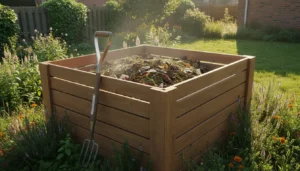
Select a compost system based on space, budget, and effort. Common options include an open pile, a tumbling bin, and a stationary enclosed bin.
Home Composting for Beginners System Pros and Cons
- Open pile: Cheapest, easy to add material, but can be messy and slow.
- Enclosed bin: Keeps pests out and looks tidy, needs some aeration and turning.
- Tumbler: Speeds up decomposition with regular turning, costs more and holds less volume.
Home Composting for Beginners Materials to Use
Compost needs a balance of carbon-rich and nitrogen-rich materials. Carbon materials are often dry and brown; nitrogen materials are green and moist.
- Carbon (browns): dry leaves, shredded paper, straw, cardboard.
- Nitrogen (greens): fruit and vegetable scraps, coffee grounds, fresh grass clippings.
- Avoid: meat, dairy, oils, diseased plants, and large bones to prevent odors and pests.
Home Composting for Beginners Step by Step Setup
Start by choosing a dry, shaded spot near water access for your pile or bin. Layer materials to jump-start decomposition and maintain airflow.
Home Composting for Beginners Basic Layering Method
- Base layer: coarse material like small branches for drainage and airflow.
- Alternate: 2–4 inches of greens, then 4–6 inches of browns.
- Moisture: keep the mix as damp as a squeezed sponge; add water if dry, cover if too wet.
- Turn: every 1–2 weeks for faster compost, or let it sit for a slower, low-effort approach.
Home Composting for Beginners Troubleshooting Common Issues
If the pile smells bad, it is likely too wet or has too many greens. Add more browns and turn the pile to introduce oxygen.
If decomposition is very slow, the pile may be too dry or too compacted. Add water and coarser materials and turn regularly.
Home Composting for Beginners Pest Prevention
- Do not add meats or dairy to avoid attracting animals.
- Use a closed bin or secure lid if neighborhood wildlife is an issue.
- Chop materials into smaller pieces to speed decomposition and reduce smell.
Home Composting for Beginners Using Finished Compost
Compost is ready when it is dark, crumbly, and smells earthy. This can take 3 months with active management or a year with a passive pile.
Use finished compost as a top dressing, mix it into garden beds, or blend it with potting soil to boost nutrient content and water retention.
Composting 1 pound of food waste keeps about 0.5 pounds of carbon dioxide equivalent out of landfills, helping reduce greenhouse gases.
Home Composting for Beginners Small Real World Example
Case study: Sarah lives in a small city garden and started composting in a 55-gallon bin. She added kitchen scraps and shredded leaves and turned the bin every week.
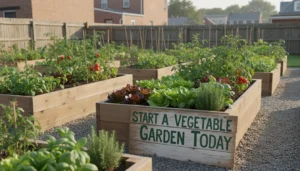
After six months she had a drum of rich compost that she mixed into her raised beds. Her tomatoes produced larger fruit and she reduced weekly trash volume by roughly one bag.
Home Composting for Beginners Tips for Success
- Keep a small countertop container with a lid for kitchen scraps and empty it daily into the bin.
- Chop or blend kitchen scraps to speed decomposition and reduce space.
- Monitor moisture and temperature: a hot center (120–150°F) means active decomposition.
- Be patient: composting is a natural process that improves with consistent small efforts.
Home Composting for Beginners Final Checklist
- Choose a bin type and location.
- Collect appropriate browns and greens.
- Layer materials, maintain moisture, and turn regularly.
- Use finished compost in garden beds or containers.
Getting started with home composting is a small time investment that yields richer soil and less waste. Follow these practical steps and adapt as you learn what works best for your space and schedule.