

Home Composting for Beginners: Getting Started
Composting at home turns kitchen scraps and yard waste into rich soil. It reduces trash and feeds your garden without store-bought fertilizers.
This guide uses simple steps to help beginners start and maintain a compost bin successfully.
Why Home Composting Matters
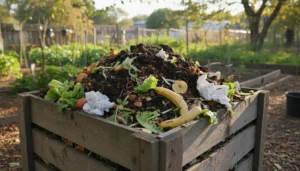
Compost improves soil structure, retains moisture, and adds nutrients. It also cuts household waste and lowers methane from landfills.
For beginners, composting is a low-cost way to make healthier plants and a greener home.
Choosing a Bin for Home Composting
Pick a compost bin that suits your space and goals. Options range from a simple heap to enclosed tumblers.
- Open pile: cheapest and good for large yards.
- Rotting bin: keeps pests out and looks tidy.
- Tumbler: faster mixing, ideal for small spaces.

Place the bin on soil or grass so worms and microbes can access the pile.
What to Add: Greens and Browns
Balance ‘greens’ (nitrogen) and ‘browns’ (carbon). This balance helps microbes break down material cleanly.
- Greens: vegetable scraps, coffee grounds, fresh grass clippings.
- Browns: dry leaves, straw, shredded paper, cardboard.
A good rule is about 2 to 3 parts browns to 1 part greens by volume. Adjust if the pile smells or is too slow.
How to Build and Maintain Your Compost

Layer materials rather than throwing everything in at once. Start with a coarse layer for airflow, then alternate greens and browns.
Keep the pile moist like a wrung-out sponge, not soggy. Too much water creates odors; too little stops decomposition.
Aeration and Turning
Turning your pile every 1–2 weeks speeds up decomposition and prevents foul smells. Use a pitchfork or a tumbler if you have one.
If you let the pile sit, it will still decompose but more slowly and may attract fewer flies.
Temperature and Speed
A hot compost pile (120–160°F / 50–70°C) breaks down material faster and kills many weed seeds. Cold composting takes months to over a year.
Beginners can start with cold composting, then try hot composting once comfortable with balancing materials and moisture.
Troubleshooting Common Problems in Home Composting
Smell: Usually too wet or too many greens. Add browns and turn the pile.
Pests: Avoid meat, dairy, and oily foods. Use an enclosed bin or bury scraps inside the pile.
Slow breakdown: Add more greens or chop materials into smaller pieces to speed microbial action.
When Is Compost Ready?
Finished compost is dark, crumbly, and smells earthy. It usually takes 3 months to a year depending on method and conditions.
Sift out large chunks to return to the pile for further breakdown before using in the garden.
Household food scraps and yard waste make up nearly 30% of municipal solid waste by weight. Composting at home can cut that share significantly and create free soil amendments.
Using Finished Compost in Your Garden
Use finished compost as a top dressing, soil mix, or potting amendment. It improves nutrient content and water retention.
- Vegetable beds: mix 1–2 inches into the topsoil each season.
- Containers: blend 25–30% compost with potting soil for better growth.
- Lawns: apply a thin layer as a mulch to feed grass over time.
Small Real-World Case Study
Anna, a homeowner with a small backyard, started a 55-gallon tumbler. She added shredded leaves and kitchen scraps in autumn and turned it weekly.
In four months her compost was dark and ready. She used it in three vegetable containers and reported better growth and fewer waterings over the summer.
Practical Tips for Home Composting Success
- Chop or shred materials to speed decomposition.
- Keep a small countertop bin with a tight lid to collect kitchen scraps.
- Layer brown material over fresh greens to control smell and flies.
- Test moisture by squeezing a handful; add water or dry browns as needed.
- Be patient—composting is low-effort but not instant.
Home composting for beginners is a practical, low-cost way to reduce waste and improve garden health. Start small, learn the balance of greens and browns, and adjust based on the pile’s behavior.
With basic care—moisture control, aeration, and the right mix—you can produce nutrient-rich compost that benefits plants and the planet.