
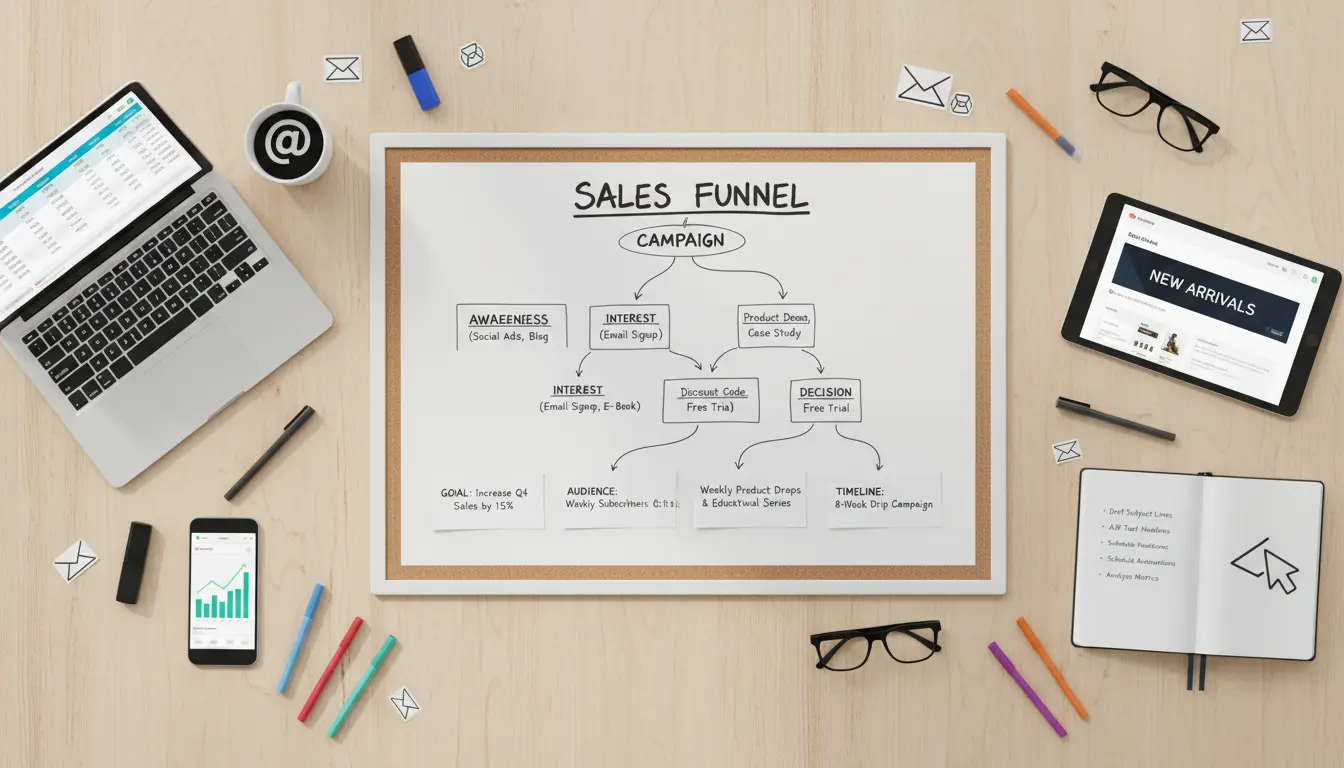
Email marketing remains one of the most cost-effective channels for small businesses. This guide outlines practical steps you can apply immediately to build lists, create campaigns, and measure results.
Email Marketing for Small Businesses: Getting Started
Start by defining a clear goal for your email program. Goals might include driving online sales, booking appointments, or improving repeat purchase rates.
Next, choose an email service provider (ESP) that fits your budget and needs. Look for features like automation, segmentation, analytics, and mobile-friendly templates.
Essential setup tasks
- Connect your domain and authenticate email (SPF, DKIM) to improve deliverability.
- Create a welcome email sequence for new subscribers.
- Segment initial lists by sign-up source or basic preference.
List Building Tactics for Email Marketing for Small Businesses
Growing a quality email list is more valuable than chasing large numbers. Focus on subscribers who are likely to engage with your offers.
Practical list-building approaches include in-store signups, website popups, and content offers. Keep forms short—name and email are often enough.
Ways to attract subscribers
- Lead magnets: checklists, discount codes, or downloadable guides relevant to your product.
- Events and local promotions: collect emails during checkout or at events.
- Referral programs: encourage current subscribers to invite friends.
Campaign Types and When to Use Them
Design different campaign types to meet distinct goals. Each type should have a clear call to action and a measurable KPI.
Common campaign examples
- Promotional emails: time-limited offers to drive immediate sales.
- Newsletters: regular updates to build brand affinity and keep your audience informed.
- Transactional emails: order confirmations and receipts that also cross-sell relevant items.
- Automated sequences: welcome series, cart abandonment, and re-engagement flows.
Segmentation and Personalization
Segmentation increases relevance and opens rates. Even simple segments like location, purchase history, or sign-up source can improve performance.
Personalize subject lines and the opening sentence to reflect the subscriber’s relationship with your business.
Segmentation ideas for small businesses
- New vs. returning customers.
- High-value customers (by spend) vs. occasional buyers.
- Product interests based on past purchases or clicks.
Measuring Success in Email Marketing for Small Businesses
Track a few core metrics rather than every available stat. Core metrics show whether your emails drive business results.
Key metrics to monitor
- Open rate — subject line and sender reputation signal.
- Click-through rate (CTR) — message relevance and CTA effectiveness.
- Conversion rate — ultimate measure tied to sales or signups.
- Unsubscribe and spam complaint rates — indicators of list health.
Practical Tips and Best Practices
Small changes often produce large gains. Test subject lines, send times, and CTA wording to find what works for your audience.
Respect frequency: do not overwhelm subscribers. A predictable cadence builds trust and reduces unsubscribes.
- Keep subject lines clear and benefit-driven.
- Use a single clear CTA per email.
- Optimize emails for mobile; most users open on phones.
- Archive old segments and clean inactive subscribers yearly to protect deliverability.
For many small businesses, email generates an average return of $30 for every $1 spent — among the highest ROI of digital channels.
Small Real-World Example
A local bakery used simple email marketing to increase sales. They collected emails at checkout and offered a 10% welcome discount. They sent a weekly newsletter with new items and limited offers.
After three months they had 1,200 subscribers, a 20% open rate, and a 3.5% conversion on promotional emails. The welcome discount converted 8% of new subscribers in the first month, adding predictable weekday sales.
Case Study: One-Month Starter Plan
Use this starter plan to launch or improve your program in 30 days.
- Week 1: Select ESP, set up authentication, and create a signup form.
- Week 2: Build a 3-email welcome sequence and one lead magnet.
- Week 3: Create a recurring newsletter template and a promotional email.
- Week 4: Launch, measure opens and clicks, and A/B test subject lines.
Wrap Up: Keep Improving
Email marketing for small businesses is a continuous process of testing and refinement. Start with clear goals, focus on list quality, and measure the metrics that matter to your business.
With consistent effort and simple segmentation, most small businesses can drive measurable revenue and stronger customer relationships through email.