
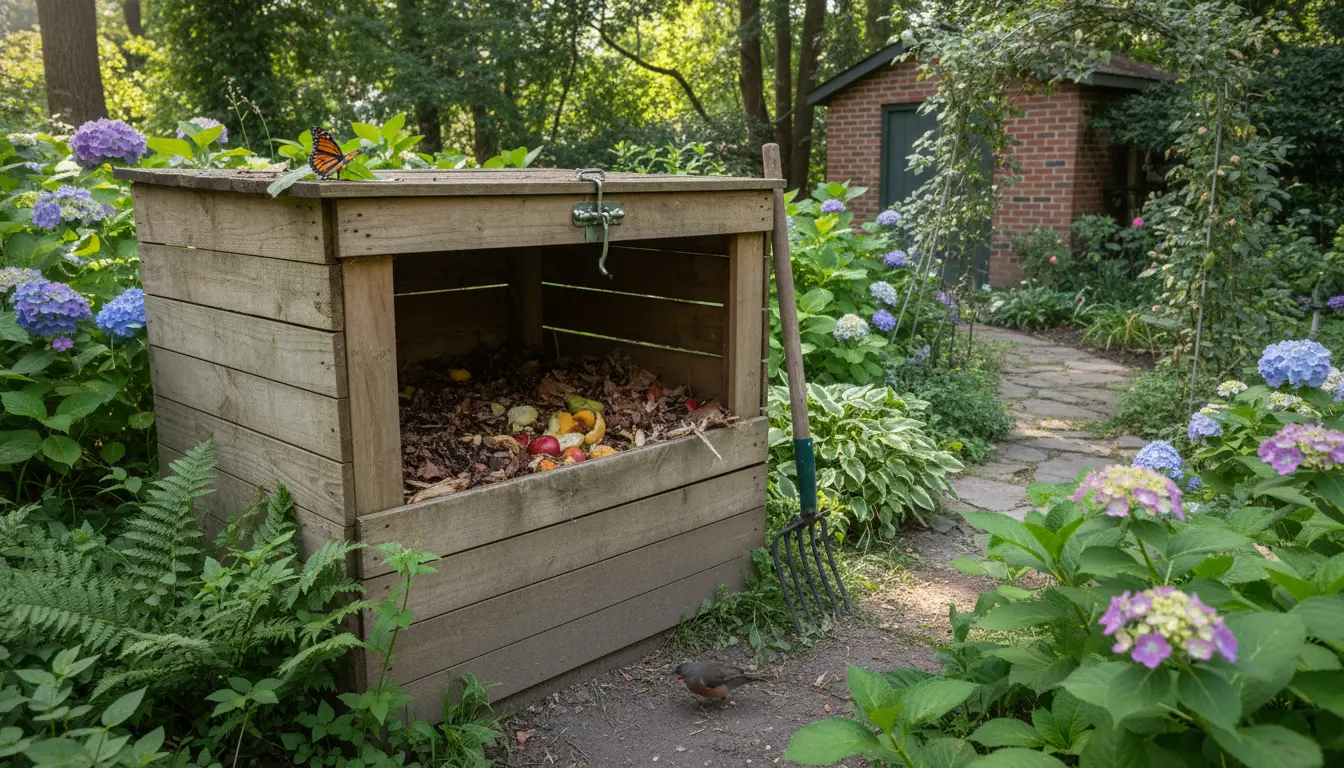
Composting for Beginners: Why It Matters
Composting turns kitchen and yard waste into nutrient-rich soil. For beginners, it is a practical way to reduce waste, improve garden health, and save money on fertilizers.
This guide gives clear steps to set up a home compost system, what materials to use, and how to troubleshoot common problems.
Composting for Beginners: Choose a Method
Start by picking a composting method that fits your space and schedule. Small urban homes, suburban yards, and rural properties all have workable options.
Common methods include open bins, tumblers, and vermicomposting with worms.
- Open bin: Easy and low-cost. Good for yards with enough space.
- Tumbler: Faster decomposition and neater. Requires turning.
- Vermicompost: Uses red worms indoors or in a sheltered box. Great for small quantities of kitchen waste.
Choosing the Right Container
Pick a container based on volume and convenience. A 3×3 foot bin suits an average household producing kitchen and yard waste.
If you rent or lack outdoor space, a small worm bin placed in a cool, shaded spot or indoors works well.
Composting for Beginners: What to Compost
Knowing what goes into the pile is essential. Materials are classed as greens (nitrogen-rich) and browns (carbon-rich).
- Greens (nitrogen): Fruit and vegetable scraps, coffee grounds, tea bags, fresh grass clippings.
- Browns (carbon): Dry leaves, straw, shredded paper, cardboard, small wood chips.
A good rule is to aim for roughly a 2:1 or 3:1 ratio of browns to greens by volume. Too many greens can make the pile smelly; too many browns slow decomposition.
Items to Avoid
- Meat, bones, dairy, and oily foods (attract pests and cause odors).
- Diseased plants and invasive weeds (may survive the composting process).
- Pet waste from carnivores (health risks).
Composting for Beginners: Step-by-Step Start
Follow these steps to begin a balanced compost pile that produces usable compost in months.
- Pick a location: shaded, well-drained, and accessible.
- Start with a 4–6 inch layer of coarse material for airflow (twigs or straw).
- Add alternating layers of greens and browns, mixing lightly as you add them.
- Keep the pile moist like a wrung-out sponge; water if it dries out.
- Turn or aerate the pile every 1–3 weeks to speed decomposition.
How Often to Turn
Turning introduces oxygen for microbes. For fast composting, turn every week. If you prefer low maintenance, turn every month and accept a longer composting time.
Composting for Beginners: Troubleshooting Common Problems
New composters often encounter issues. Most problems have simple fixes.
- Bad odors: Add more browns and turn the pile to restore airflow.
- Pile too dry: Add water and more greens; mix well.
- Pile too wet or slimy: Mix in dry browns and increase turning.
- Slow decomposition: Chop materials smaller, maintain correct moisture, and turn more often.
Compost can reduce household waste volume by up to 50% and return key nutrients like nitrogen, phosphorus, and potassium to your soil.
Composting for Beginners: Using Finished Compost
Compost is ready when it is dark, crumbly, and smells like soil rather than the original scraps. This usually takes 2–12 months depending on method and care.
Use finished compost in several ways:
- Top-dress vegetable beds and lawns.
- Mix with potting soil for container plants.
- Improve soil structure by incorporating into garden beds.
Applying Compost
A typical application rate is 1–2 inches of compost spread over beds and lightly incorporated. For new garden soil, mix 25% compost into topsoil for planting.
Small Real-World Example
Case study: A two-person household started a 3×3 foot open bin in spring. They added daily kitchen scraps and weekly yard waste, keeping a rough 2:1 brown-to-green balance and turning every two weeks.
In six months they produced about 0.3 cubic meters of usable compost. They used it to amend three raised vegetable beds and reported improved soil moisture and healthier plants the following season.
Composting for Beginners: Tips for Success
- Chop or shred larger items to speed breakdown.
- Keep a small countertop bucket for kitchen scraps to make collection easy.
- Layer materials rather than creating one large batch of greens.
- Use a thermometer for hot composting; 130–160°F (55–70°C) speeds sanitization.
Composting is a low-cost, effective way to close the loop on household organic waste. With basic equipment, regular attention, and the right mix of materials, beginners can produce nutrient-rich compost to improve garden health in months.