
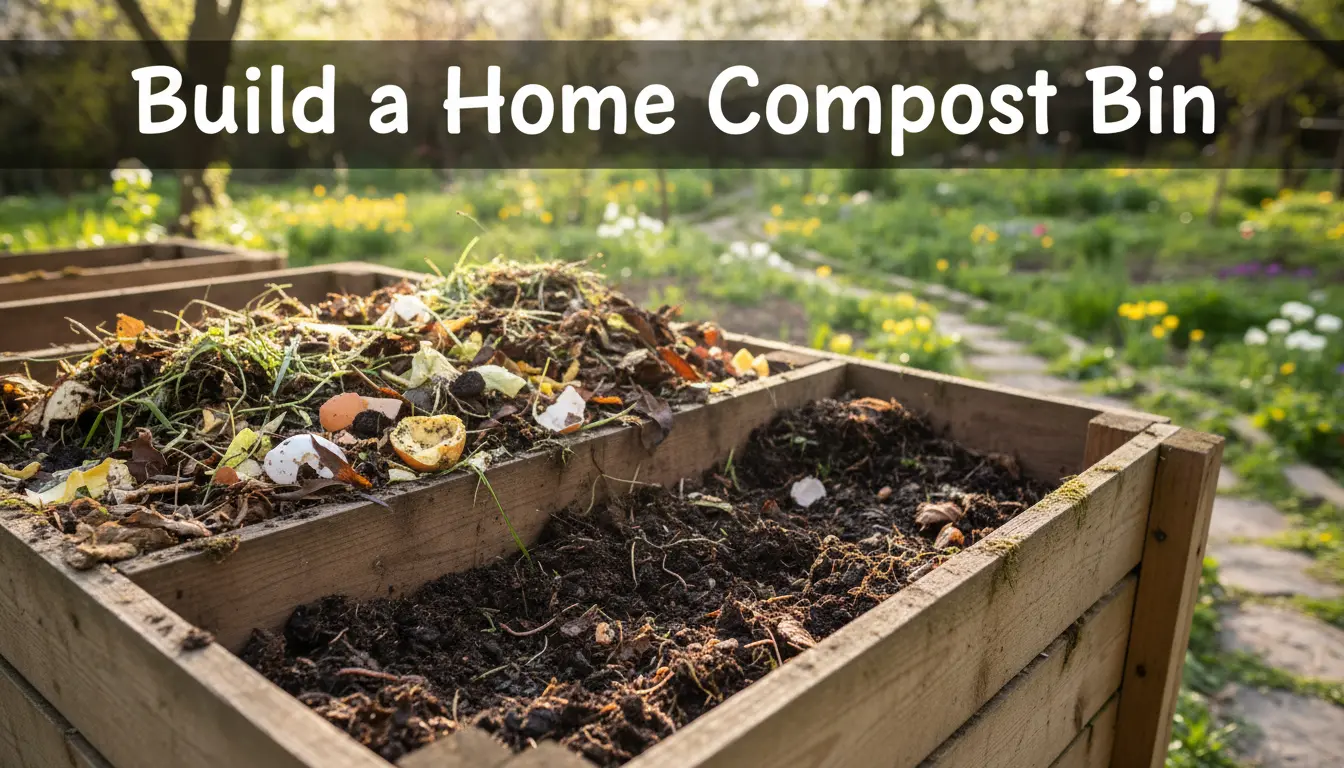
Why build a home compost bin
Building a home compost bin turns kitchen scraps and yard waste into nutrient-rich soil. A simple bin reduces trash, improves garden soil, and saves money on commercial amendments.
This guide explains materials, assembly, placement, maintenance, and troubleshooting so you can start composting quickly and practically.
Materials for a home compost bin
Choose materials that are durable and allow airflow. Common options include wooden pallets, plastic tumblers, wire mesh, or a simple wooden box.
- Wooden pallets or planks (untreated) — low cost and breathable.
- Plastic compost tumbler — easy turning and pest resistant.
- Wire mesh bin — cheap and quick to assemble.
- Basic tools: saw, drill, screws, staple gun, zip ties.
Steps to build a simple wooden home compost bin
This step-by-step method makes one 3-sided bin that is easy to load and turn. It is suitable for beginners and small yards.
- Measure and cut: Cut three wooden panels 3 feet high and 3 feet wide. One side remains open for access.
- Assemble the frame: Attach two side panels to a back panel using screws at the corners. Leave gaps of 1–2 inches between slats for airflow.
- Add a front removable slat: Create a removable slat or hinged door to rake or turn the pile.
- Elevate slightly: Set the bin on small blocks to allow worms and drainage into soil beneath.
- Optional lid: Add a loose-fitting lid or tarp to keep excess rain out while allowing some air exchange.
Choosing the location for your home compost bin
Place the bin on level ground with some shade and easy access to the kitchen or yard. Avoid low spots that collect water.
Good placement helps temperature regulation and makes turning the pile easier during regular use.
What to add to a home compost bin
Balance green (nitrogen) and brown (carbon) materials for an active pile that breaks down efficiently.
- Greens: vegetable scraps, coffee grounds, fresh grass clippings.
- Browns: dry leaves, shredded paper, sawdust, straw.
- Do not add: meat, dairy, oils, diseased plants, or pet waste.
How to maintain your home compost bin
Maintenance is simple: mix, monitor moisture, and keep the right balance. Turn the pile every 1–2 weeks for faster breakdown.
Moisture should feel like a wrung-out sponge. Add water if too dry, or add more brown materials if too wet.
How to turn your home compost bin
Use a pitchfork or garden fork to move the outer material into the center. Turning aerates the pile and prevents odors.
For static bins, use a rake or remove the front slat and mix layers manually until they’re evenly distributed.
Troubleshooting common home compost bin problems
Even simple bins can face issues. Troubleshoot quickly to keep composting effective.
- Bad smells: Add dry browns and turn the pile to add oxygen.
- Slow decomposition: Chop materials into smaller pieces and add greens to boost microbes.
- Pests: Avoid meat and dairy; use a closed tumbler or bury food scraps in the center.
- Too wet: Mix in dry leaves, shredded cardboard, or move to a less rainy spot.
Using finished compost from your home compost bin
Compost is ready when it’s dark, crumbly, and earthy smelling. Sift out large pieces and let them return to the next batch.
Use finished compost as a soil top-dressing, potting mix ingredient, or garden amendment to improve structure and fertility.
Adding a handful of finished compost to a new pile can speed decomposition by introducing active microbes and beneficial organisms.
Small case study: A backyard compost trial
One household of three started a 3-foot wooden compost bin and followed a weekly turning routine. They tracked progress for three months.
After 12 weeks the family had produced usable compost for container plants and reduced their kitchen waste by roughly half. Regular turning and a balanced green-to-brown mix made the difference.
Quick checklist before you start your home compost bin
- Choose a bin type: wooden, tumbler, or wire mesh.
- Select a location with partial shade and good drainage.
- Gather both green and brown materials before filling the bin.
- Plan to turn every 1–2 weeks and monitor moisture.
Final tips for successful home compost bin use
Start small, observe, and adjust your mix. Composting is forgiving; slight imbalances can be corrected quickly with turning and added browns or greens.
With basic care, your home compost bin will deliver free soil amendments and reduce household waste in a few months.