
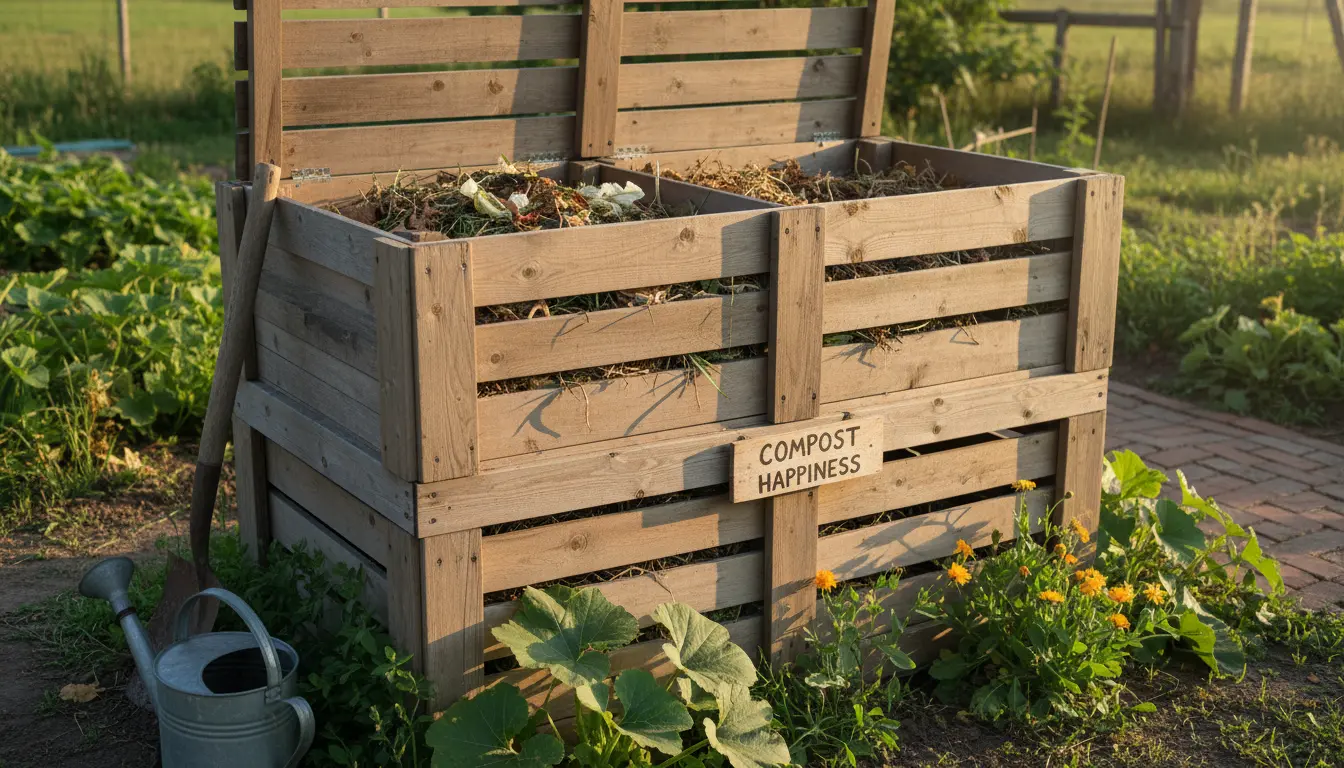
What is composting at home?
Composting at home is the controlled breakdown of organic waste into a nutrient-rich product called compost. It turns kitchen scraps and yard waste into soil conditioner you can use for plants.
Home composting reduces landfill waste and improves garden soil structure and fertility. This guide covers practical steps to start and maintain a successful home compost system.
Choose the right bin for composting at home
Your choice of bin affects how fast and how clean the process will be. Common options include open piles, tumblers, and stationary bins.
- Open pile: cheapest and simple, best for large yards.
- Tumbler: speeds up mixing and aeration, good for small spaces.
- Stationary bin: discreet and low-maintenance, available in many sizes.
Place your bin on soil or grass to allow beneficial organisms to enter and to drain excess liquid.
Preparing the compost pile
Building a balanced pile is key to effective composting at home. Aim for a mix of carbon-rich and nitrogen-rich materials.
Balance materials for composting at home
Use a rough 25–30:1 carbon to nitrogen ratio. This is often described as “browns” and “greens.”
- Greens (nitrogen): vegetable scraps, coffee grounds, fresh grass clippings.
- Browns (carbon): dry leaves, straw, shredded cardboard, paper.
Add materials in layers, and keep pieces small to speed decomposition. Wet the pile lightly so it feels like a wrung-out sponge.
Maintaining your compost
Maintenance focuses on moisture, air, and particle size. These three factors control decomposition speed and odor.
Air and turning
Oxygen is needed for aerobic bacteria. Turn the pile every 1–2 weeks for a hot compost, or less often for slower systems.
Moisture control
Too dry and decomposition slows; too wet and it becomes anaerobic and smelly. Add water if dry, and add browns or improve drainage if too wet.
What not to put in your home compost
Some items should be avoided to prevent pests and slow breakdown.
- Meat, dairy, and oily foods — attract animals and create odors.
- Diseased plants and invasive weeds — may survive the composting process.
- Pet waste from meat-eating animals — can carry pathogens.
Speeding up composting at home
Want finished compost faster? Use these tactics to accelerate breakdown.
- Shred materials: smaller pieces decompose more quickly.
- Maintain a hot pile (131–160°F) by keeping a larger mass and regular turning.
- Add finished compost or garden soil to introduce microbes.
Composting can reduce household waste by up to 30 percent. Well-managed compost piles also capture carbon and improve soil water retention.
Using finished compost
Compost is ready when it is dark, crumbly, and smells earthy. Use it as a soil amendment, mulch layer, or potting mix ingredient.
- Mix 1 part compost with 3 parts soil for planting beds.
- Top-dress lawns or established beds with a thin layer of compost.
- Blend with potting soil to boost nutrients for container plants.
Troubleshooting common issues with composting at home
Problems are usually easy to fix if you monitor basic conditions.
Bad smells
Smells indicate anaerobic conditions. Turn the pile, add browns, and improve drainage.
Pests or rodents
Avoid putting meat or dairy in the bin. Use a sealed tumbler or a rodent-proof bin and bury food scraps inside the pile.
Slow decomposition
Check particle size, moisture, and balance of greens and browns. Turning more often and adding water or microbes can help.
Small real-world example: Backyard compost case
Case: A three-person household in a townhouse started composting at home using a 50-gallon tumbler. They combined kitchen scraps and yard trimmings, shredded cardboard, and turned the tumbler twice a week.
Result: After four months they had dark, crumbly compost used to top-dress vegetable beds. Their weekly trash volume dropped noticeably, and plants showed improved leaf color.
Quick checklist to start composting at home
- Choose a bin type that fits your space and budget.
- Collect browns and greens separately to maintain balance.
- Keep the pile moist and aerated; turn regularly.
- Monitor for pests and avoid problematic items.
- Use finished compost to improve garden soil and reduce fertilizer needs.
Composting at home is practical and low-cost once you set up a simple system. Start small, learn from observation, and adjust the mix and maintenance routine as you go.