
Why start a balcony vegetable garden
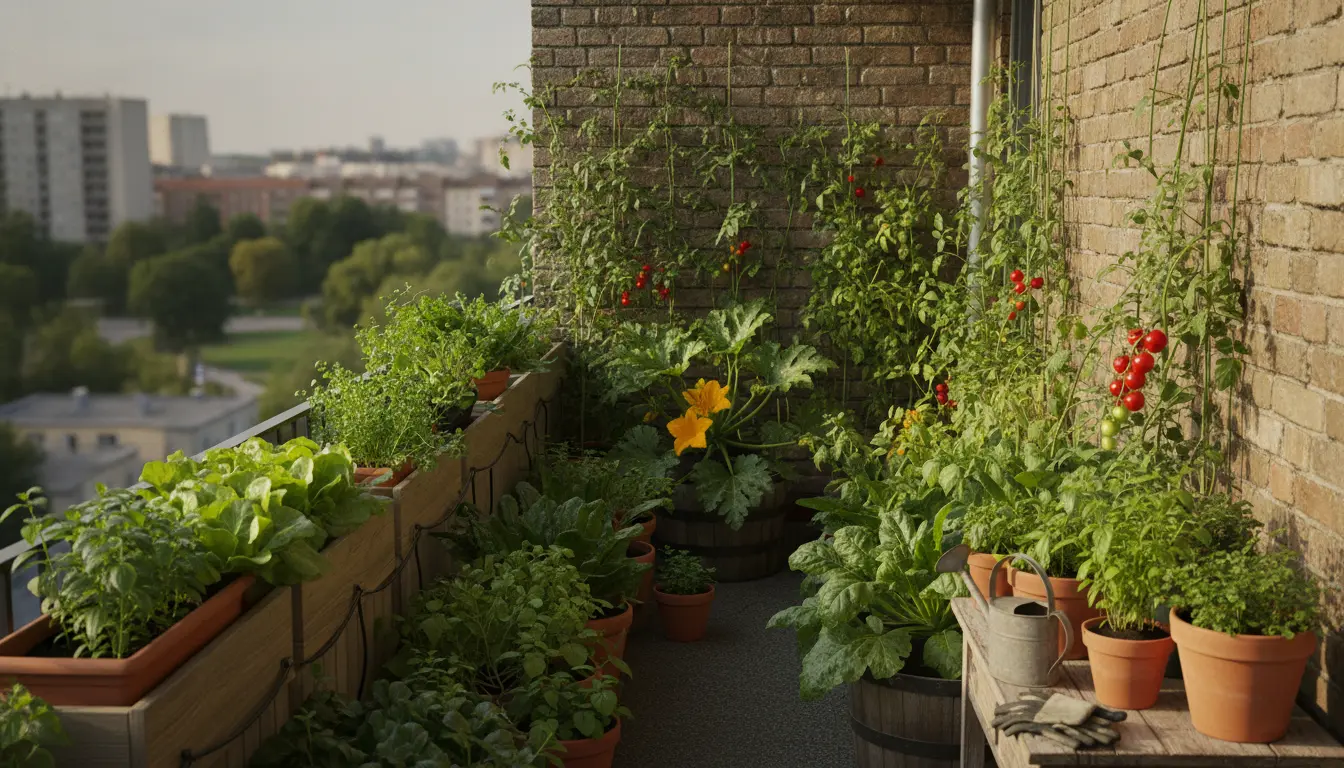
A balcony vegetable garden turns small outdoor space into a productive food source. It saves money, reduces supermarket trips, and gives fresh produce within reach.
This guide shows practical steps for planning, planting, and maintaining a balcony vegetable garden, using containers and simple tools.
How to plan your balcony vegetable garden
Good planning prevents wasted effort. Start by assessing space, light, weight limits, and access to water before buying soil or seeds.
Assess sunlight and balcony conditions
Observe the balcony for several days and note hours of direct sun. Most vegetables need 4–6 hours of sunlight; leafy greens tolerate less.
Check wind exposure and building rules. Heavy winds may require windbreaks and lightweight containers can tip over easily.
Determine space and weight limits
Measure available floor area and railing space for planters. Use lightweight potting mix and plastic or fabric containers to reduce load.
Confirm any building or HOA restrictions on hanging planters or visible structures before installing shelves or trellises.
Choose containers and soil
Select containers with drainage holes and adequate volume. A 5-gallon pot works for tomatoes and peppers, while 1–3 gallon pots suit herbs and lettuce.

Use a high-quality container potting mix with compost and good drainage. Avoid plain garden soil which compacts in pots.
What to plant in a balcony vegetable garden
Pick crops that match your light and space. Choose beginner-friendly, compact, or dwarf varieties labeled for containers.
- Leafy greens: lettuce, spinach, arugula
- Herbs: basil, chives, parsley, mint (mint confined to pots)
- Compact vegetables: cherry tomatoes, bush beans, baby peppers
- Root crops: radishes, baby carrots (deep, narrow pots)
Succession planting and companion choices
Stagger sowing times to extend harvests. Plant fast-maturing crops like radishes between slower growers to maximize space.
Pair compatible plants — for example, basil near tomatoes can improve flavor and use vertical space efficiently.
Planting and care for a balcony vegetable garden
Consistent care is key for container vegetables. Focus on watering, feeding, pruning, and pest monitoring.
Watering and drainage
Containers dry out faster than ground beds. Water deeply until water runs from drainage holes, then allow the top inch of soil to dry slightly.
Consider self-watering pots or a simple drip line to reduce daily chores, especially in hot weather.
Fertilizing and soil health
Container soil loses nutrients more quickly. Use a balanced liquid fertilizer every 2–3 weeks or slow-release granules at planting time.
Top-dress with compost mid-season to maintain fertility and soil structure in pots.
Pest and disease management
Inspect plants weekly for pests such as aphids, whiteflies, and slugs. Remove affected leaves and use insecticidal soap for small outbreaks.
Rotate crops and avoid overcrowding to reduce fungal problems. Good air circulation helps prevent mildew.
Seasonal tips for a balcony vegetable garden
Adjust choices and care to the season. Use cool-season crops in spring and fall; move to heat-tolerant varieties in summer.
- Spring: Start seeds or transplant hardy greens and peas.
- Summer: Increase watering and mulching; choose heat-tolerant peppers and tomatoes.
- Fall: Plant fast-maturing lettuces and brassicas for a second harvest.
- Winter: Use cold frames or bring pots indoors for mild climates.
Small containers can produce as much food per square foot as ground plots when you choose the right varieties and space plants efficiently.
Tools and materials checklist for a balcony vegetable garden
Keep a short list of essentials to get started. This avoids buying unnecessary items and speeds setup.
- Containers (variety of sizes) with drainage
- Quality container potting mix and compost
- Seeds or starter plants labeled for containers
- Watering can or hose with gentle nozzle; optional drip irrigation
- Small hand tools, trellis or stakes for support
Case study: Small balcony, big basil harvest
Maria, a city renter, transformed a 4-foot-wide balcony into a productive garden. She used five 2-gallon pots with potting mix and staggered planting dates.
Within three months she harvested basil, two varieties of lettuce, and cherry tomatoes. Basil produced weekly harvests, saving her roughly $10–15 per week on supermarket herbs during peak season.
Her key steps: choose compact varieties, use a consistent watering schedule, and place pots where they received morning sun.
Common mistakes and how to avoid them
Avoid these frequent errors that reduce yields and increase frustration.
- Overwatering: Leads to root rot. Check soil moisture before watering.
- Wrong soil: Garden soil compacts in pots. Always use potting mix.
- Ignoring light: Mismatched plant and sunlight needs cause poor growth.
- Overcrowding: Reduces airflow and increases disease risk.
Get started with your balcony vegetable garden
Begin small with a few containers and easy crops. Track which varieties do best and scale up each season.
With modest effort and simple supplies, a balcony vegetable garden can provide fresh produce, reduce waste, and add enjoyment to daily life.