
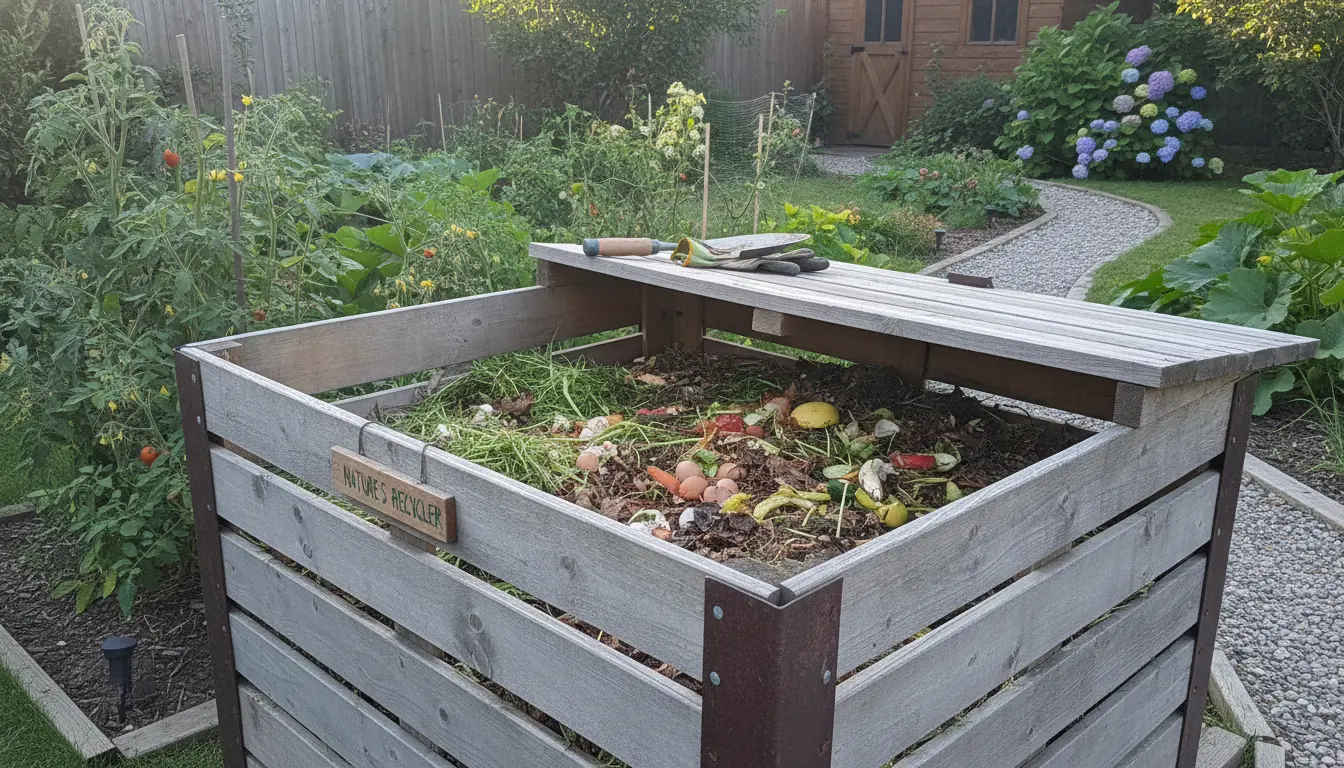
Start Home Composting with Simple Steps
Home composting turns kitchen scraps and yard waste into useful soil amendment. This guide for composting for beginners gives clear, practical steps you can use this week.
Composting reduces household waste by up to 30 percent and returns valuable nutrients to your garden. Small changes at home can cut landfill waste and improve soil health.
Why Home Composting Matters
Home composting for beginners is more than a hobby; it reduces waste and saves money on fertilizer. Compost improves soil structure, water retention, and plant nutrition in lawns, pots, and garden beds.
How to Start Home Composting
Begin by choosing a location and a compost system that fits your space and lifestyle. Composting for beginners should focus on balance: carbon rich materials, nitrogen rich materials, moisture, and airflow.
Choose a Compost Bin for Home Composting
Select a compost bin that suits your space and effort level. Options include tumblers, open bins, and worm (vermicompost) systems; each has pros and cons for beginners.
- Tumbler: faster decomposition, easier turning, good for small yards.
- Open bin: low cost, large capacity, needs manual turning.
- Vermicompost: great for apartments, handles kitchen scraps well, requires worm care.
Composting for Beginners: What to Compost
Know the two main categories: greens (nitrogen) and browns (carbon). A good rule is roughly 2 to 3 parts browns to 1 part greens by volume to maintain balance and reduce smells.
- Greens: vegetable peels, coffee grounds, fresh grass clippings.
- Browns: dry leaves, shredded paper, wood chips, cardboard.
- Avoid: meat, dairy, oils, diseased plants, and pet waste for typical home compost piles.
Layering and Turning Your Compost
Build your pile by layering browns and greens to trap air and manage moisture. Turning the pile every 1–2 weeks speeds decomposition and prevents compacting.
- Add a layer of coarse material for airflow at the base.
- Add alternating layers of greens and browns about 2–4 inches thick.
- Moisten lightly; the pile should feel like a wrung-out sponge.
Troubleshooting Common Problems in Home Composting
New composters often face smells, pests, or slow breakdown. Each problem has simple fixes that keep the system healthy and productive.
Bad Smell
A sour or rotten smell usually means too much green material or poor aeration. Add dry browns, turn the pile to introduce oxygen, and check moisture levels to correct the odor.
Pile Is Too Dry or Too Wet
If decomposition slows, the pile may be too dry; add water and more greens. If it is soggy, add browns and increase turning to improve drainage and aeration.
Pests in the Compost
Raccoons, rodents, or flies are attracted by meat or dairy and uncovered scraps. Remove these items, bury food scraps in the center of the pile, and use closed bins or secure lids in areas with wildlife.
Tools and Supplies for Successful Home Composting
You do not need expensive gear to compost effectively, but a few tools save time and keep the process tidy. Choose items based on your system size and effort preference.
- Pitchfork or compost turner for mixing piles.
- Garden thermometer to monitor internal temperature (optional).
- Kitchen compost pail with a tight lid for collecting scraps.
- Shredder or scissors to cut large materials into small pieces.
Simple Maintenance Schedule for Composting for Beginners
A regular, simple routine prevents problems and speeds composting. Use this schedule to keep your system active without extra effort.
- Daily: Collect kitchen scraps in a small pail; add to bin every few days.
- Weekly: Turn or rotate your pile or tumbler to mix materials and add oxygen.
- Monthly: Check moisture and add browns if needed; harvest finished compost as available.
Real-World Example: Small Backyard, Big Results
Case study: A family of three started home composting with a 55-gallon tumbler and kitchen pail. Over six months they diverted roughly 150 pounds of food and yard waste from the trash and produced about 30 liters of usable compost for vegetable beds.
The family followed a basic schedule: add scraps daily, turn the tumbler weekly, and add shredded leaves monthly. The result was healthier tomatoes and reduced grocery costs for potting mixes and soil amendments.
Final Tips for Composting for Beginners
Start small and build habits: consistent additions and simple turning yield steady results. Monitor balance, avoid problem items, and use finished compost to enrich soil and close the loop on household waste.
Ready to begin home composting? Choose a bin, collect your kitchen scraps, and try a three-layer starter pile this weekend to see how quickly your compost system takes shape.