
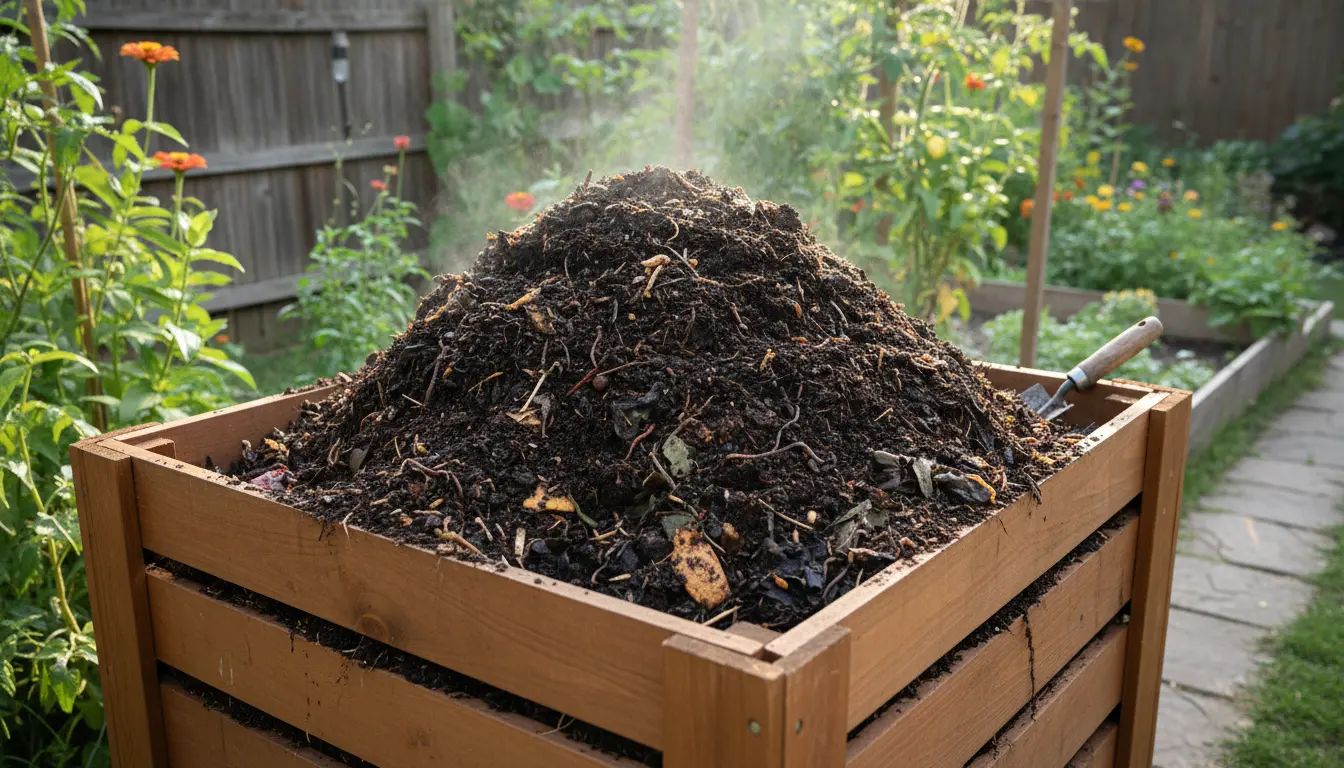
Home composting turns food scraps and yard waste into rich soil that improves garden health. This guide for beginners explains what to compost, how to set up a system, and how to avoid common problems.
Why Choose Home Composting
Home composting reduces household waste and returns nutrients to your soil. It saves money on fertilizers and improves soil structure for healthier plants.
Basic Principles of Home Composting for Beginners
Successful composting relies on a balance of carbon and nitrogen, moisture, and aeration. Aim for a mix of brown materials (carbon) and green materials (nitrogen) and keep the pile damp but not soggy.
What to Compost
- Greens: fruit and vegetable scraps, coffee grounds, fresh grass clippings
- Browns: dry leaves, straw, shredded paper, wood chips
- Small amounts of garden waste: non-diseased plant trimmings
What Not to Compost
- Meat, fish, bones, and dairy: attract pests and cause odors
- Oily or greasy foods: slow decomposition and create smell
- Diseased plants or invasive weeds: risk spreading problems
Choosing a Home Composting System
Select a method that fits your space and time. Options include an open heap, backyard bin, tumblers, or indoor vermicompost (worm bin).
Backyard Bin (Good for Beginners)
A simple bin keeps material contained and is low maintenance. It works well for most urban and suburban homes and requires only occasional turning.
Tumbler (Faster, Less Effort)
Tumblers speed up decomposition because they make turning easy. They are ideal for those who want faster results and less handling of the pile.
Step-by-Step Setup for Home Composting
This basic plan gets you started in under an hour and produces good results with weekly attention.
- Choose a dry, partially shaded spot near your garden or kitchen for convenience.
- Start with a 4-6 inch layer of coarse browns like twigs to improve drainage.
- Add alternating layers: 2-3 inches of greens, then 2-4 inches of browns.
- Moisten each layer so the pile feels like a wrung-out sponge.
- Turn or mix the pile every 1-2 weeks to supply oxygen and speed decomposition.
Maintaining Balance and Avoiding Problems
Watch for common issues and adjust the mix or moisture as needed. Troubleshooting keeps the system healthy and odor-free.
Common Problems and Solutions
- Bad smell: add more browns and aerate the pile.
- Slow decomposition: chop materials smaller and maintain moisture.
- Pests: avoid adding meat and seal the bin or use a tumbler.
Compost can raise beneficial microbial activity and improve soil water retention by up to 20 percent, helping plants survive dry periods.
How to Tell When Compost Is Ready
Finished compost looks dark, crumbly, and smells earthy. Most backyard systems produce usable compost in 3 to 9 months depending on materials and how often you turn the pile.
Using Finished Compost
- Mix into garden beds at planting time to improve soil texture.
- Top-dress lawns or potted plants with a thin layer to add nutrients.
- Make compost tea by steeping compost in water for a nutrient-rich liquid feed.
Small Real-World Case Study
Maria, a homeowner in a small yard, started a backyard bin using kitchen scraps and yard leaves. She followed a weekly turning schedule and added shredded paper as brown material.
Within six months Maria had enough compost to enrich two raised beds. Her tomatoes produced larger fruit and she reduced weekly trash by nearly 40 percent. The key changes were maintaining moisture and chopping scraps small to speed up decomposition.
Simple Tips for Long-Term Success with Home Composting
- Collect kitchen scraps in a small countertop pail to make feeding the bin easy.
- Shred or chop large items to increase surface area and speed breakdown.
- Keep a balance: aim for roughly 3 parts browns to 1 part greens by volume.
- Protect the pile from heavy rain with a simple cover to avoid waterlogging.
Conclusion: Start Small and Learn
Home composting for beginners is straightforward: choose a system, maintain a balance, and troubleshoot problems early. Start with small steps and adjust to your household habits.
With regular attention you will turn waste into a valuable resource for healthier plants and a more sustainable home.