
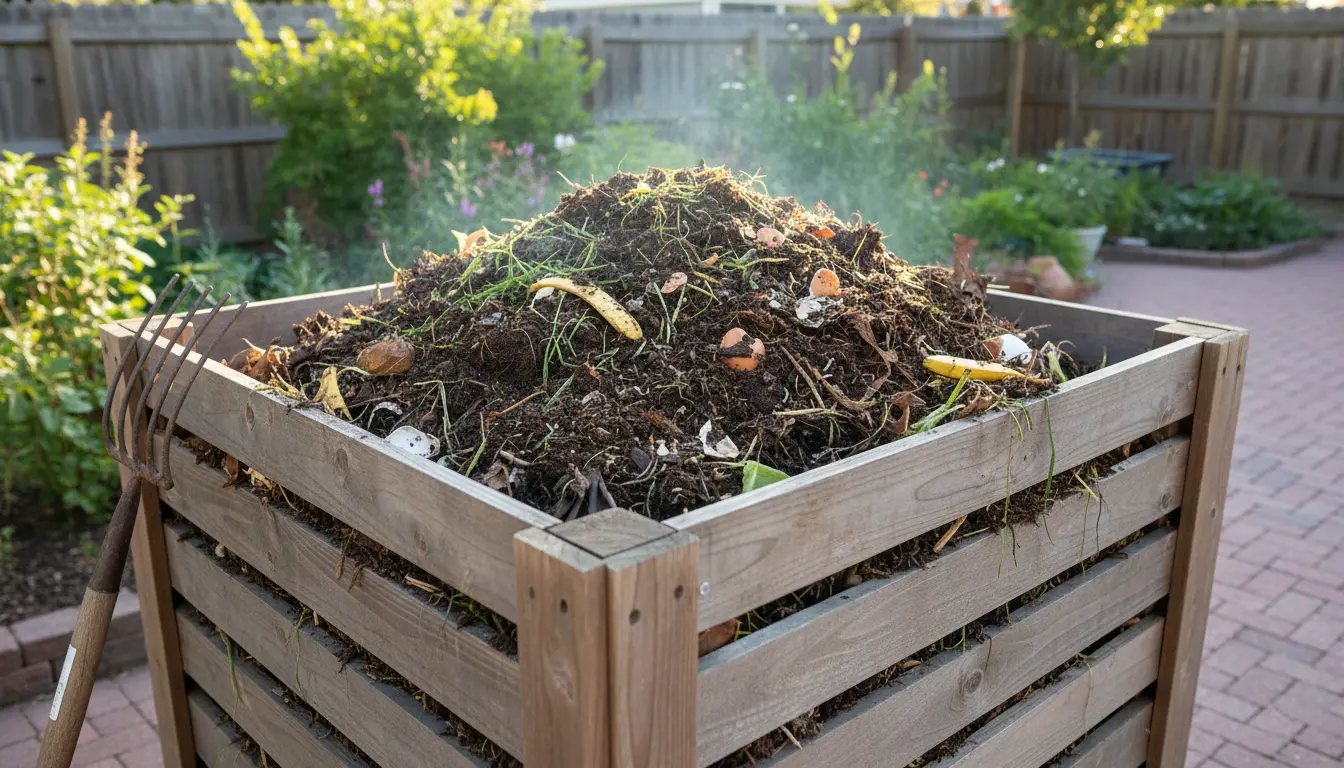
Why Choose Composting at Home
Composting at home reduces kitchen and yard waste while creating a valuable soil amendment. It lowers landfill contribution and improves garden soil structure.
Home composting is simple, affordable, and works on small city balconies as well as larger backyards.
Basic Principles of Composting at Home
Composting is the controlled breakdown of organic material by microbes. The key is balancing carbon “browns” and nitrogen “greens,” moisture, and airflow.
Understanding these basics helps prevent odors and speeds up decomposition.
What to Put in Your Compost
Use a mix of brown and green materials. Browns provide carbon; greens provide nitrogen.
- Greens: fruit and vegetable scraps, coffee grounds, tea bags, fresh grass clippings.
- Browns: dry leaves, shredded paper, cardboard, wood chips, straw.
- Avoid: meat, dairy, oily foods, diseased plants, pet feces, and invasive weeds.
Balance and Moisture
A good target is roughly 2–3 parts browns to 1 part greens by volume. The pile should be as damp as a wrung-out sponge.
Too wet causes smell; too dry slows decomposition. Adjust by adding water or more browns.
Methods for Composting at Home
Choose a method that fits your space, time, and effort level. Here are the common options.
Cold Composting
Cold composting requires little effort: layer materials and let them decompose over 6–18 months. It’s low-maintenance but slower.
Best for: people who want set-and-forget composting with minimal turning.
Hot Composting
Hot composting heats up to 130–160°F (55–70°C) when done right and takes 2–8 weeks. It requires regular turning and a good carbon-nitrogen balance.
Best for: gardeners who want finished compost quickly and want to kill seeds and pathogens.
Vermicomposting (Worm Bins)
Vermicomposting uses red worms (Eisenia fetida) in a contained bin to convert food scraps into worm castings. It works well indoors or on small patios.
Best for: apartment dwellers and small-space gardeners who want high-quality compost for potted plants.
Setting Up Your First Home Compost
Follow these practical steps to start composting at home today.
- Pick a container: a simple bin, tumbler, or a corner of the yard works fine.
- Start with a layer of coarse browns like twigs to improve airflow.
- Add alternating layers of greens and browns, keeping the pile moist.
- Turn the pile every 1–2 weeks for hot composting, or leave for cold composting.
- Harvest finished compost when it is dark, crumbly, and smells earthy.
Troubleshooting Common Problems
Home composting can be trouble-free if you watch for a few signs and adjust accordingly.
- Smelly pile: add more browns and turn to increase airflow.
- Slow decomposition: chop materials smaller and increase greens or moisture.
- Fruit flies: cover food scraps with browns and store kitchen scraps in a sealed container until you add them to the bin.
Composting at home can reduce household waste by up to 30%. Compost improves soil water retention, which may cut garden irrigation needs.
Using Finished Compost
Finished compost is ready when it looks and smells like rich soil. Use it to boost plant growth and soil health.
- Top-dress lawns and garden beds with a 1/4–1/2 inch layer.
- Mix into potting soil at a ratio of 1 part compost to 3 parts soil for potted plants.
- Use as mulch around trees and shrubs to conserve moisture and suppress weeds.
Small Case Study: A Weeknight Family Starts Composting at Home
The Garcia family began composting at home using a 60-liter tumbling bin on a Tuesday evening. They collected kitchen scraps in a sealed counter caddy for one week.
Within two months they had a crumbly, dark compost that they mixed into raised beds. Their garden yield improved and their household reduced landfill waste by roughly 40% the first six months.
Practical Tips to Keep Going with Composting at Home
Make composting a routine: empty your counter caddy every 2–3 days. Keep a stash of dry browns nearby for quick layering.
Record a simple schedule: add scraps, check moisture, and turn weekly if hot composting. Small, consistent actions keep the process healthy.
Where to Learn More
Local extension services and community gardens often run composting workshops. Many cities offer free or subsidized compost bins for residents.
Start small, learn by doing, and adjust methods to your space and goals.
Composting at home turns waste into a resource. With basic steps and small habits, anyone can make valuable compost for healthier soil and less waste.