
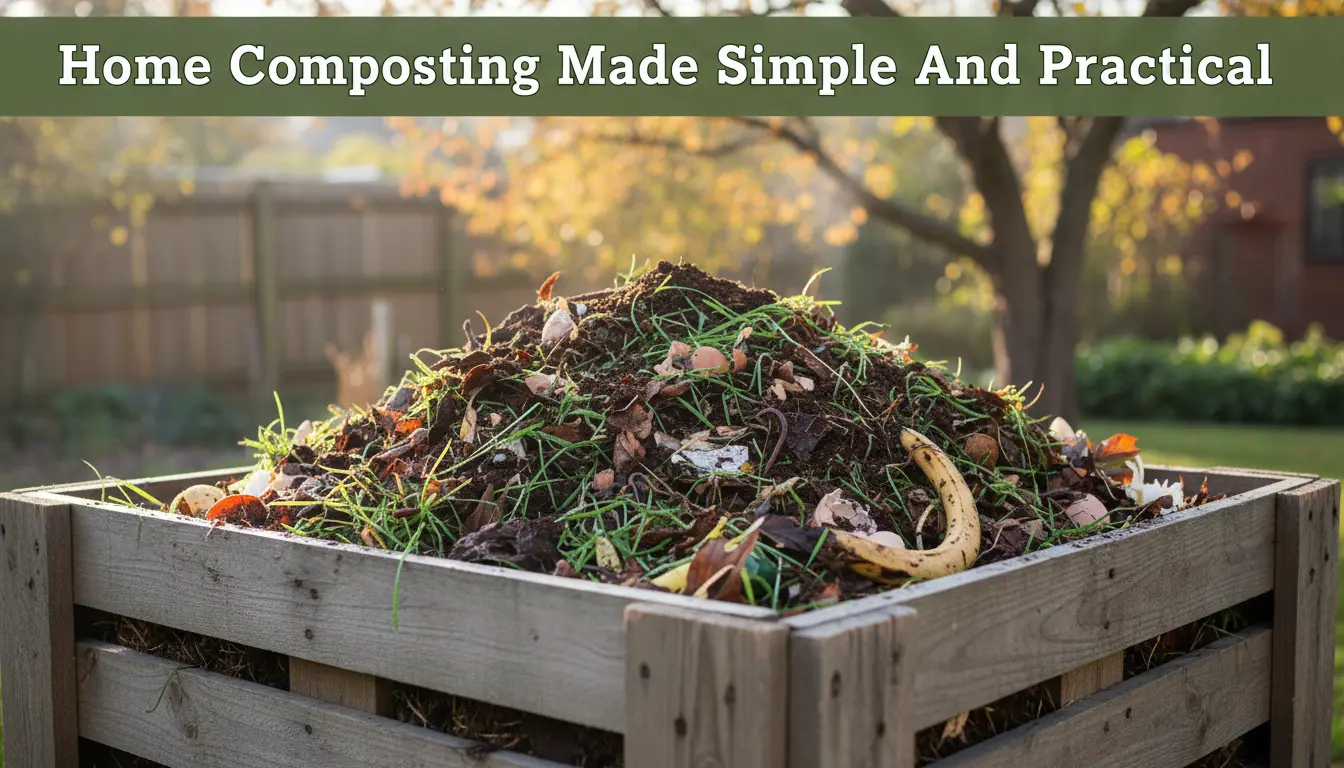
Start Composting at Home: A Practical Overview
Composting at home turns kitchen and yard waste into useful soil material. This guide gives clear steps, methods, and maintenance tips to help you begin with confidence.
Why Home Composting Matters
Home composting reduces household waste and lowers the carbon footprint of organic materials. It also creates nutrient-rich compost that improves soil structure and plant health.
For gardeners and apartment growers alike, composting at home can reduce the need for store-bought fertilizers and improve water retention in soil.
Getting Started With Home Composting
Begin by choosing a composting method that fits your space and routine. Even small apartments can compost with the right system.
Choose a Composting Method
- Cold pile (basic bin): Low effort, good for yard waste and occasional kitchen scraps.
- Hot composting: Faster results, requires turning and monitoring moisture and heat.
- Bokashi: Fermentation method suitable for indoor use and food scraps including cooked food.
- Vermicomposting: Uses worms to break down organic matter; ideal for apartments and small spaces.
Pick a Location and Container
Place a compost bin on soil or a balcony with good drainage. For cold piles, a simple plastic bin or wooden frame works well. Worm bins should stay indoors or in a shaded area to keep them active.
Ensure easy access for adding materials and removing finished compost.
What to Compost at Home
Successful composting balances green (nitrogen) and brown (carbon) materials. Aim for a mix that decomposes steadily without odors.
Good Materials (Greens and Browns)
- Greens: Fruit and vegetable scraps, coffee grounds, fresh grass clippings.
- Browns: Dry leaves, shredded paper, cardboard, straw, wood chips.
Materials to Avoid
- Meat, fish, and dairy (unless using bokashi or hot composting).
- Oily foods and large bones, which attract pests.
- Diseased plants or weeds that have gone to seed.
Maintaining a Healthy Compost Pile
Proper maintenance keeps the pile active and odor-free. Monitor moisture, aeration, and particle size for best results.
Key Maintenance Steps
- Turn or mix the pile every 1–2 weeks for hot composting; less often for cold piles.
- Keep moisture like a wrung-out sponge — damp but not soggy.
- Chop or shred large items to speed up decomposition.
- Cover piles in rainy seasons to prevent excess water.
Composting can divert up to 30% of household waste from landfills. Finished compost can improve garden soil by increasing nutrient content and water retention.
How to Tell When Compost Is Ready
Finished compost looks dark, crumbly, and earthy-smelling. Small pieces of original material may remain, but most should be decomposed into a uniform texture.
Depending on the method, compost can be ready in 2 months (hot) to a year (cold).
Using Finished Compost
Use finished compost as a soil amendment, top dressing, or potting mix ingredient. Blend 1–3 parts soil with 1 part compost for seedlings and potted plants.
Spread a 1–2 inch layer of compost around established plants to improve nutrient availability and soil structure.
Troubleshooting Common Problems
Odor, pests, or slow decomposition are common but fixable issues. Adjust materials, moisture, and aeration to correct problems quickly.
Quick Fixes
- Bad smell: Add more browns and turn the pile to increase oxygen.
- Pests: Avoid meat and dairy, secure the bin, or use a closed tumbler.
- Slow breakdown: Chop materials smaller, add greens to boost nitrogen, or switch to hot composting.
Small Real-World Case Study
Case: Two-bedroom apartment in Portland. The tenants started a small vermicompost bin under their kitchen sink. They added vegetable scraps and shredded paper daily.
After four months they produced enough compost to top up two balcony planters. Their weekly trash volume dropped by 40% and their tomatoes showed better growth.
Simple Weekly Routine to Keep Composting at Home
- Collect kitchen scraps in a small counter pail.
- Empty scraps into your bin 2–3 times a week, alternating with browns.
- Check moisture and turn or aerate once per week for fast composting.
- Harvest finished compost as needed for plants.
Final Tips for Successful Home Composting
- Start small and choose a method you will maintain regularly.
- Keep a good balance of greens and browns for steady decomposition.
- Be patient—composting is a process and improves with practice.
Composting at home is an easy, practical step toward waste reduction and healthier plants. With a little routine and the right setup, most households can start composting within a week.