
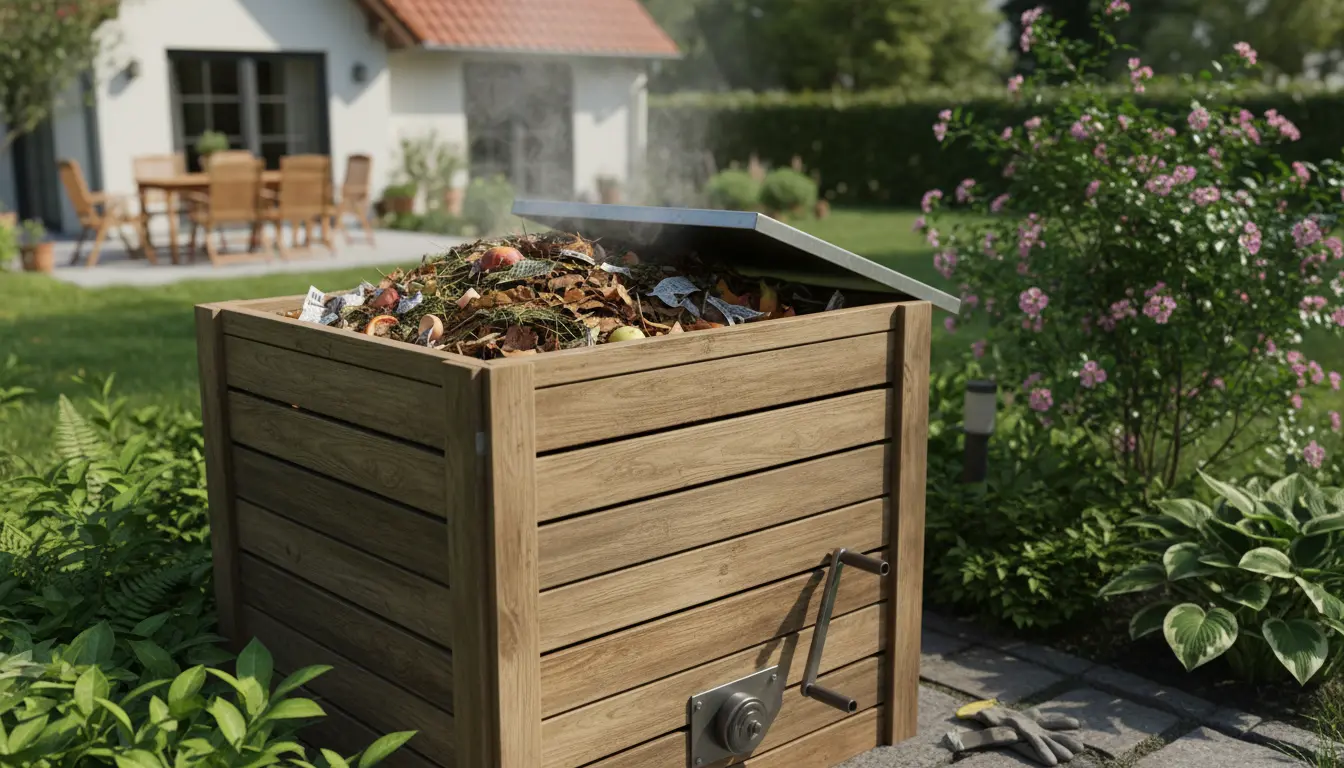
Composting at home is a practical way to reduce kitchen waste and produce rich soil for gardens or houseplants. This guide on home composting for beginners gives clear steps, common pitfalls, and how to use finished compost effectively.
Why Home Composting Helps
Home composting for beginners turns organic waste into a valuable resource. It reduces landfill waste, lowers methane emissions, and improves soil structure when applied to beds or containers.
Understanding these benefits helps you stay motivated as you learn the basic routine and troubleshooting steps.
How to Start Home Composting
Starting composting at home is straightforward: pick a system, balance materials, manage moisture and aeration, and monitor progress. Each step affects speed and odor control.
Choose a Compost System
Decide on a compost method that suits your space and schedule. Options include:
- Open pile for larger yards and speedy results.
- Compost bin for tidy, contained composting in small yards.
- Tumbler for faster mixing and easier turning.
- Bokashi or worm bins for apartments or indoor composting.
Pick the right container and place it on soil or a flat surface that drains well.
Balance Greens and Browns
Home composting for beginners often fails when the mix is off. Aim for a balance of nitrogen-rich “greens” and carbon-rich “browns.”
- Greens: fruit and vegetable scraps, coffee grounds, fresh grass clippings.
- Browns: dry leaves, straw, shredded paper, cardboard.
A good starting ratio is about 2–3 parts browns to 1 part greens by volume. Adjust if the pile is too wet or smells.
Aeration and Moisture
Compost microbes need oxygen and moisture to break down material. Turn the pile every 1–2 weeks with a pitchfork or use a tumbler to mix contents.
Keep the pile damp like a wrung-out sponge. Too dry and decomposition slows; too wet and it smells.
What to Avoid in Home Composting
Some items cause pests or slow decomposition and should be avoided in a typical backyard bin.
- Meat, fish, dairy, and greasy foods (unless using a specialized hot compost system).
- Diseased plants, weed seed heads, and invasive roots.
- Pet waste and treated wood.
Compost can reach temperatures over 130°F in hot systems, which helps kill weed seeds and pathogens. Most home bins operate at lower temperatures but still produce excellent soil amendments over time.
How to Use Finished Compost
Finished compost looks dark, crumbly, and earthy-smelling. Use it as a soil amendment, mulch, or potting mix ingredient.
Practical uses include:
- Mix 1–3 inches into garden beds to improve structure and nutrients.
- Top-dress lawns or container plants to slowly release nutrients.
- Blend with potting soil at a 10–30% ratio for seedlings and transplants.
Common Problems and Fixes in Home Composting
Beginners often face odors, pests, or slow decomposition. These issues are usually easy to fix once identified.
- Smelly pile: Add more browns, mix to add air, and check moisture.
- Pests: Bury food scraps deeper, use a closed bin, or try a kitchen counter compost pail with a tight lid.
- Slow breakdown: Chop materials into smaller pieces, increase greens slightly, and turn more often.
Monitoring Progress
Home composting for beginners improves with simple observation. Expect partial decomposition within weeks and finished compost in 3–12 months depending on method.
Track color, smell, and texture to judge readiness. It should no longer resemble original scraps.
Simple Weekly Routine
Set a small routine to keep composting manageable and consistent.
- Add kitchen scraps and cover with browns each time.
- Turn the pile or rotate the tumbler every 1–2 weeks.
- Check moisture weekly and adjust as needed.
- Harvest finished compost from the bottom as available.
Small Real-World Case Study
Case study: Sarah, a renter with a balcony garden, started home composting using a small worm bin. She began with food scraps and shredded newspaper, feeding the bin weekly.
Within four months she harvested about 10 liters of worm castings and used them to top-dress two balcony planters. Her tomato plants showed fuller foliage and better fruit set the following season.
This example shows small-scale home composting can yield measurable benefits even without a backyard.
Final Tips for Home Composting Beginners
Start small, keep the mix balanced, and be consistent with turning and moisture checks. Expect a learning curve and adjust based on what your pile teaches you.
Most importantly, make composting a simple habit: a small change each day leads to steady results and healthier soil.