
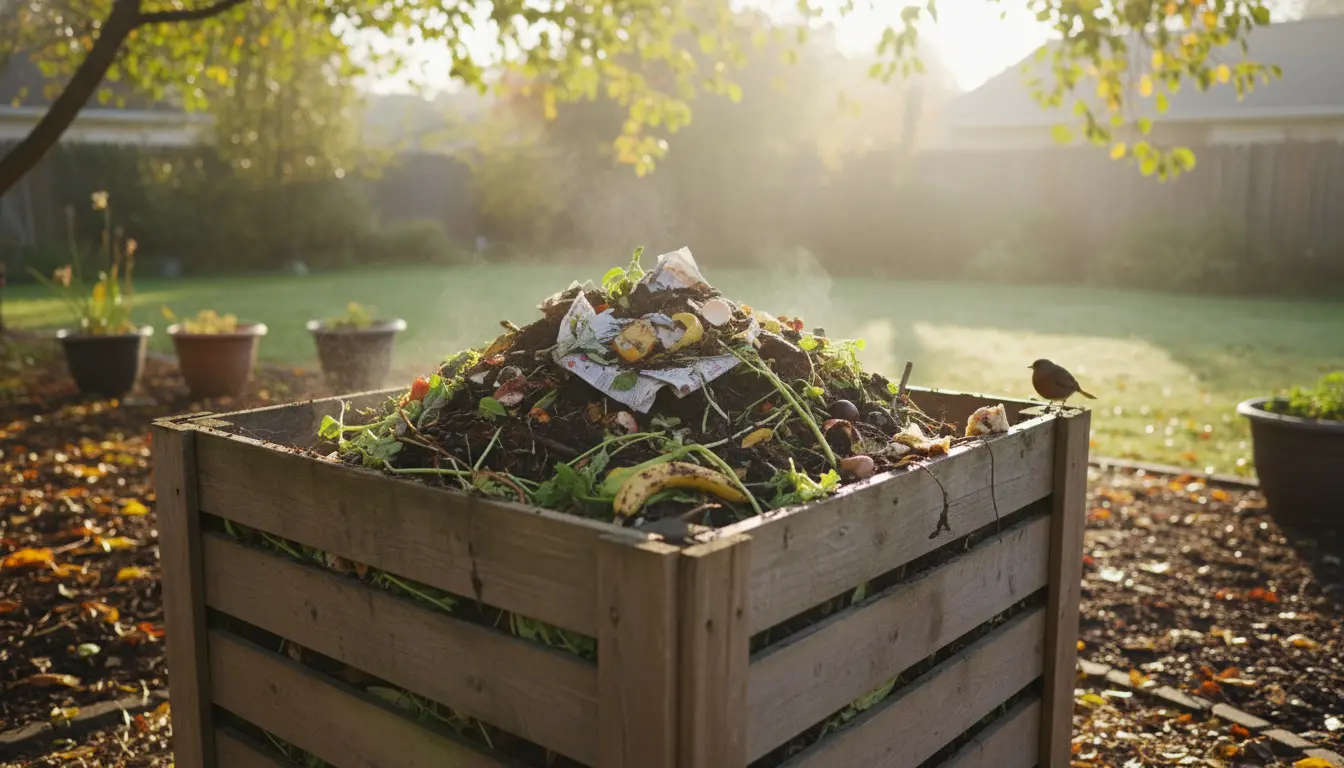
Why Home Composting for Beginners Is Worth It
Home composting reduces household waste and creates a free soil amendment for gardens and houseplants. The process turns kitchen scraps and yard waste into nutrient-rich compost that improves soil structure and water retention.
For beginners, composting is a low-cost, low-effort method to close the organic loop at home. This guide gives practical steps and troubleshooting tips so you can start composting today.
Home Composting for Beginners: Choosing the Right Method
There are several composting methods suited to different living situations. Choose one that fits your space, time, and effort level.
- Backyard compost bin: Good for gardens and households with yard waste.
- Compost tumbler: Faster turning, cleaner, and less attractive to pests.
- Vermicomposting (worms): Ideal for apartments or small spaces and produces rich worm castings.
- Bokashi: Fermentation method for kitchens, handles meat and dairy in sealed systems.
Home Composting for Beginners: What to Compost
Understanding what to add is essential. A balanced mix of carbon and nitrogen materials feeds microbes that break down organic matter.
- Greens (nitrogen): vegetable scraps, fruit peels, coffee grounds, fresh grass clippings.
- Browns (carbon): dry leaves, straw, shredded cardboard, paper, wood chips.
- Water: Keep the pile damp like a wrung-out sponge to support microbial activity.
Avoid adding diseased plants, pet waste, oils, and large amounts of meat or dairy unless using Bokashi or an industrial composting service.
Home Composting for Beginners: How to Build a First Pile
Start with a base layer of coarse browns to allow airflow. Alternate layers of greens and browns to maintain balance.
For a simple backyard bin:
- Place a 6-8 inch brown base (twigs or straw).
- Add a 3-4 inch layer of greens (kitchen scraps).
- Cover greens with a layer of browns to reduce odor and flies.
- Turn or mix the pile every 1-2 weeks to introduce oxygen.
Home Composting for Beginners: Bins, Location, and Size
Choose a bin roughly 3x3x3 feet for efficient heat retention. Smaller piles may compost more slowly.
Place the bin on soil to allow beneficial organisms and worms access. A partially shaded spot keeps the pile from drying out or overheating.
Maintaining Your Compost: Key Practices
Consistent maintenance helps the pile decompose quickly and without problems. Focus on balance, moisture, and aeration.
- Balance greens and browns. Aim for roughly 1 part greens to 2-3 parts browns by volume.
- Moisture control. Add water during dry periods and add dry browns when too wet.
- Turn the pile. Aerate weekly or biweekly to speed decomposition and prevent odors.
Home Composting for Beginners: Troubleshooting Common Problems
Many issues are easy to fix with simple adjustments.
- Smelly pile: Add more browns and turn the pile to introduce oxygen.
- Pests or rodents: Avoid adding meat and dairy; use a closed bin or secure tumbler.
- Slow decomposition: Chop materials small, increase greens, or maintain heat by enlarging the pile.
Composting can reduce household waste by up to 30 percent. Finished compost can improve soil water retention by 20 percent, helping plants survive dry spells.
Home Composting for Beginners: Using Finished Compost
Finished compost is dark, crumbly, and earthy smelling. It should not show recognizable food scraps and should be cool to the touch.
Use finished compost in several ways:
- Top-dress lawns and garden beds to improve fertility.
- Mix with potting soil for container plants.
- Work into vegetable beds in spring to boost organic matter.
Home Composting for Beginners: Real-World Example
Case study: A small urban gardener started a 60-liter tumbler on a balcony. They added kitchen scraps and shredded paper, turning the tumbler twice weekly.
After three months, the gardener had dark, fine compost used to top up potted tomatoes. The plants yielded larger fruit and required less watering that season.
Tools and Supplies for Home Composting for Beginners
Start with minimal tools and add as needed. Simple supplies make the process easier and cleaner.
- Compost bin or tumbler
- Pitchfork or compost aerator for turning
- Kitchen caddy or container for collecting scraps
- Shredder or scissors to chop large materials
Final Tips for Home Composting for Beginners
Be patient. Composting is a biological process that can take weeks to months depending on method and maintenance.
Start small and learn. Track what you add, note problems, and adjust the mix. Small changes yield steady improvement and long-term benefits for your garden and the environment.