
Starting a vegetable garden is a practical way to grow fresh food, save money, and enjoy time outdoors. This guide gives clear, step-by-step instructions you can use in a small yard, balcony, or community plot.
Plan Your Vegetable Garden
Choose a spot with at least 6 hours of direct sunlight per day. Most vegetables need full sun to produce well.
Decide on the garden type: in-ground, raised beds, or containers. Each works for different spaces and budgets.
Pick Vegetables to Start
Begin with easy crops: tomatoes, lettuce, radishes, beans, and herbs. These give quick feedback and build confidence.
- Tomatoes: need support and 6–8 hours of sun.
- Lettuce: grows fast and tolerates partial shade.
- Radishes: harvest in 3–6 weeks.
- Beans: good for vertical space and soil nitrogen.
- Herbs (basil, parsley): low maintenance and useful in the kitchen.
Prepare Soil for a Vegetable Garden
Good soil is the most important factor for success. Test the soil if possible to check pH and nutrient levels.
Amend heavy clay with compost and coarse sand for drainage. Add compost or well-rotted manure to sandy soil to improve water retention.
How to Build Raised Beds
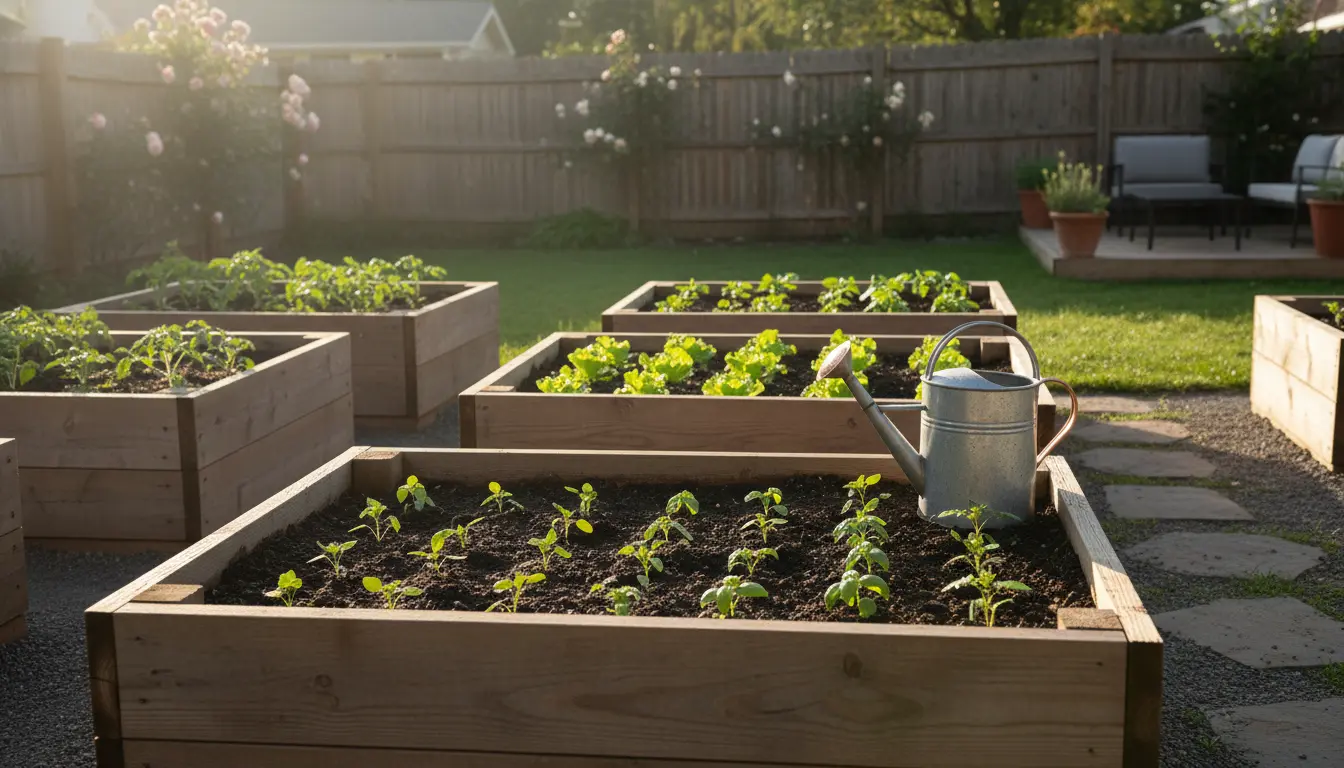
Raised beds warm faster and reduce compaction. Build frames from untreated wood or recycled materials.
- Choose a bed size no wider than 4 feet so you can reach the center from both sides.
- Fill with a mix of topsoil and compost (60% topsoil, 40% compost) or a dedicated raised-bed mix.
- Water the soil to settle it before planting.
Planting: Timing and Technique
Follow local frost dates to decide when to plant. Use seed packets and plant labels as a guide for depth and spacing.
Start seeds indoors for long-season crops like tomatoes, or sow directly for quick crops like radishes and beans.
Companion Planting Tips
Use simple companion rules to maximize space and reduce pests. For example, plant basil near tomatoes to improve flavor and deter pests.
Watering and Feeding Your Vegetable Garden
Consistent moisture is key. Water deeply once or twice a week rather than light daily sprinkling to encourage strong roots.
Mulch around plants to retain moisture and suppress weeds. Use organic mulch like straw, leaves, or wood chips.
Fertilizer Guidelines
Use balanced fertilizers or compost tea. Most vegetables benefit from a side dressing of compost mid-season.
- Vegetative crops (lettuce, spinach) prefer higher nitrogen.
- Fruit-bearing crops (tomatoes, peppers) need more phosphorus and potassium during fruit set.
Pest and Disease Management for Vegetable Garden
Inspect plants weekly for signs of pests or disease. Early detection makes management easier.
Use nonchemical methods first: hand-pick pests, row covers, beneficial insects, and crop rotation.
Common Problems and Simple Solutions
- Aphids: spray with strong water stream or introduce ladybugs.
- Slugs: use beer traps or copper barriers.
- Blight: remove infected leaves and avoid overhead watering.
Harvesting and Storage
Harvest vegetables at peak ripeness for best flavor and nutrition. Regular harvesting often encourages more production.
Store produce properly: leafy greens in cool, moist conditions; tomatoes at room temperature until ripe.
Succession Planting to Extend Harvest
Plant quick crops every 2–3 weeks to keep a steady supply. Replace early crops with warm-season plants as the season progresses.
Some vegetables, like lettuce and radishes, can be harvested just a few weeks after sowing, making them ideal for beginner gardeners who want quick results.
Small Case Study: A Beginner’s Vegetable Garden
Maria, a first-time gardener in a small urban yard, built two 4×4 raised beds. She filled them with a 60/40 topsoil-compost mix and planted tomatoes, lettuce, beans, and basil.
She watered deeply twice weekly and mulched with straw. After three months she harvested continuous lettuce, several tomato plants producing fruit, and beans that climbed a simple trellis.
Her key wins: small bed sizes for easy maintenance, a short list of easy crops, and consistent watering.
Quick Checklist to Start a Vegetable Garden
- Choose sunny location (6+ hours sun)
- Select garden type: in-ground, raised bed, container
- Test and amend soil with compost
- Start with 4–6 easy crops
- Mulch and water consistently
- Inspect weekly for pests and diseases
- Practice succession planting for continuous harvest
Final Tips for New Vegetable Gardeners
Start small and expand as you gain experience. A compact, well-tended garden is more productive than a large, neglected one.
Keep notes: record planting dates, varieties, and yields. Simple records help improve decisions next season.
With basic planning, good soil, and regular care, you can start a vegetable garden that supplies fresh food and satisfies your interest in growing plants. Begin with small steps, learn from each season, and enjoy the process.