
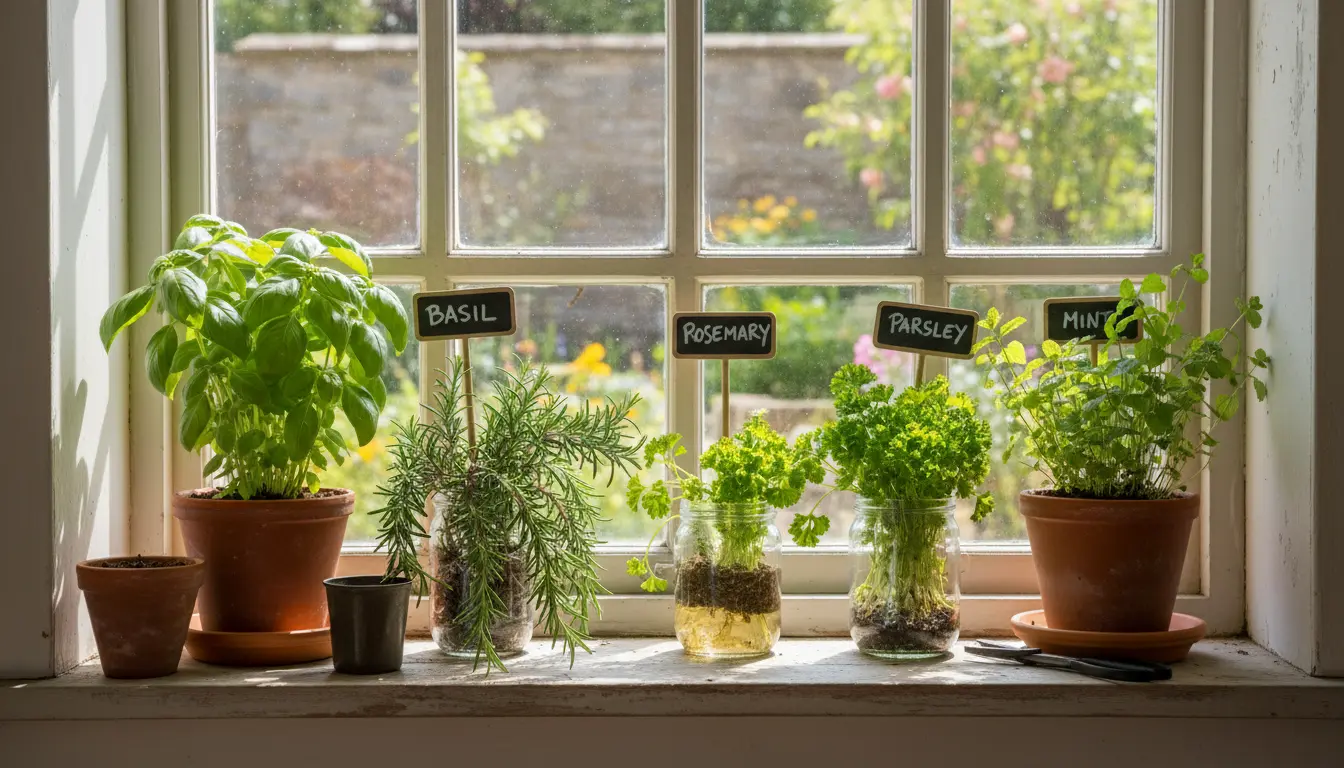
Why an indoor herb garden matters
An indoor herb garden is a practical way to have fresh flavors year-round and reduce trips to the store. Herbs also improve kitchen aesthetics and can be grown in small spaces.
This guide shows the basic steps to start and maintain an indoor herb garden so you get usable herbs with minimal fuss.
Choose the right location for your indoor herb garden
Most culinary herbs need bright light. A south- or west-facing windowsill is ideal where plants get 4–6 hours of direct or strong indirect light.
If you lack natural light, use a full-spectrum LED grow light aimed at the plants for 10–12 hours daily. Keep lights 6–12 inches above the foliage.
Key location factors for an indoor herb garden
- Light: 4–12 hours depending on herb and light source.
- Temperature: 60–75°F (16–24°C) is comfortable for most herbs.
- Airflow: Gentle circulation prevents mold and pests—avoid drafty spots.
Pick the best herbs for beginners
Select herbs known for forgiving growth habits. Start with a small selection of fast-growing, low-maintenance varieties.
- Basil — great for warm, sunny spots and frequent harvests.
- Mint — vigorous and forgiving; best in its own container.
- Parsley — tolerates moderate light and regular watering.
- Thyme — prefers drier soil and bright light.
- Chives — compact, hardy, and useful fresh or cooked.
Containers and soil for an indoor herb garden
Use containers with drainage holes to avoid root rot. Size depends on the herb; most herbs thrive in 4–8 inch pots.
Choose a well-draining potting mix designed for containers. Avoid garden soil, which compacts and retains too much moisture indoors.
Container tips for success
- Use saucers to catch excess water and protect surfaces.
- Consider self-watering pots if you travel or forget waterings.
- Use separate pots for aggressive herbs like mint to prevent spreading.
Watering and feeding your indoor herb garden
Watering frequency varies by herb, pot size, and light. Check soil moisture by inserting a finger 1 inch into the soil; water when the top inch is dry.
Most herbs prefer slightly drier conditions than constant wetness. Overwatering is a common cause of failure—better to err on the side of slightly dry.
Fertilizing schedule
Feed herbs lightly with a balanced liquid fertilizer every 4–6 weeks during the growing season. Reduce feeding in winter when growth slows.
Pruning and harvesting to encourage growth
Regular harvesting keeps herbs productive. Pinch back stems to promote bushiness and prevent flowering for many culinary herbs.
When herbs begin to flower, flavor often declines. Trim flower buds to extend leaf production for cooking.
Pest and disease basics for an indoor herb garden
Indoors, common issues include spider mites, aphids, and fungal problems from high humidity. Inspect plants weekly for pests.
- Wipe leaves with a damp cloth to remove dust and pests.
- Use insecticidal soap for light infestations.
- Improve airflow and reduce humidity to prevent mildew.
Many herbs are more flavorful when grown indoors under steady conditions because stress from inconsistent outdoor weather can reduce essential oil production.
Simple care schedule for an indoor herb garden
- Daily: Check light and rotate pots weekly for even growth.
- Every 3–4 days: Check soil moisture and water when top inch is dry.
- Monthly: Fertilize lightly during active growth months.
- As needed: Prune and harvest to maintain shape and flavor.
Small real-world case study
Case: Sarah, a city renter, started an indoor herb garden on a 3-foot windowsill with basil, chives, and mint.
She used 6-inch terracotta pots, a commercial potting mix, and a clip-on full-spectrum LED light for 10 hours nightly. She watered when the top inch felt dry and fed the plants once a month.
Within 8 weeks Sarah harvested fresh basil for four meals a week and had a steady supply of chives. Mint grew faster than expected, so she moved it to a separate pot to prevent crowding.
Sarah’s takeaways: light and drainage mattered most, and regular harvesting increased yields.
Troubleshooting common problems in your indoor herb garden
Yellowing leaves often indicate overwatering or poor drainage. Reduce watering and check pot holes.
Leggy plants signal insufficient light—move closer to the window or add a grow light and prune back long stems to encourage bushiness.
Quick start checklist for your indoor herb garden
- Choose 3–5 beginner herbs (basil, mint, chives, parsley, thyme).
- Find a bright spot or get a full-spectrum LED.
- Use well-draining potting mix and pots with drainage holes.
- Water when the top inch is dry; fertilize monthly.
- Harvest regularly and monitor for pests.
Starting an indoor herb garden is an achievable project that yields fresh ingredients and a more vibrant kitchen. With the right light, containers, and simple care, you can maintain healthy herbs year-round.