
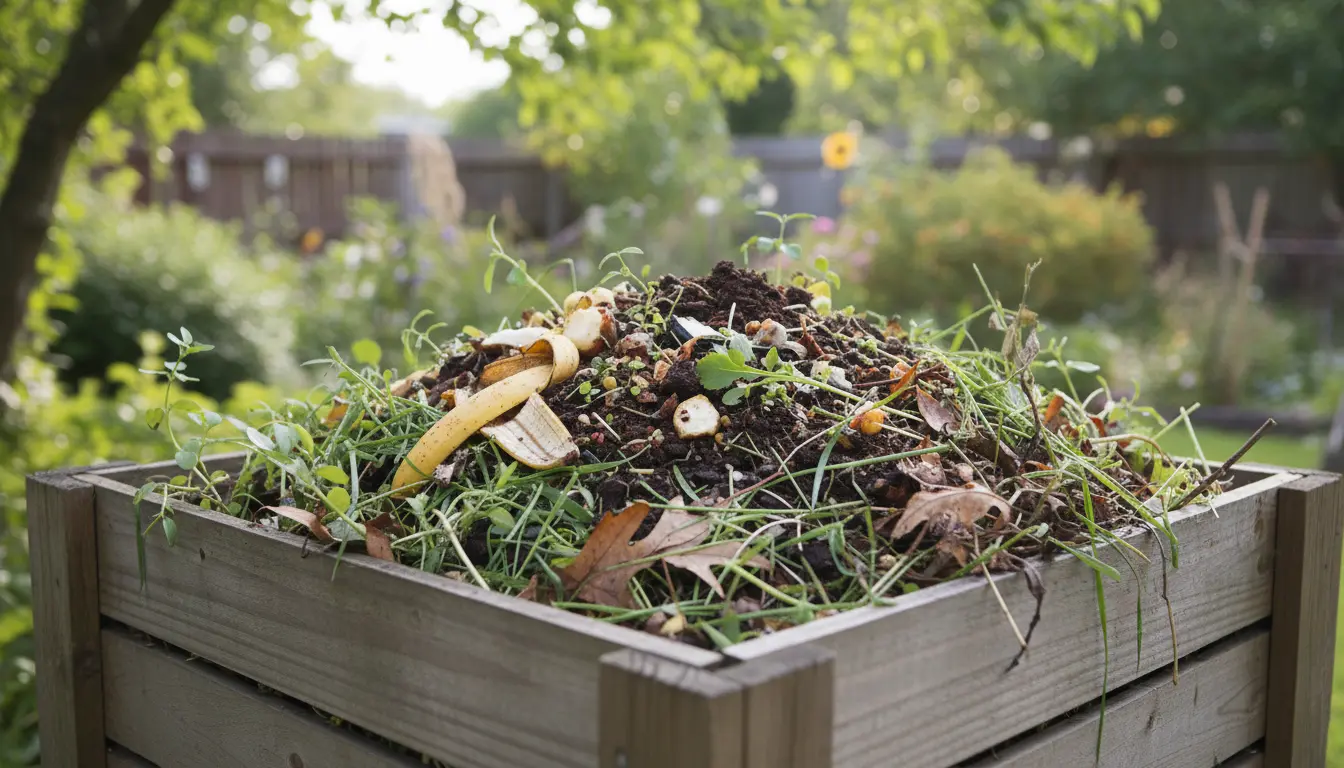
Composting at home turns kitchen scraps and yard waste into a useful soil amendment. This guide shows practical, step-by-step methods to set up and manage a home compost system.
Getting Started with Home Composting
Choose a location for your compost that is convenient and has good drainage. A level, partly shaded spot near a water source is ideal for frequent maintenance.
Decide whether you want a simple pile, a bin, or a tumbler. Each option affects how often you turn the compost and how quickly it breaks down.
Choosing a Compost System
Home composting systems vary by space, effort, and desired speed. Pick one that fits your routine and living situation.
- Compost pile: Best for large yards and gardeners who don’t mind occasional turning.
- Open or closed bin: Keeps the area tidy and deters pests. Good for most homeowners.
- Tumbler: Speeds up decomposition with easy turning; useful for small yards and patios.
- Vermicompost (worm bins): Indoor option for kitchen scraps, producing rich worm castings quickly.
What to Compost
Balance carbon-rich “browns” with nitrogen-rich “greens” for faster decomposition. Aim for roughly a 30:1 carbon-to-nitrogen ratio by volume.
- Greens (nitrogen): vegetable and fruit scraps, fresh grass clippings, coffee grounds, tea leaves.
- Browns (carbon): dry leaves, straw, shredded paper, cardboard, woody prunings.
- Do not compost: meat, dairy, oils, diseased plants, or pet waste from carnivores.
Simple Mix Example
Combine one bucket of kitchen scraps (greens) with two to three buckets of shredded leaves or cardboard (browns). Moisture and aeration complete the setup.
Managing Your Compost
Good composting requires attention to three things: aeration, moisture, and particle size. Small, mixed pieces decompose faster than large chunks.
Aeration and Moisture
Turn the pile every 1–2 weeks to add oxygen and speed breakdown. Use a pitchfork or a tumbler to mix materials and prevent compacting.
Moisture should feel like a wrung-out sponge. If the pile is dry, sprinkle water when turning. If it’s soggy or smells, add more browns and increase turning.
Compost Temperature and Time
Active piles heat to 120–160°F (50–70°C), which kills many weed seeds and pathogens. Not all home systems reach these temperatures; they still produce usable compost but may take longer.
Typical composting times range from 2 months (hot, well-managed) to a year (slow, passive). Screen or sift finished compost to remove larger unbroken pieces for further decomposition.
Troubleshooting Common Problems
Successful home composting often requires small adjustments. Identify the problem, change one variable, and monitor results for a week or two.
- Bad odor: Add more browns, turn the pile, and reduce moisture.
- Slow decomposition: Chop larger materials, increase greens, or improve aeration.
- Pests: Avoid adding meat or dairy and use a closed bin or secure lid.
- Excess heat but dry center: Turn and add water evenly while mixing outer layers inward.
Small Case Study: Neighborhood Vegetable Plot
Maria, a city homeowner with a small backyard, started a 3-bin compost setup. She collected kitchen scraps and office paper, and added yard trimmings weekly.
Within six months of regular turning and balancing greens and browns, Maria produced rich compost for her raised vegetable beds. Her tomato yields increased, and she reduced weekly trash by one bag.
Practical Tips for Successful Home Composting
Establish simple routines to keep composting manageable and effective. Small habits create consistent results over time.
- Keep a covered countertop container for kitchen scraps and empty it into the outdoor bin every 2–3 days.
- Shred or chop materials to speed decomposition and improve mixing.
- Layer materials rather than dumping one type on top of another to maintain balance.
- Test compost maturity: dark, crumbly material with an earthy smell indicates readiness to use.
Using Finished Compost
Apply finished compost as a top dressing for lawns, mixed into potting soil, or worked into garden beds. It improves soil structure and water retention.
For seedlings and transplants, blend compost up to 20–30% with garden soil or potting mix to avoid burning young roots.
Home composting is a practical, low-cost way to cut waste and boost garden health. Start small, learn by doing, and scale your system as your needs grow.