
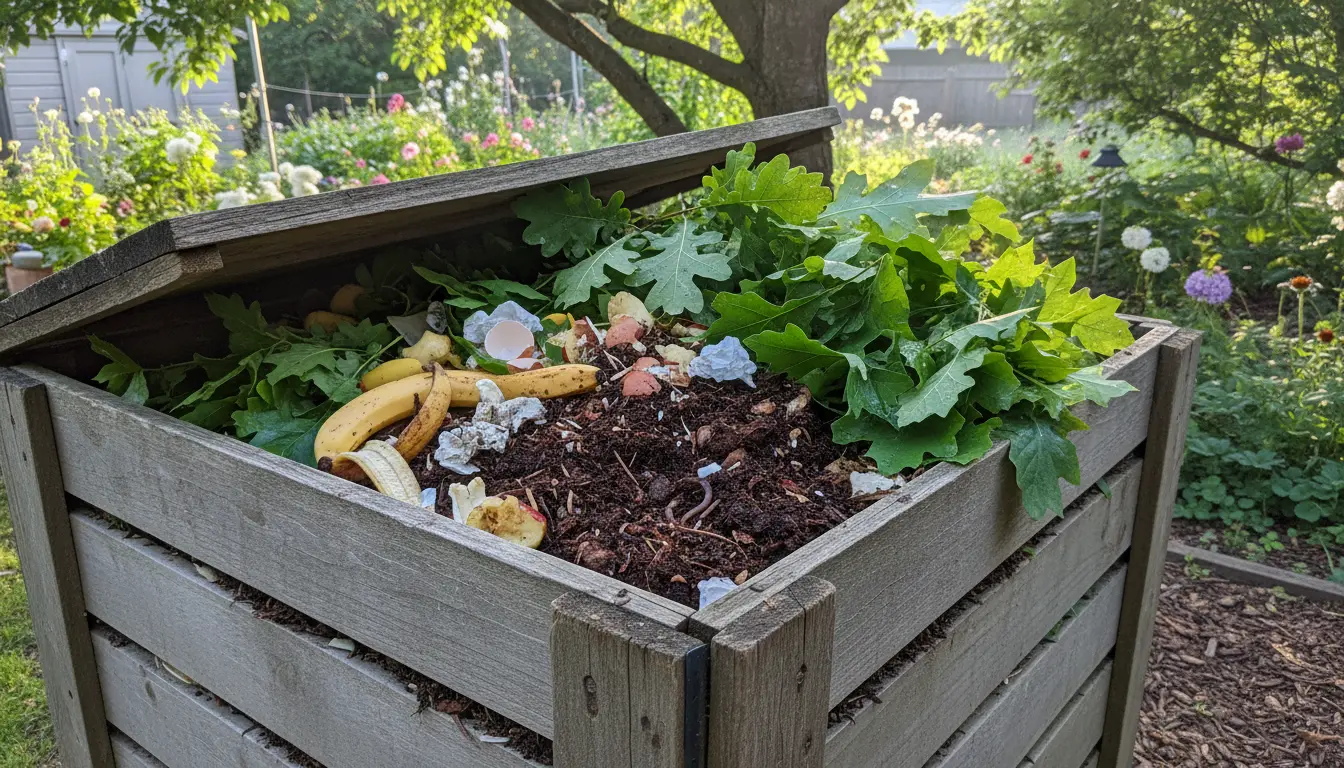
Why home composting matters
Home composting reduces kitchen and garden waste while returning nutrients to soil. It saves landfill space and cuts greenhouse gas emissions from organic waste.
For beginners, composting is a low-cost way to improve garden health and close the loop on household food scraps.
What is home composting
Home composting is the controlled decomposition of organic materials like vegetable scraps, yard trimmings, and paper. Microbes, worms, and fungi break these materials down into a dark, crumbly product called compost.
Compost improves soil structure, retains moisture, and supplies slow-release nutrients for plants.
What you need for home composting
You can compost in a simple bin, a tumbler, or a small pile. Choose a setup that fits your space: in-ground, balcony bokashi, or a countertop container for pre-composting.
Basic items to have on hand:
- Compost bin or container
- Kitchen bucket for scraps
- Garden fork or turning tool
- Carbon materials (brown): dry leaves, shredded paper
- Nitrogen materials (green): fruit and vegetable scraps, fresh grass clippings
Step-by-step home composting for beginners
1. Pick a location and container
Place the bin on soil where possible to allow organisms to enter. For apartments, use sealed countertop bins for collection and a small outdoor container or pickup service.
2. Start with a base layer
Begin with coarse brown material like twigs or straw. This improves drainage and airflow at the bottom of the bin.
3. Add materials in layers
Alternate thin layers of green and brown materials. Aim for roughly a 2:1 ratio of browns to greens by volume to avoid odors.
4. Maintain moisture and airflow
Compost should feel like a wrung-out sponge — moist but not soggy. Turn the pile every 1–2 weeks to introduce oxygen and speed decomposition.
5. Know when compost is ready
Finished compost is dark, crumbly, and smells earthy. Depending on method and materials, this can take from 2 months in a hot system to a year in a passive pile.
Troubleshooting common beginner problems
Problems usually come from too much moisture, lack of oxygen, or imbalance between browns and greens. Fixes are simple and fast.
- Bad smell: Add dry brown material and turn the pile to add air.
- Too dry: Add water and green materials, cover to retain moisture.
- Slow decomposition: Chop materials smaller and turn more often.
Types of home composting explained
Choose a method that fits your lifestyle and space. Here are common options with quick points:
- Open pile: Low cost, needs space and regular turning.
- Compost bin: Neater and compact, range of sizes available.
- Tumbler: Easy turning, faster breakdown but smaller capacity.
- Bokashi: Fermentation method for small spaces and meat/dairy scraps.
- Vermicompost (worms): Great for apartments and produces nutrient-rich worm castings.
Composting one ton of food waste can prevent the release of about 0.5 tons of CO2 equivalent methane compared with landfilling. Small household efforts add up across neighborhoods.
Practical tips for beginners
- Chop or shred larger items to speed decomposition.
- Keep a small sealed bin in the kitchen for scraps to reduce trips outside.
- Balance greens and browns visually if you don’t have scales.
- Use finished compost as mulch, soil amendment, or in potting mixes.
Small case study: Apartment balcony composting
Emma lives in a city one-bedroom and started composting with a small worm bin on her balcony. She used a 20-liter tumbling bin to collect pre-composted scraps, then fed her worms weekly.
Within six months she produced enough compost to top-dress her balcony planters and reduce her household trash by 30 percent. She fixed a fruit fly issue by covering food scraps with shredded paper and keeping the bin sealed.
Examples of what to compost and avoid
Accepted materials:
- Vegetable and fruit scraps
- Coffee grounds and tea bags
- Eggshells (crushed)
- Dry leaves, shredded paper, cardboard
Avoid or limit:
- Meat, dairy, and oily foods unless using bokashi or a hot system
- Diseased plants, persistent weeds, or chemically treated wood
- Pet waste from carnivores
Next steps for confident composting
Start small and observe. Keep a simple log of what you add and how the pile responds for the first two months.
Join local composting groups or municipal programs for tips, seed materials, and community support.
Home composting is practical and flexible. With a little attention to balance, moisture, and airflow, beginners can turn household waste into valuable compost and support healthier gardens.