
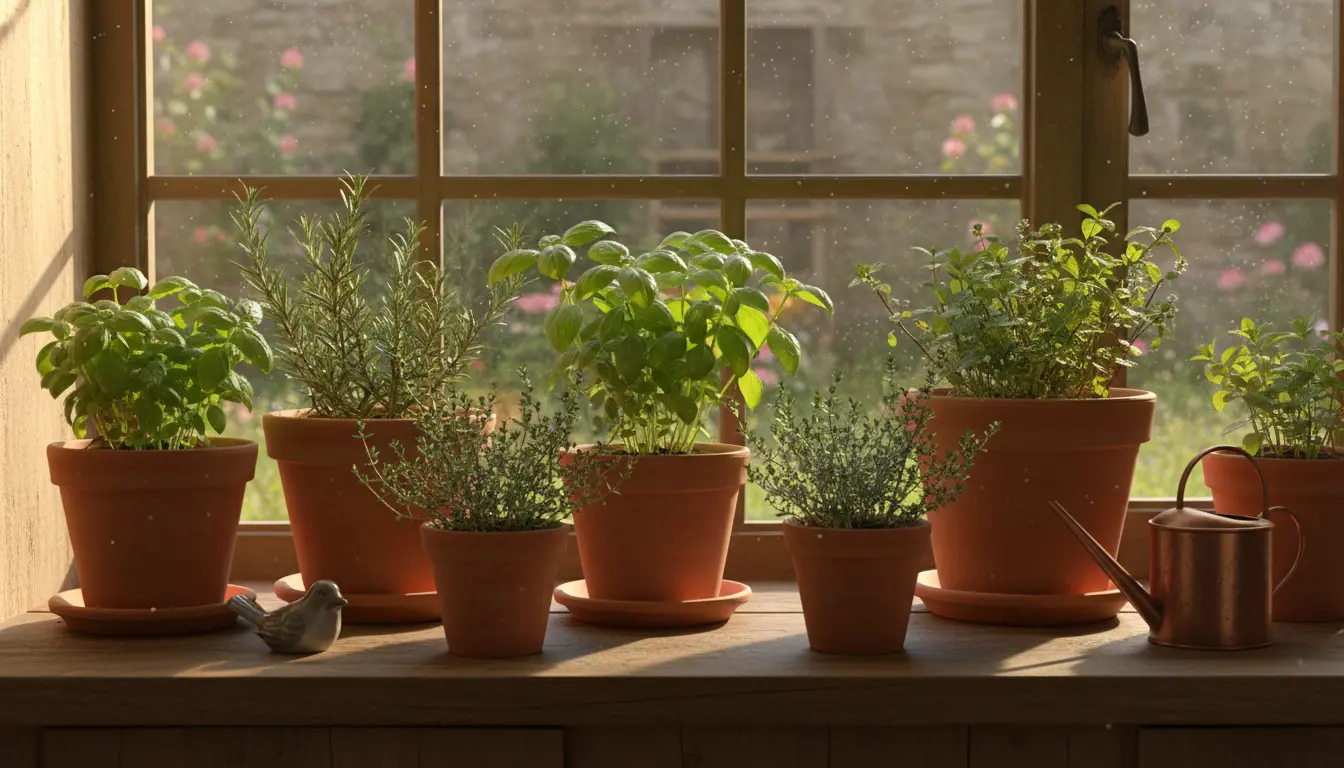
Why Grow Indoor Herbs
Growing indoor herbs lets you harvest fresh flavor year-round and reduces trips to the store. Indoor herb gardening is space-efficient and works in apartments, kitchens, and small homes.
With the right setup you can have continuous basil, mint, parsley, and more. This guide explains how to grow indoor herbs successfully with simple, repeatable steps.
Essential Requirements to Grow Indoor Herbs
Indoor herbs need three basics: light, water, and suitable soil. Meeting these needs prevents common problems like leggy growth, yellow leaves, or root rot.
Start by selecting herb varieties that tolerate indoor conditions and plan your containers and location accordingly.
Light for Indoor Herbs
Most culinary herbs need 6 to 8 hours of bright light each day. A sunny south- or west-facing window is ideal for many herbs.
When natural light is insufficient, use a 12-inch LED grow light positioned 6–12 inches above the plants. Timers help maintain consistent light cycles.
Water and Drainage
Herbs prefer evenly moist but well-drained soil. Water when the top inch of soil feels dry, and avoid letting pots sit in standing water.
Choose pots with drainage holes and use trays to catch excess. Overwatering is the leading cause of indoor herb failure.
Soil and Fertilizer
Use a light, well-draining potting mix formulated for containers. Add perlite or pumice for extra drainage if the soil feels dense.
Feed herbs with a balanced liquid fertilizer at half strength every 4–6 weeks during active growth. Slow-release pellets are another low-maintenance option.
Best Indoor Herbs to Grow
Some herbs adapt better to indoor life. Choose varieties known for compact growth and forgiving conditions.
- Basil — fast-growing and great for windowsills with lots of light.
- Parsley — tolerates medium light and provides long harvests.
- Mint — thrives in containers and tolerates lower light but can be vigorous.
- Chives — compact and forgiving, ideal for small pots.
- Cilantro — prefers cooler indoor spots and regular harvesting.
How to Grow Indoor Herbs: Step-by-Step
Follow a clear routine to establish and maintain healthy herbs. The steps below work whether you start from seed or small nursery plants.
Step 1: Choose the Right Container
Select pots with drainage holes and a volume matching the herb’s root system. For most herbs, 6–8 inch pots are a good starting point.
Use lightweight containers for easy repositioning and avoid overly large pots that retain excess moisture.
Step 2: Planting and Placement
Fill the pot with quality potting mix and plant seeds or transplants at the recommended depth. Firm soil gently and water to settle roots.
Place containers near a bright window or under grow lights and rotate pots weekly to ensure even growth.
Step 3: Prune and Harvest Correctly
Regular harvesting encourages bushy growth. Pinch back growing tips and harvest no more than one-third of the plant at a time.
Remove flowers on herbs like basil to keep leaves flavorful. For herbs like mint, trim back to prevent legginess.
Common Problems and Quick Fixes for Indoor Herbs
Being able to diagnose issues quickly helps you keep herbs productive. Check plants weekly for signs of stress.
- Leggy growth — increase light and pinch back stems to promote bushiness.
- Yellow leaves — reduce watering and check drainage; consider repotting in fresh soil.
- Pest spots — wipe leaves with mild soapy water and isolate affected plants.
Some herbs like mint and oregano release natural oils that can repel certain household pests. Keeping these herbs near windows or doors can add a subtle protective benefit.
Small Real-World Case Study
Case Study: A city apartment cook grew three basil plants on a sunny windowsill. Using 6-inch pots, a cheap LED light, and weekly pruning, the cook harvested fresh basil every 7–10 days.
Over 12 months the grower reported saving roughly $120 on store-bought basil, reduced food waste, and a steady supply for pesto and salads. Simple consistency delivered reliable results.
Practical Tips to Maximize Success
Implement a short routine to keep herbs thriving. Small actions repeated weekly make the biggest difference.
- Set a watering day to check soil moisture consistently.
- Trim regularly to prevent bolting and encourage new leaves.
- Group herbs with similar light and water needs together for easier care.
- Start with hardy varieties if you are new to indoor gardening.
Conclusion: Grow Indoor Herbs with Confidence
Growing indoor herbs is practical and rewarding with minimal space and low cost. Focus on light, drainage, and consistent care to keep herbs productive.
Start small, learn the needs of each herb, and expand as you gain confidence. Fresh herbs at your fingertips are an easy way to elevate everyday meals.