
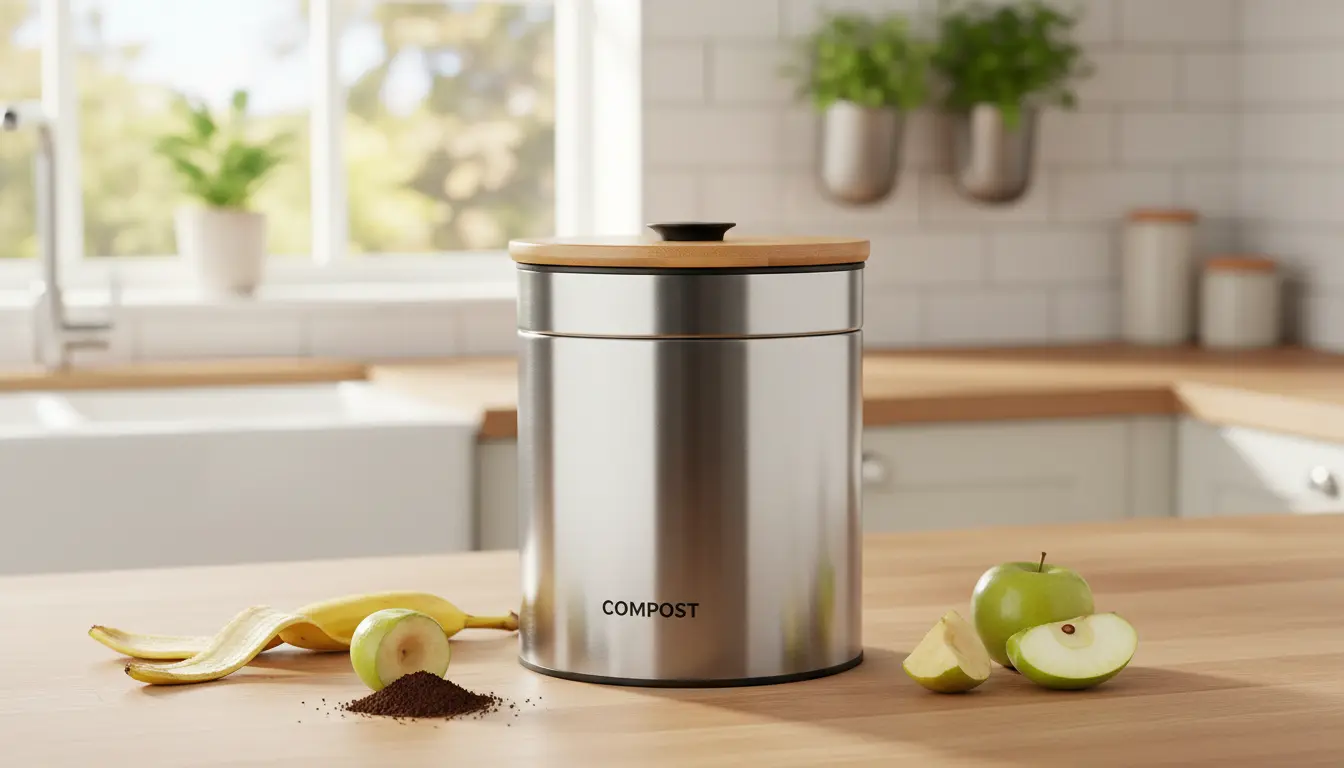
Why Home Composting for Beginners Matters
Composting turns kitchen and yard waste into nutrient-rich soil. It reduces garbage, cuts methane emissions from landfills, and improves garden health.
This guide gives clear, step-by-step instructions to start and maintain a simple home composting system. It focuses on practical choices for small spaces and busy schedules.
Choose the Right Composting Method
Pick a method that fits your living situation. Options include a backyard pile, a bin, a tumbler, or an indoor worm bin. Each has different space, odor, and maintenance needs.
- Backyard pile: Low cost, needs space and turning.
- Compost bin: Contained, easier to manage for neighbors.
- Tumbler: Faster breakdown, convenient turning.
- Worm bin (vermicompost): Great for apartments, produces rich castings.
Simple Setup for a Home Composting Bin
For many beginners a covered bin is the best start. Place it on soil or a flat surface with some drainage. A 3×3 foot bin size works for typical households.
Key components: a container, brown materials, green materials, moisture, and occasional turning.
Home Composting Basics: What to Add
Balance ‘greens’ and ‘browns’ to keep the pile active. Greens provide nitrogen. Browns provide carbon. A good rule is about 2 to 3 parts browns to 1 part greens by volume.
- Greens: fruit and vegetable scraps, coffee grounds, fresh grass clippings, tea leaves.
- Browns: dried leaves, shredded paper, cardboard bits, straw, small wood chips.
- Do not add: meat, dairy, oils, diseased plants, or pet waste from carnivores.
Layering and Moisture
Start with a layer of coarse browns at the bottom for airflow. Alternate greens and browns in 2 to 4 inch layers. Keep the pile damp like a wrung-out sponge.
If it is too wet, add more browns and turn. If it is too dry, add water and more greens.
Maintaining the Compost Pile
Regular maintenance shortens the time to finished compost. Turn the pile every 1 to 2 weeks to introduce oxygen and speed decomposition.
Temperature is a good indicator. Warm piles (100 to 140°F or 38 to 60°C) break down quickly and kill many weed seeds.
Troubleshooting Common Problems
- Bad smell: Usually too wet or too many greens. Add browns and turn the pile.
- Pile not heating: Too small or too dry. Add greens, water, and insulate if cold outside.
- Lots of fruit flies: Bury fresh fruit scraps under a layer of browns or switch to a covered bin.
How to Know When Compost Is Ready
Finished compost is dark, crumbly, and smells earthy. Pieces of original material should be mostly unrecognizable.
Time to finish depends on method and maintenance. With regular turning, compost can be ready in 2 to 3 months. Passive piles may take 6 to 12 months.
Using Finished Compost
Apply compost as mulch, mix it into garden beds, or use it for potting mixes. A 1 to 2 inch layer of compost on beds improves soil structure and water retention.
Compost is safe for most plants. For seedlings or sensitive plants, mix compost with garden soil rather than using it alone.
Composting a ton of food waste can prevent as much as 0.5 to 1 ton of CO2 equivalent emissions compared with sending that waste to landfill. Small actions add up fast.
Small Real World Example
Case Study: Maria, a city renter, started a 10-gallon worm bin under her kitchen sink. She collected coffee grounds, fruit peels, and shredded paper. Within three months she produced two gallons of rich worm castings.
She mixed the castings into potted herbs and noticed stronger growth and fewer watering needs. The worm bin eliminated most of her kitchen waste and required about 10 minutes of care per week.
Quick Start Checklist for Home Composting for Beginners
- Choose a bin or method that fits your space.
- Gather basic supplies: browns, greens, water, a pitchfork or turning tool.
- Layer materials and maintain moisture like a wrung-out sponge.
- Turn every 1 to 2 weeks for faster results.
- Use finished compost to improve soil and reduce fertilizer needs.
Final Tips
Start small and expand as you get comfortable. Track what you add and how the pile reacts to learn faster.
Community resources such as local extension offices or gardening groups can provide region-specific advice. Composting is practical and scalable, and anyone can start today.