
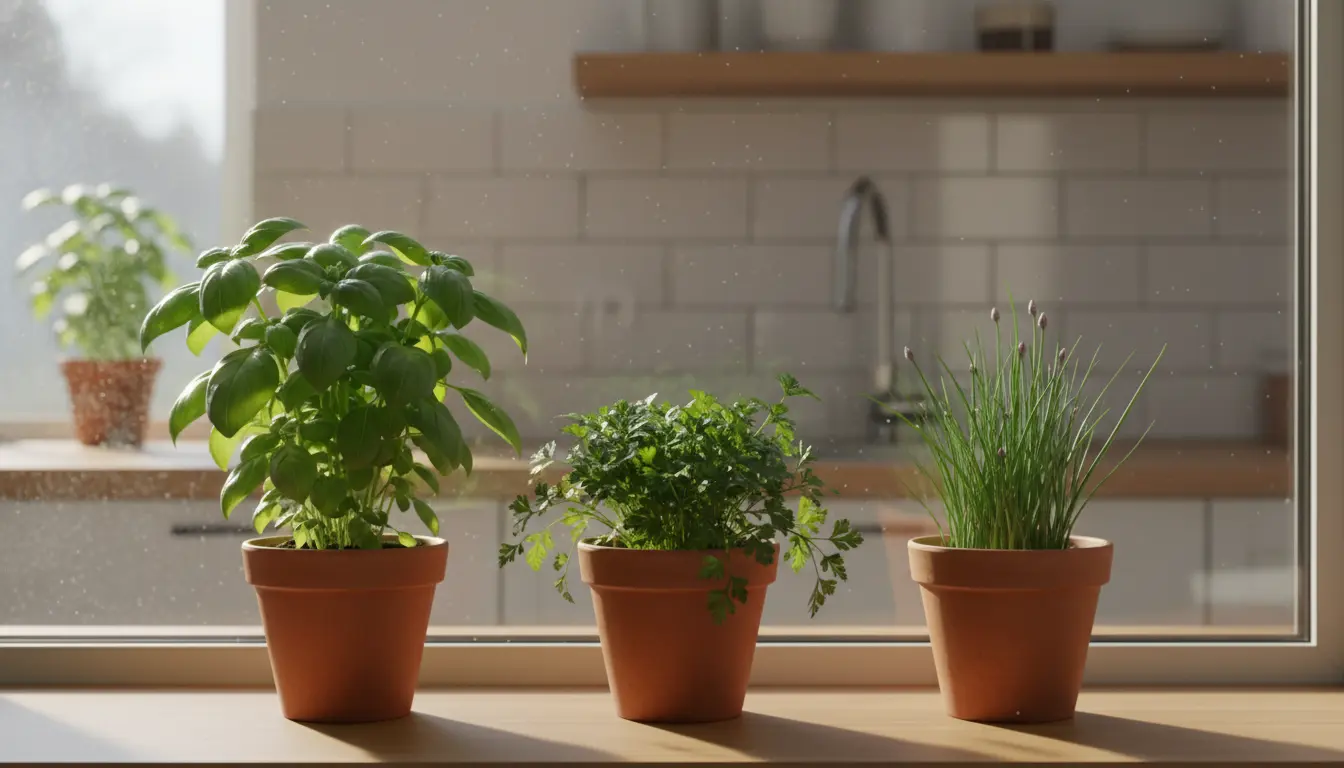
Why Start an Indoor Herb Garden
An indoor herb garden brings fresh flavor to your cooking and saves money. It also improves air quality and adds a touch of green to small spaces.
This guide explains practical steps to start and maintain an indoor herb garden, ideal for beginners and busy homeowners.
Choosing Herbs for an Indoor Herb Garden
Select herbs that adapt well to containers and lower light. Start with easy, productive varieties that respond quickly to care.
- Basil — great for sunny windows and quick harvests.
- Parsley — tolerates moderate light and frequent trimming.
- Mint — vigorous grower; keep it contained to one pot.
- Chives — small, hardy, and useful for garnishes.
- Thyme and Oregano — drought-tolerant and compact.
Location and Light for an Indoor Herb Garden
Light is the most important factor for an indoor herb garden. Most culinary herbs need 6–8 hours of bright, indirect light.
Place plants on a south- or west-facing windowsill if possible. If natural light is limited, use a grow light for 10–12 hours daily.
Using Grow Lights in an Indoor Herb Garden
Choose full-spectrum LED grow lights for energy efficiency and a light spectrum that mimics the sun. Position lights 6–12 inches above plants and adjust as they grow.
Set a timer to ensure consistent day/night cycles to prevent legginess and stress.
Containers and Soil for an Indoor Herb Garden
Use containers with drainage holes to prevent root rot. Lightweight pots or standard nursery pots inside decorative covers work well.
Fill containers with a well-draining potting mix, not garden soil. A mix with perlite or coarse sand helps prevent waterlogging.
Container Size Guidelines
- Small herbs (chives, thyme): 4–6 inch pots.
- Medium herbs (basil, parsley): 6–8 inch pots.
- Mint and oregano: 8–10 inch pots to contain growth.
Watering and Feeding an Indoor Herb Garden
Water schedule depends on light, temperature, and pot size. Check soil moisture by inserting your finger 1 inch into the soil; water when the top inch is dry.
Aim for consistent moisture without saturation. Use room-temperature water and water evenly until it drains from the bottom.
Fertilizing Tips
Use a balanced, water-soluble fertilizer at half strength every 3–4 weeks during active growth. Over-fertilizing can reduce flavor intensity in herbs.
Pest and Disease Management for an Indoor Herb Garden
Indoor herb gardens are less prone to pests than outdoor plants, but you still may encounter aphids, whiteflies, or fungal issues.
- Inspect plants weekly for sticky residue, holes, or webbing.
- Remove affected leaves and isolate new plants until cleared.
- Use insecticidal soap or neem oil as a safe, organic control.
Pruning and Harvesting from an Indoor Herb Garden
Regular harvesting encourages bushy growth and higher yields. Pinch or cut stems above a node to promote branching.
Harvest in the morning for best flavor. For leafy herbs, remove no more than one-third of the plant at a time.
Seasonal Care and Common Issues in an Indoor Herb Garden
Indoor herbs slow growth in winter due to lower light and cooler temperatures. Reduce watering and expect slower harvests.
If herbs become leggy, provide additional light and prune back to healthy growth points. Repot when roots circle the container or soil drains poorly.
Many herbs, like basil and mint, are perennials in warm climates but behave as annuals indoors. Regular pruning prolongs productive growth and prevents flowering, which can reduce leaf flavor.
Tools and Supplies for a Beginner Indoor Herb Garden
Keep a short list of basic tools to simplify care and improve success.
- Small hand pruners or scissors
- Watering can with a narrow spout
- pH-neutral potting mix
- Full-spectrum LED grow light (if needed)
Simple Routine for an Indoor Herb Garden
Create an easy weekly routine to keep your indoor herb garden healthy and productive.
- Check light and rotate pots weekly for even growth.
- Inspect soil moisture and water as needed.
- Harvest or prune to shape plants and stimulate growth.
- Fertilize every 3–4 weeks during active growth.
Real-World Example: A Small Kitchen Indoor Herb Garden Case Study
Case study: Sarah, a city renter, started an indoor herb garden on a 4-foot windowsill. She planted basil, chives, and parsley in three 6-inch pots under a small LED light.
Within four weeks, she had enough basil to make fresh pesto and cut chives for weekly breakfasts. A monthly half-strength fertilizer and weekly pruning kept plants compact and productive.
Sarah reports spending under $50 on supplies and saving over $80 on store-bought herbs in three months, plus improved cooking satisfaction and reduced waste.
Common Mistakes to Avoid with an Indoor Herb Garden
- Overwatering: Leads to root rot; always check soil before watering.
- Poor light: Causes legginess and weak flavor; use grow lights if necessary.
- Wrong soil: Garden soil compacts in pots; use potting mix for drainage.
Next Steps for Your Indoor Herb Garden
Start with two or three herbs and learn their needs. Expand gradually as you gain confidence and notice what works in your space.
Keep notes on watering frequency, light hours, and harvest yields to refine care over time. An indoor herb garden is a small project with ongoing rewards.