
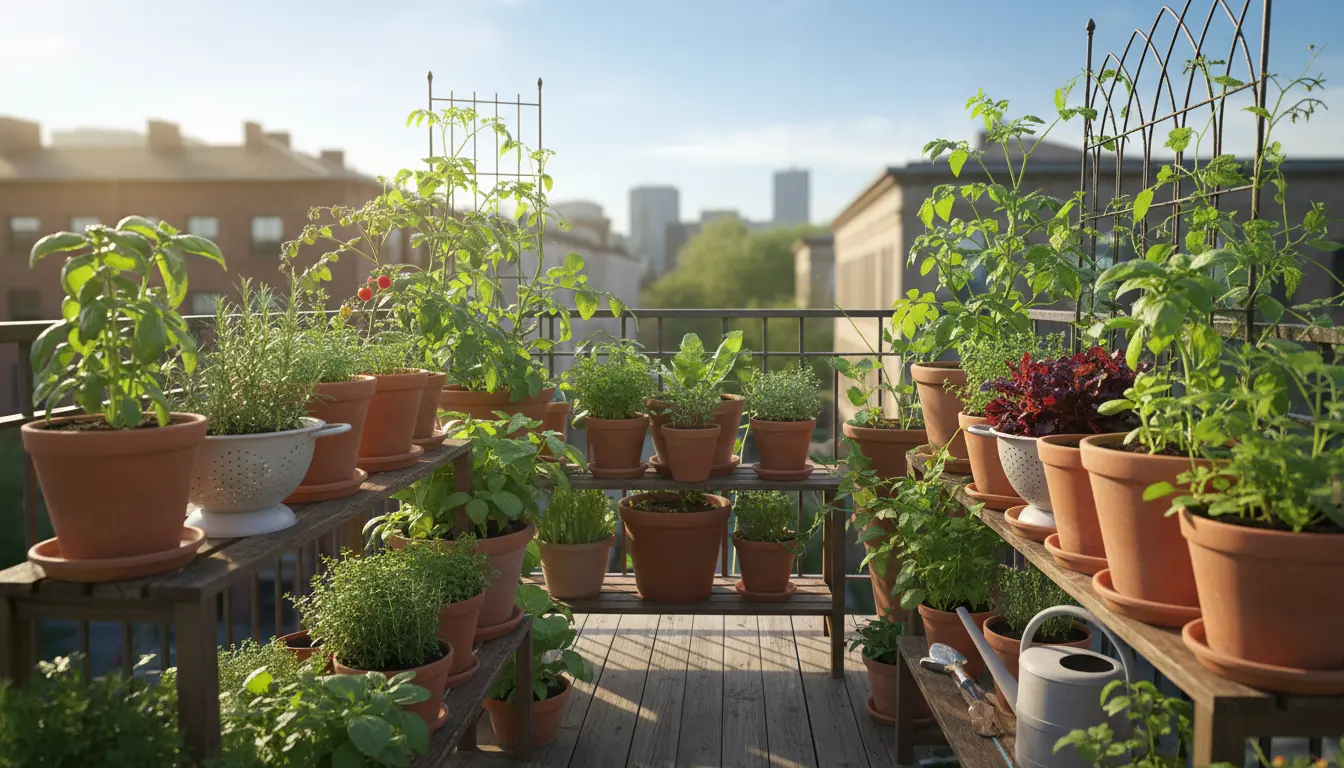
Planning Your Balcony Vegetable Garden
Starting a balcony vegetable garden begins with a simple plan. Assess sunlight, space, weight limits, and your daily routine before choosing plants.
Measure the balcony area and note how many hours of direct sun it receives. Most vegetables need 5–8 hours of sun; leafy greens can tolerate less.
Choosing Vegetables for a Balcony Vegetable Garden
Select vegetables suited to containers and compact growth. Prioritize quick yields and low-maintenance crops if you are a beginner.
- Leafy greens: lettuce, spinach, arugula
- Herbs: basil, parsley, chives
- Compact fruiting plants: cherry tomatoes, dwarf peppers
- Root crops: radishes, baby carrots
How to match plants to your balcony
For shady balconies, choose leafy greens and herbs. For sunny balconies, add tomatoes and peppers. Consider vertical varieties for limited floor space.
Container and Soil Choices for a Balcony Vegetable Garden
The right containers and soil make the biggest difference in container gardening success. Use containers with drainage holes and durable material.
Choose a quality potting mix formulated for vegetables. Avoid garden soil in pots because it compacts and drains poorly.
- Container types: plastic, fabric grow bags, ceramic (ensure weight is safe)
- Soil mix: peat-free options, compost-enriched mixes, or a blend of compost, coir, and perlite
Container size guidelines
Use deeper pots for root crops and larger-volume pots for fruiting vegetables. Examples:
- Leafy greens and herbs: 6–8 inch depth
- Radishes and baby carrots: 8–10 inch depth
- Tomatoes and peppers: 12+ inch depth and 5+ gallons volume
Watering and Fertilizing Your Balcony Vegetable Garden
Container plants dry out faster than in-ground plants, so establish a consistent watering routine. Check soil moisture daily during hot weeks.
Feed container vegetables regularly because nutrients wash out when you water. Use a balanced liquid or slow-release fertilizer designed for vegetables.
- Watering tips: water until excess drains, water in the morning when possible
- Fertilizer tips: apply slow-release at planting and supplement with liquid feed every 2–4 weeks
Pest Management and Common Problems in a Balcony Vegetable Garden
Pests and diseases can occur even on balconies. Inspect plants weekly and remove affected leaves immediately to prevent spread.
Use these strategies to manage problems without heavy chemicals.
- Physical controls: hand-pick pests, use sticky traps for flying insects
- Biological options: encourage beneficial insects, use neem oil or insecticidal soap when needed
- Prevention: rotate crops in containers and maintain clean pots and tools
Dealing with wind and heat
Balconies can be wind tunnels or heat traps. Provide windbreaks and shade cloth if plants suffer. Move lightweight pots against a wall or railing during strong winds.
Seasonal Calendar for a Balcony Vegetable Garden
Plan plantings by season to keep your balcony productive year-round. Start cool-season crops early and warm-season crops after the last frost.
- Spring: direct-seed radishes, transplant lettuce, sow herbs
- Summer: grow tomatoes, peppers, and continuous harvest lettuce
- Fall: plant spinach and kale for cooler weather growth
- Winter (mild climates): protect plants or grow cold-tolerant crops in sheltered spots
Small Real-World Case Study
Case Study: Maria’s 6-Container Balcony Vegetable Garden. Maria had a north-facing 8 ft balcony with midday sun for 4 hours. She used six 10-inch containers and one 15-gallon pot.
She planted lettuce, basil, two cherry tomato plants, radishes, and chives. After three months, her harvests included weekly salads and a steady supply of basil for cooking.
Key takeaways from Maria’s setup:
- Choose crops that match sunlight: lettuce and herbs thrived with limited sun.
- Stagger plantings for continuous harvests: radishes were sown every two weeks.
- Lightweight containers and saucers prevented water damage to the balcony floor.
Practical Tips to Maximize Yields in a Balcony Vegetable Garden
Use vertical space with trellises and hanging pots to expand planting area. Train vining plants upward to free floor space.
Keep a simple log of watering, fertilizing, and harvests. Small records help you spot problems early and repeat what works.
Quick checklist before you start
- Measure balcony and check building rules for pot placement and weight limits.
- Test sunlight hours across a typical day.
- Buy proper containers and a high-quality potting mix.
- Choose 3–6 easy vegetables to begin with, then expand next season.
With a clear plan, the right containers, and regular care, a balcony vegetable garden can be a productive and rewarding way to grow fresh food. Start small, learn from each season, and adjust plant choices to fit your balcony’s microclimate.