
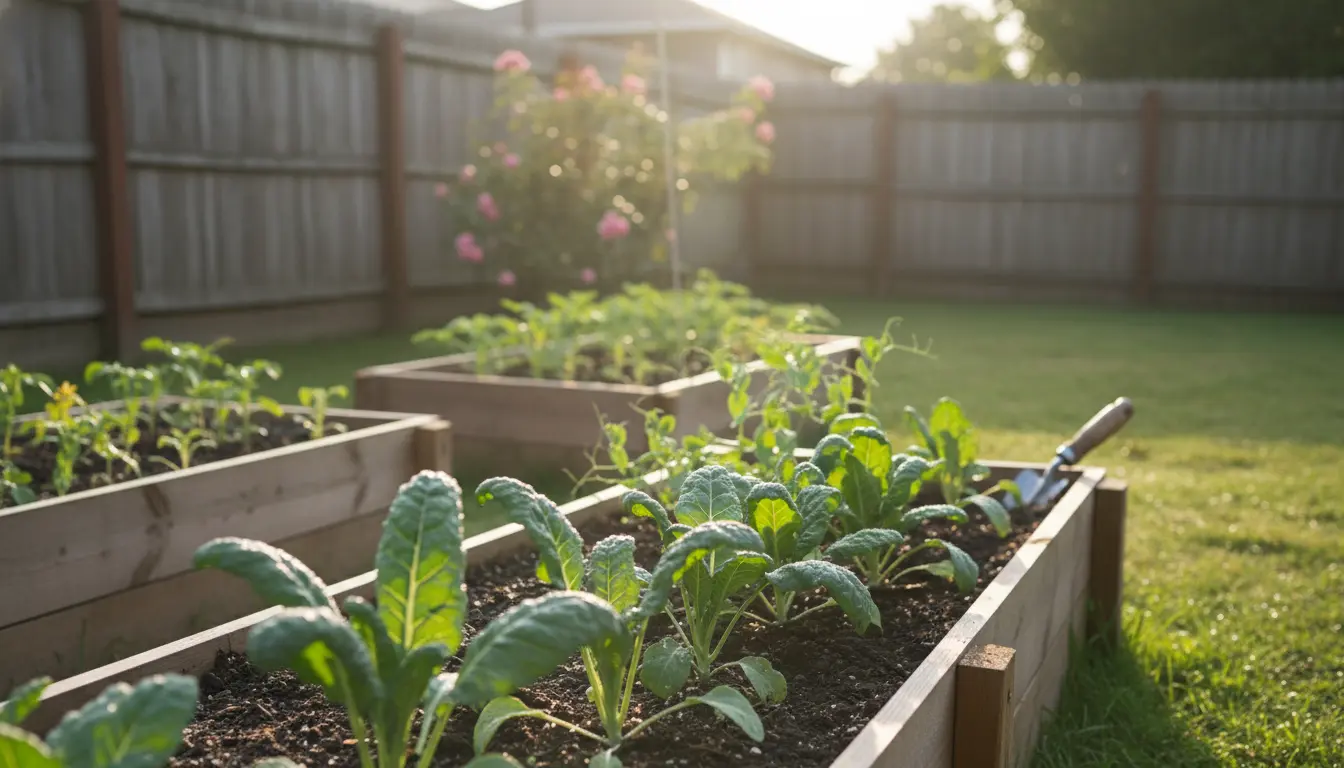
Why start a small vegetable garden
Starting a small vegetable garden brings fresh food close to your kitchen and reduces trips to the store. It also teaches seasonal timing and gives you control over how your food is grown.
Planning your small vegetable garden
Good planning makes caring for a garden straightforward. A small garden can thrive in a backyard bed, balcony containers, or a sunny windowsill with the right choices.
Choose the right location for your small vegetable garden
Most vegetables need at least six hours of direct sunlight daily. Observe sun patterns for a week to find the sunniest spot.
Also consider access to water and protection from strong wind. A location near the house saves time and improves surveillance for pests.
Pick containers or raised beds
Containers are ideal for balconies and patios; raised beds suit small yards. Choose containers at least 12 inches deep for most vegetables.
- Advantages of containers: portable, good drainage, easier on the back.
- Advantages of raised beds: larger root space, better soil warming, higher yields.
Prepare soil and compost
Healthy soil is the foundation of a productive small vegetable garden. Use a mix of quality garden soil, compost, and a light texture amendment like coconut coir or aged bark for containers.
Test soil pH if possible; most vegetables prefer slightly acidic to neutral soil (pH 6.0–7.0).
What to plant first in a small vegetable garden
Choose easy, fast-growing crops for your first season. Focus on high-reward plants that suit your space and climate.
- Leafy greens: lettuce, spinach, arugula — quick harvests and space efficient.
- Herbs: basil, parsley, chives — small footprint and useful in the kitchen.
- Root crops: radishes and baby carrots — do well in containers and mature fast.
- Fruit-bearing: cherry tomatoes and bush beans — productive in limited space.
Step-by-step planting and care for a small vegetable garden
Follow a simple routine to ensure steady growth. Break tasks into weekly habits to avoid overwhelm.
Step 1: Plan your layout
Map the bed or container layout before planting. Place taller plants to the north or back so they don’t shade smaller crops.
Step 2: Plant at the right time
Use your local frost dates to time seeds and transplants. Sow quick greens in cool weather and warm-season crops after the last frost.
Step 3: Water correctly
Water deeply and less often to encourage strong roots. For containers, check moisture daily; for beds, test the top 1–2 inches of soil.
Step 4: Mulch and fertilize
Apply 1–2 inches of organic mulch to retain moisture and reduce weeds. Use balanced organic fertilizer or compost tea every 3–4 weeks for steady growth.
Maintenance and troubleshooting in a small vegetable garden
Regular observation catches problems early. Weekly checks for pests, disease signs, and moisture keep plants productive.
Common issues and simple fixes
- Pests: Handpick beetles, use row covers for caterpillars, and encourage beneficial insects like ladybugs.
- Yellowing leaves: Often a sign of overwatering or nutrient deficiency; check drainage and feed with balanced compost.
- Poor fruit set: Ensure consistent watering and sufficient sunlight; some crops need pollinators—plant flowers nearby.
Tips to maximize yields in a small vegetable garden
Use vertical growing and succession planting to get more from limited space. Rotate fast crops with soil-building plants to maintain soil health.
- Vertical supports: trellis peas, cucumbers, and indeterminate tomatoes to free ground space.
- Succession planting: sow a new batch of lettuce every 2–3 weeks for continuous harvests.
- Interplanting: grow herbs or quick greens between slower vegetables to use gaps efficiently.
Small real-world example: Balcony tomato and herb case study
Anna, a city renter, started a small vegetable garden on a 6-foot balcony using three 12-inch containers. She planted a cherry tomato, basil, and lettuce in each pot.
By choosing compact varieties and rotating lettuce every three weeks, she harvested fresh salads and weekly cherry tomatoes all summer. Daily morning watering and a monthly compost tea feed kept plants healthy.
Quick checklist to start a small vegetable garden
- Choose a sunny location and plan container or bed placement.
- Buy quality potting mix or prepare raised bed soil with compost.
- Select easy crops for your climate and space.
- Set a weekly routine: water, weed, inspect for pests, and harvest.
Final thoughts on starting a small vegetable garden
Starting a small vegetable garden is a step-by-step process you can scale over time. Begin with a few reliable crops and expand as you gain confidence.
With basic planning, consistent care, and modest space, you can enjoy fresh, homegrown produce even in urban settings.