
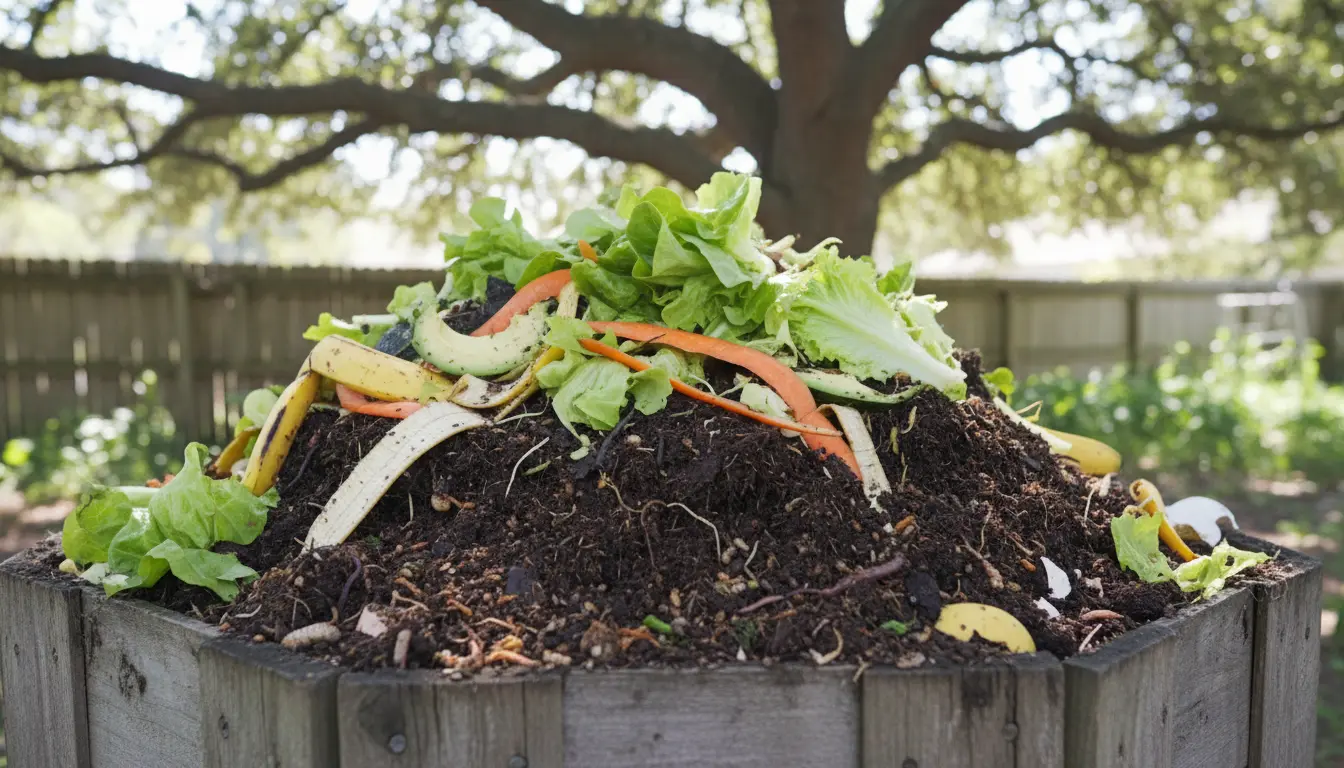
Why Home Composting Matters
Home composting turns kitchen and yard waste into a useful soil amendment. It reduces landfill waste and improves garden soil with minimal cost.
Anyone with a small yard or even a balcony can compost with the right approach. This guide covers simple steps and common problems to help you start today.
Choosing a Compost System for Home Composting
Select a system that fits your space, time, and effort. Options include a simple pile, a tumbling bin, and a sealed bin for small spaces.
Consider these factors when choosing a bin:
- Available space: backyard, patio, or balcony
- Volume of waste: how many people and how much yard debris
- Maintenance level: frequent turning vs low-maintenance systems
Types of Bins
- Open pile: cheap and simple, needs space and turning
- Tumbler: speeds up decomposition, easier to turn
- Sealed bin: good for small spaces and pest control
Materials: Greens, Browns, and What to Avoid
Compost works best when you balance nitrogen-rich “greens” and carbon-rich “browns.” Aim for a rough ratio of 1 part greens to 3 parts browns by volume.
Common greens include vegetable scraps, coffee grounds, and fresh grass clippings. Browns include dried leaves, shredded paper, and small twigs.
- Greens: kitchen scraps, fresh garden clippings, coffee grounds
- Browns: dried leaves, straw, cardboard (shredded), newspaper
- Avoid: meat, dairy, oils, diseased plants, and pet waste
How to Start Home Composting: Step-by-Step
Follow these practical steps to set up and maintain compost at home.
- Pick a container and location: level ground with some shade works well.
- Add a base layer: coarse material like twigs to help drainage and airflow.
- Build in layers: alternate greens and browns, keeping the ratio roughly 1:3.
- Maintain moisture: aim for damp like a wrung-out sponge, not soggy.
- Turn the pile: every 1–2 weeks to add oxygen and speed decomposition.
Speeding Up the Process
Smaller pieces decompose faster. Chop kitchen scraps and shred browns before adding them. Using a tumbler or turning the pile regularly moves oxygen in and keeps microbes active.
Troubleshooting Common Problems in Home Composting
Compost issues are usually simple to fix. Smells, pests, or slow breakdown each have predictable causes.
Bad Odor
Cause: too many greens or lack of air. Fix: add more browns, turn the pile, and check moisture.
Pests
Cause: meat, dairy, or exposed scraps. Fix: avoid these items, bury food under browns, or use a sealed bin.
Slow Decomposition
Cause: low temperature, large pieces, or poor balance. Fix: chop materials, add nitrogen-rich greens, and turn to increase activity.
Using Finished Compost
Compost is ready when it looks dark, crumbly, and smells earthy. Use it as mulch, mix it into potting soil, or spread it over garden beds.
In vegetable gardens, work compost into the top 4–6 inches of soil before planting for best results.
A properly balanced compost pile can reach internal temperatures above 130°F (54°C), which helps kill seeds and many plant pathogens.
Small Real-World Case Study
Sarah, a new homeowner with a small backyard, started composting with a 60-gallon tumbling bin. She collected coffee grounds and vegetable scraps from her kitchen and mixed them with shredded leaves and cardboard.
After three months of turning the tumbler twice a week and maintaining moisture, her compost was dark and crumbly. She used it to improve the soil in three raised beds, resulting in fuller tomato plants the following season.
Practical Tips for Consistent Success
- Keep a small counter bucket with a tight lid for kitchen scraps to reduce trips outside.
- Shred or chop materials to speed up decomposition.
- Monitor moisture and temperature weekly during warm months.
- Record what you add for a few weeks to find the right balance for your system.
Final Checklist for Home Composting
- Choose the right bin for your space and needs.
- Balance greens and browns, and avoid banned items.
- Maintain moisture and turn the pile regularly.
- Use finished compost to improve soil structure and plant health.
Home composting is a low-cost practice with big benefits for your garden and the environment. Start small, observe changes, and adjust your routine to suit your space.