
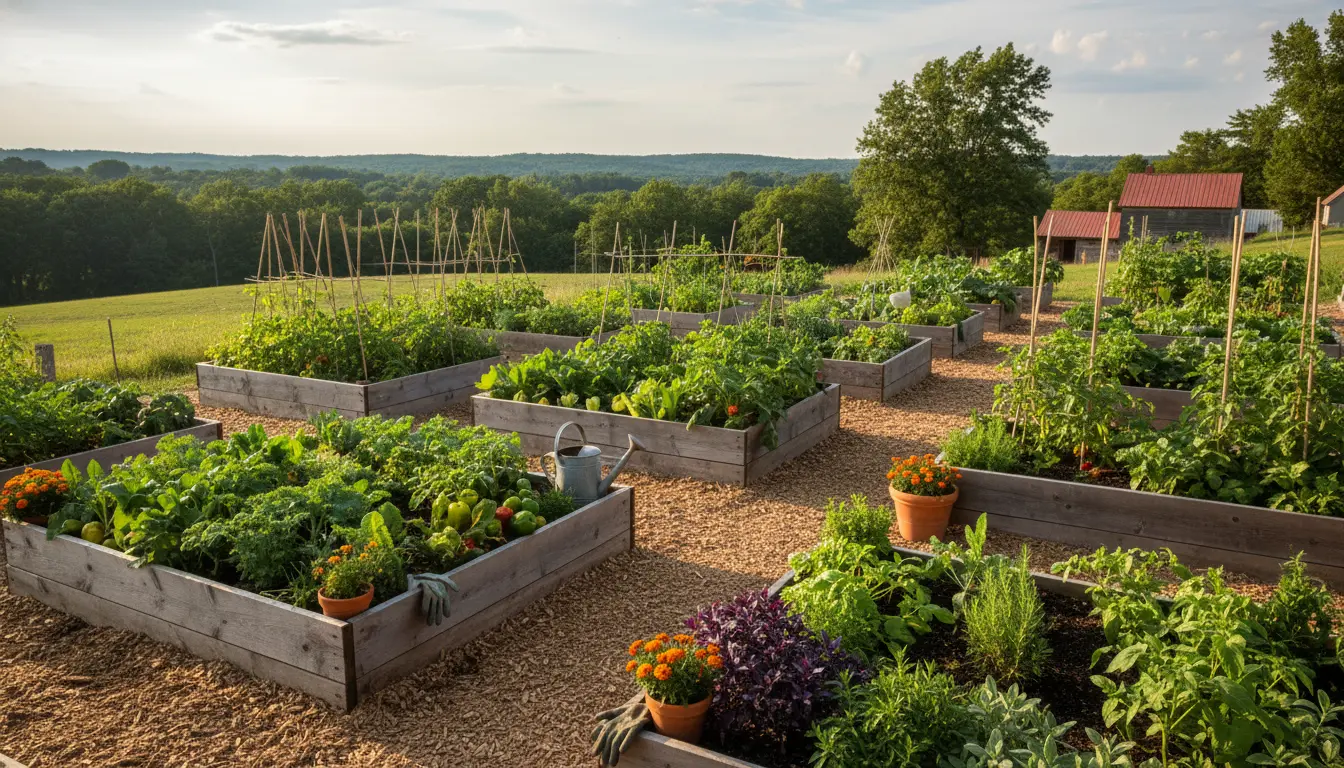
Raised bed gardening is a practical way to grow vegetables, herbs, and flowers in limited space. This guide explains planning, building, planting, and maintaining a raised bed garden in clear, actionable steps.
Why Choose Raised Bed Gardening
Raised bed gardening improves drainage, warms soil faster in spring, and makes weeding and harvesting easier. Beds concentrate good soil where plant roots need it and can extend the growing season for many crops.
Benefits of Raised Bed Gardening
- Better soil control: mix the right texture and nutrients.
- Improved drainage and root aeration for healthier plants.
- Less bending and easier access for seniors or those with mobility limits.
- Clearer organization for companion planting or crop rotation.
How to Plan Your Raised Bed Garden
Good planning saves time and money. Start with location, size, and what you want to grow before buying materials or soil.
Location and Size for Raised Bed Gardening
Choose a site with at least 6 hours of sunlight for most vegetables. Avoid low spots that collect water and places under dense tree canopies that steal moisture and nutrients.
Standard raised bed sizes work well: 4 feet wide lets you reach the center from either side. Common lengths are 4, 8, or 12 feet. Depth matters: 12 inches is minimal, 18–24 inches is ideal for most vegetables and root crops.
Materials and Soil Mix for Raised Bed Gardening
Common materials: untreated cedar, recycled composite boards, concrete blocks, or corrugated metal. Choose durable, non-toxic materials suitable for food crops.
Soil mix recipe for raised bed gardening (simple and effective):
- 40% topsoil or screened garden soil
- 40% compost (mixed sources: kitchen scraps, leaf mold, well-rotted manure)
- 20% coarse sand or perlite for drainage and structure
Mix ingredients well before filling beds. Test pH and add lime or sulfur only if necessary after testing.
Step-by-Step Raised Bed Gardening Setup
Follow these basic steps to set up a functional raised bed garden. Each step includes practical tips for first-time builders.
- Prepare the site: Clear grass and weeds. If grass is thick, cut close to the ground and cover with cardboard to suppress regrowth.
- Build the frame: Use 2×6 or 2×8 boards for 12–18 inch bed depth. Fasten corners with galvanized screws, and avoid treated wood that may leach chemicals.
- Level and position: Place the frame, check level, and adjust so water drains away from structures.
- Fill with soil mix: Fill in layers, tamp lightly, and finish with a 2–3 inch mulch layer after planting.
- Planting layout: Use square-foot gardening or traditional row spacing. Label rows and stagger plant families to make care easier.
Maintaining Your Raised Bed Garden
Regular maintenance keeps raised beds productive. Focus on watering, feeding, pest control, and seasonal tasks.
Watering and Fertilizing
Water deeply once or twice a week rather than shallow daily watering. Raised beds dry faster so monitor soil moisture with a finger probe or moisture meter.
Top-dress with compost each season and use balanced organic fertilizer when plants show slow growth. Avoid overfertilizing leafy crops late in the season.
Pest and Disease Management
Encourage beneficial insects with flowering borders and avoid broad-spectrum insecticides. Use row covers for early pest protection and rotate crops each season to reduce disease buildup.
- Inspect plants weekly for pests and disease.
- Hand-pick slugs and caterpillars when possible.
- Use organic controls like neem oil or insecticidal soap if infestations grow.
Seasonal Care and Crop Rotation
Rotate plant families to different beds each year to reduce nutrient depletion and disease. Use cover crops like clover or winter rye in beds left fallow to rebuild organic matter.
In cold climates, add row covers or simple cold frames to extend harvest into late fall and early spring.
Raised beds can warm several degrees faster in spring than in-ground rows, which often allows earlier planting and faster germination for cool-season crops like lettuce and peas.
Small Real-World Case Study
Example: A neighborhood allotment used three 4×8 cedar raised beds in year one. They planted tomatoes, carrots, and leafy greens, using the soil mix above. By mid-summer, yields were higher than nearby in-ground plots because of better soil structure and drainage.
They rotated the beds in year two, added a herb border to attract pollinators, and reported less slug damage after adding a thin wood ash perimeter. Continuous compost additions kept crops productive into the second season.
Quick Tips for Success in Raised Bed Gardening
- Keep bed width at 4 feet or less for reachability.
- Invest in quality compost rather than filling entirely with purchased topsoil.
- Use drip irrigation or soaker hoses to save water and cut leaf wetness.
- Note planting dates and successes in a simple garden journal.
Raised bed gardening is scalable and forgiving for beginners. Start with one or two beds, learn from each season, and expand as you gain confidence. With careful planning and routine maintenance, raised beds deliver productive, manageable gardens in small spaces.