
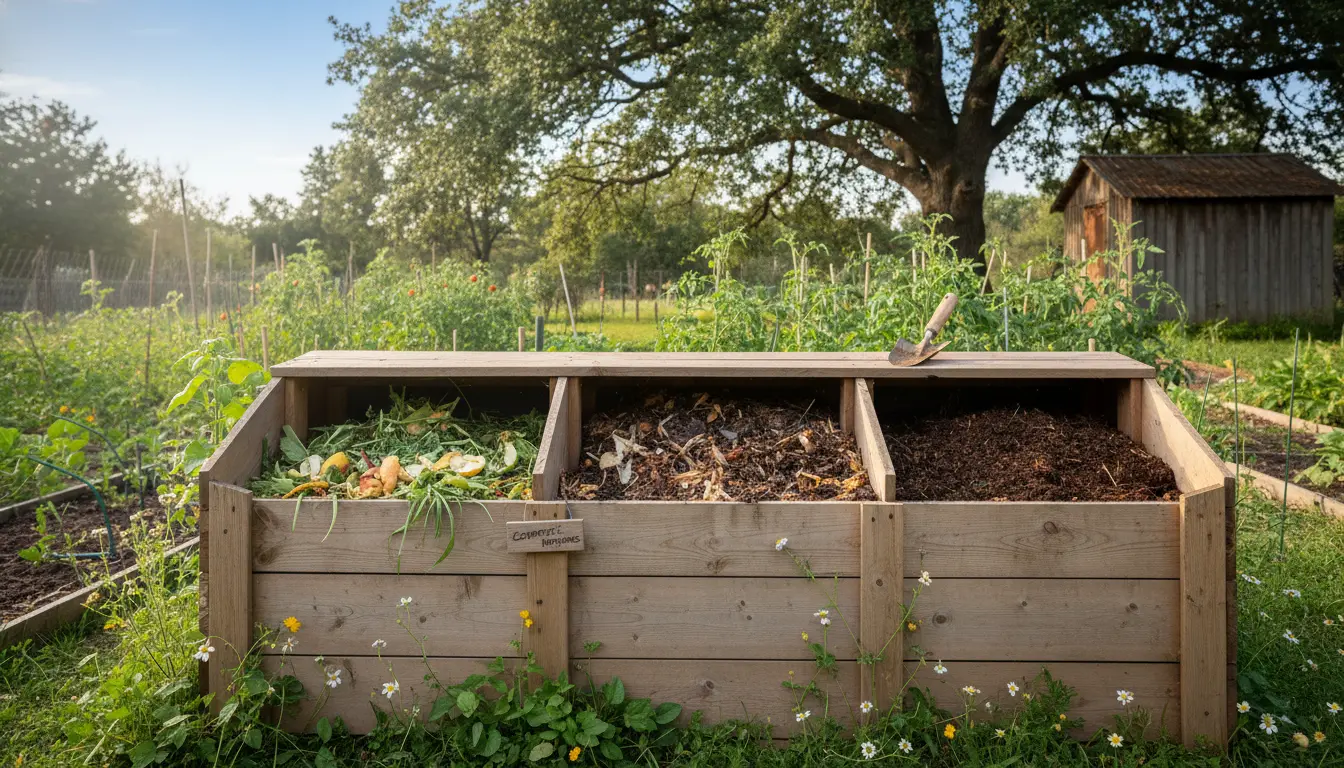
Why Start a Home Compost Bin
Starting a home compost bin reduces kitchen and yard waste while producing nutrient-rich soil for gardens and potted plants. It lowers landfill contributions and gives you free, natural fertilizer for healthier plants.
Choose the Right Spot for Your Home Compost Bin
Pick a level, well-drained outdoor spot that is convenient but not in direct, all-day sun. Good options include a corner of the backyard, next to the shed, or a shady part of the garden.
If you live in an apartment, consider a small indoor or balcony composter designed for limited spaces.
What You Need to Start a Home Compost Bin
Gather basic materials before you begin. You do not need fancy equipment—simple tools work well.
- Compost bin or tumbler (plastic or wood)
- Kitchen scraps: fruit and vegetable peels, coffee grounds, eggshells
- Dry brown materials: leaves, shredded paper, straw
- Water source or watering can
- Pitchfork or garden fork for turning
Which Compost Bin to Use
Choose a bin that fits your space and volume of waste. Tumblers speed up decomposition by making turning easy. Open bins or DIY wooden bins work well for large gardens.
How to Start a Home Compost Bin: Step by Step
Follow these practical steps to get your compost started and avoid common mistakes.
- Prepare the base: Lay a 3–4 inch layer of coarse material like twigs or straw at the bottom to improve airflow and drainage.
- Add brown and green layers: Alternate dry brown materials with moist green materials. Aim for roughly a 3:1 ratio of browns to greens by volume.
- Moisten the pile: The compost should feel like a wrung-out sponge. Add water if it is dry, but avoid soaking it.
- Turn the pile: Every 1–2 weeks use a fork to mix the materials and add oxygen. Turning helps speed up decomposition and prevents odors.
- Monitor: Check temperature and moisture. A well-working pile will feel warm in the center and break down within 2–6 months depending on conditions.
What to Put in a Home Compost Bin
Knowing what can and cannot be composted prevents pests and unpleasant smells.
- Do compost: vegetable scraps, fruit peels, coffee grounds, tea bags, eggshells, yard waste, shredded paper
- Avoid composting: meat, dairy, oils, diseased plants, pet waste (unless using specialized composting methods)
Examples of Brown and Green Materials
- Greens: fresh grass clippings, vegetable scraps, green leaves
- Browns: dry leaves, cardboard shredded, straw, paper towels (unbleached)
Compost can reduce household waste by up to 30 percent. A single active compost bin can divert hundreds of pounds of organic waste from the landfill each year.
Troubleshooting Common Problems with a Home Compost Bin
Most compost issues are easy to fix once you know the cause.
- Bad smell: Add more brown materials and turn the pile. Odors are usually from too much wet green waste or poor aeration.
- Pests or flies: Bury food scraps under a layer of browns and avoid meat or oily foods.
- Slow decomposition: Check moisture and add green materials for nitrogen, then turn the pile more frequently.
When and How to Use Finished Compost
Finished compost is dark, crumbly, and smells earthy. Sift out large chunks and use the compost in your garden beds, potted plants, or as a top dressing for lawns.
Mix compost into soil at planting time or use a thin layer around established plants to improve soil structure and nutrients.
Small Real-World Example
Case study: A two-person household in a small yard started a 50-gallon tumbler. They added kitchen scraps and shredded leaves, turning weekly. After four months they had about 30 liters of usable compost.
They used the compost on a vegetable bed and reported healthier tomato plants and fewer store-bought fertilizer purchases during the season.
Practical Tips to Keep Your Home Compost Bin Working
- Chop or shred larger materials to speed decomposition.
- Keep a small kitchen caddy to collect scraps to reduce trips outside.
- Balance greens and browns each time you add to the bin to keep the process steady.
- Use a compost thermometer if you want to manage faster, hotter composting cycles.
Beginner Checklist to Start Your Home Compost Bin
- Choose bin type and location
- Collect initial brown and green materials
- Build alternating layers and moisten
- Turn regularly and monitor moisture
- Harvest finished compost and use in garden
Starting a home compost bin is a simple, low-cost step that benefits both your garden and the planet. With basic materials and regular attention, you can turn everyday waste into a valuable resource for your plants.