
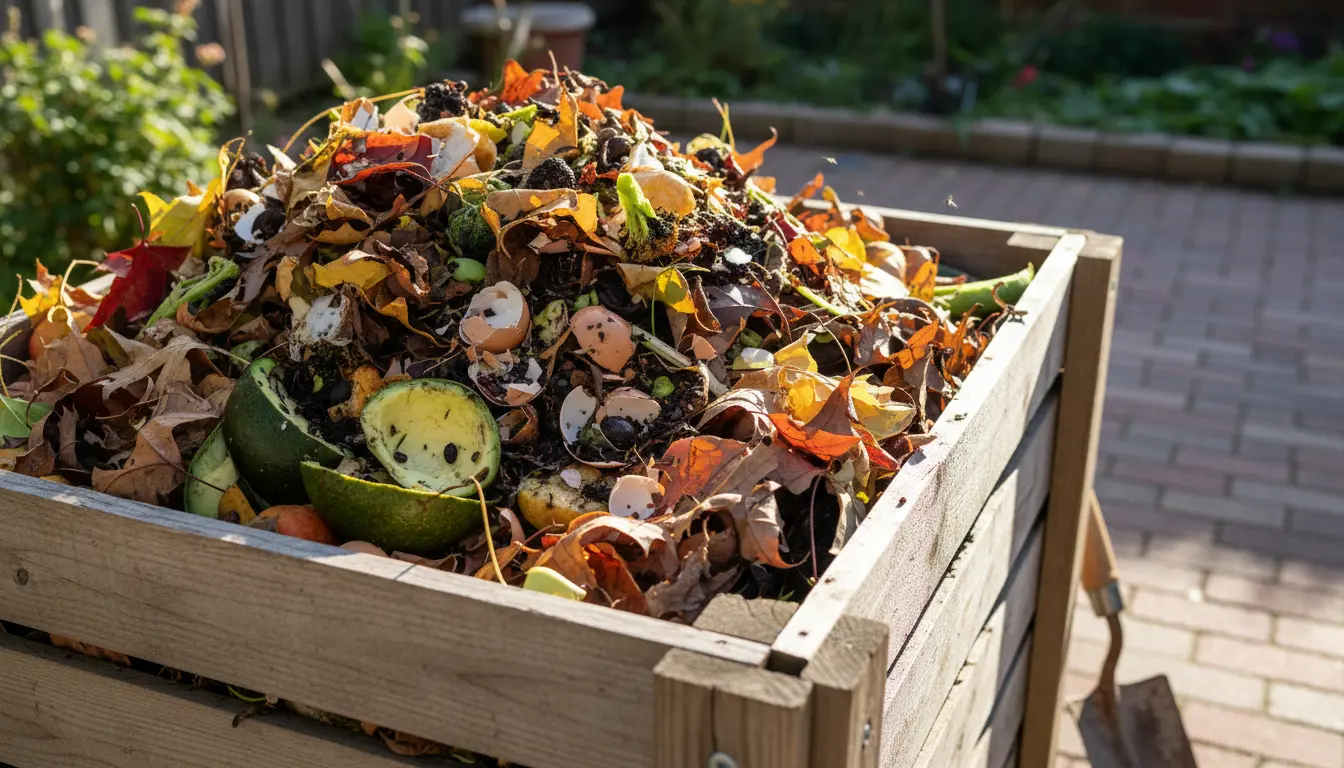
What is Home Composting
Home composting is the process of turning kitchen scraps and yard waste into nutrient-rich soil using natural decomposition. It reduces household waste and creates material you can use in gardens or potted plants.
Why Home Composting Matters
Composting lowers the amount of organic waste sent to landfills and cuts methane emissions. It also returns valuable nutrients back to soil, improving plant health and reducing the need for chemical fertilizers.
How to Start Home Composting
Starting a compost system at home is simple and requires minimal tools. The basic steps are choosing a container, adding materials, keeping a balance, and maintaining the pile.
Choose a Compost Bin
Select a bin that fits your space and volume. Options include simple tumblers, stationary plastic bins, wooden pallets, or even a corner soil pile for larger yards.
- Apartment or small balconies: use a worm bin (vermicompost) or an indoor bokashi bucket.
- Small yards: closed plastic or wooden bin keeps pests out and retains heat.
- Large yards: open windrow or multi-bin system for higher volume.
Balance Greens and Browns
Compost needs a balance of nitrogen-rich “greens” and carbon-rich “browns.” This ratio helps microbes break down materials efficiently.
- Greens (nitrogen): fruit and vegetable scraps, coffee grounds, fresh grass clippings.
- Browns (carbon): dry leaves, shredded paper, straw, cardboard.
- Aim for roughly a 2:1 or 3:1 ratio of browns to greens by volume for an aerobic pile.
Layering and Adding Materials
Start with a layer of coarse material for airflow, then alternate greens and browns. Chop large items to speed decomposition and avoid compacting layers.
Keep materials moist like a wrung-out sponge; too dry slows activity and too wet causes odors.
Maintain Your Compost
Active maintenance helps the pile heat up and decompose faster. Maintenance actions are turning, monitoring moisture, and managing pests.
Turning and Aeration
Turn the pile every 1–3 weeks to introduce oxygen and redistribute heat. Tumblers make turning easy, while static bins can be aerated with a garden fork or compost aerator tool.
Temperature and Timing
A hot compost pile (130–160°F or 54–71°C) breaks down material faster and kills seeds and pathogens. Cold composting is slower but still works for most household waste.
Expect finished compost in 2–6 months for a hot system and 6–12 months for a cold system.
Troubleshooting Common Problems
- Bad smell: add more browns, turn the pile, check drainage.
- Slow decomposition: chop materials, increase greens, or add water if too dry.
- Pests: avoid adding meat, dairy, or oily foods; use a closed bin or bury new scraps in the center.
Household composting can divert up to 30% of weekly trash by volume and produce nutrient-rich compost that improves soil water retention by up to 20%.
What to Compost and What to Avoid
Knowing what belongs in the pile keeps the system healthy. Use the list below when you start saving scraps.
- Safe to compost: fruit and vegetable scraps, coffee grounds, tea bags (paper), eggshells, shredded paper, dry leaves, lawn clippings.
- Avoid composting: meat, dairy, bones, oils, diseased plants, pet waste, and glossy or heavily inked paper.
Real-World Example: Small Urban Household Case Study
Case: A two-person household in a city used a 50-liter worm bin for 12 months. They collected food scraps in a kitchen caddy, added shredded paper weekly, and fed the worm bin twice a week.
Results: The household diverted about 4 kg (9 lb) of organic waste per week. In 12 months they harvested roughly 40 liters of worm castings and reduced garbage pickup volume by 25%.
Lessons learned: regular feeding and moisture control kept the worms healthy. Using a small caddy with a tight lid prevented odors between feedings.
Using Finished Compost
Finished compost is dark, crumbly, and smells earthy. Use it as a soil amendment, top dressing, or potting mix ingredient.
- Vegetable beds: work 2–4 inches into soil before planting.
- Potted plants: mix 10–30% finished compost into potting soil.
- Lawn: apply a thin top dressing and rake lightly to improve soil structure.
Simple Start Checklist for Home Composting
- Choose a bin suited to your space (worm bin, tumbler, or stationary bin).
- Collect kitchen scraps and dry browns separately.
- Layer materials and keep the pile moist but not soggy.
- Turn the pile regularly and monitor for pests or odors.
- Harvest finished compost when material is dark and crumbly.
Home composting is a low-cost, high-impact way to reduce waste and improve soil health. Start small, observe your system, and adjust as you learn what works best for your home and climate.