
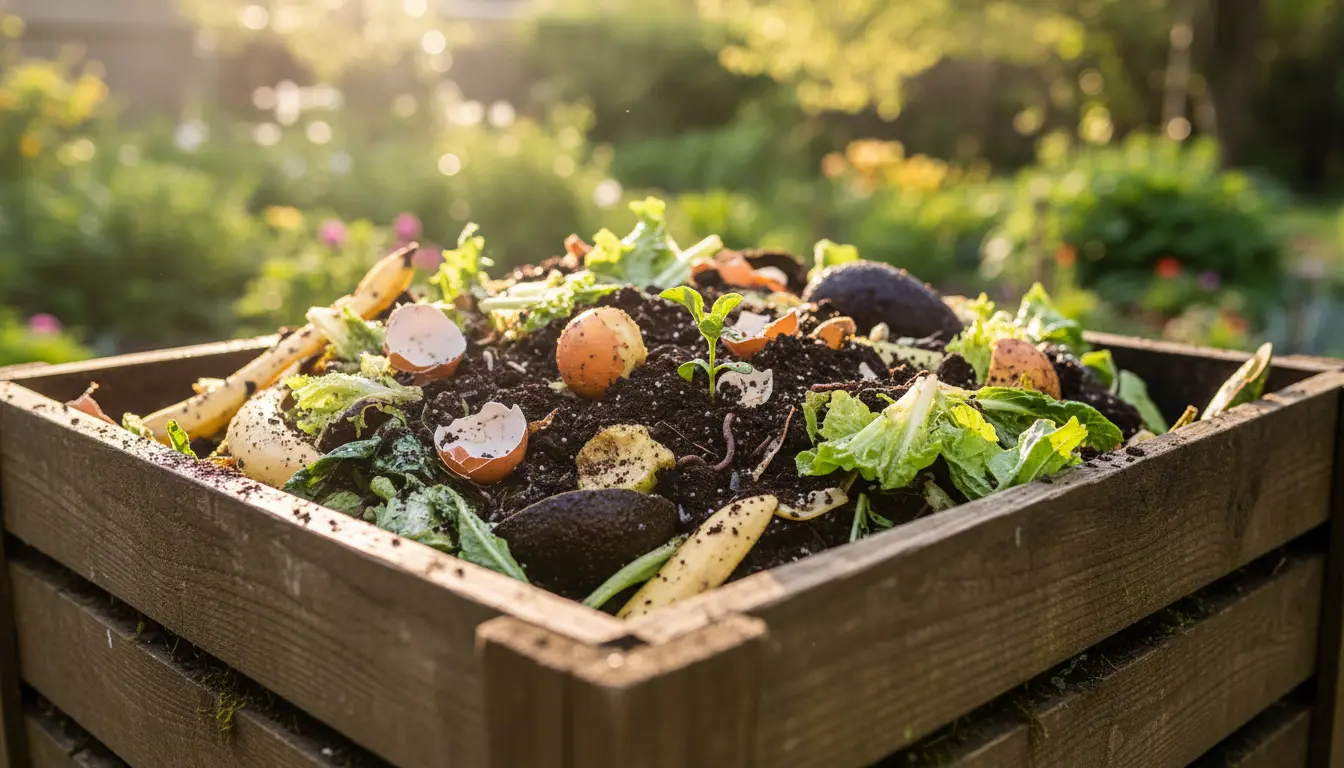
Home Composting for Beginners: A Quick Overview
Composting at home turns kitchen scraps and yard waste into valuable soil amendment. It reduces landfill waste and improves garden soil structure and fertility.
This guide explains a practical, step-by-step approach to home composting for beginners, covering setup, materials, maintenance, and common problems.
Why Choose Home Composting for Beginners
Home composting is simple and cost-effective for most households. It keeps organic waste out of landfills and produces compost for potting soil, lawns, and gardens.
The process relies on natural decomposition—microbes break down organic matter when conditions of air, moisture, and carbon-to-nitrogen balance are managed.
Essential Materials for Home Composting
Starting composting requires minimal supplies and can be adapted to space and budget. Choose appropriate materials to maintain healthy decomposition.
- Compost bin or tumbler (or a simple pile for larger yards)
- Kitchen scraps (fruit and vegetable peels, coffee grounds)
- Brown materials (dry leaves, cardboard, shredded paper)
- Garden waste (grass clippings, small prunings)
- Basic tools: pitchfork or garden fork, bin thermometer (optional)
How to Set Up Your Compost Bin
Pick a location with partial shade and good drainage to keep the pile active without drying out. Place a bin or form a pile directly on soil for best worm access.
Start with a 10–15 cm (4–6 inch) base layer of coarse materials like twigs to aid airflow. Add alternating layers of green and brown materials.
Layering Method for Home Composting for Beginners
Layering helps maintain the carbon-to-nitrogen ratio and prevents odors. Follow a simple pattern:
- Start: coarse base (twigs, small branches)
- Layer 1: greens (kitchen scraps, fresh grass clippings)
- Layer 2: browns (dry leaves, shredded paper)
- Repeat until the bin is full, finishing with a brown layer
Balanced Materials: What to Compost and What to Avoid
A balanced mix of nitrogen-rich (green) and carbon-rich (brown) materials speeds decomposition and reduces pests and odor.
Examples of acceptable and unacceptable items:
- Acceptable: fruit and vegetable scraps, coffee grounds, eggshells, leaves, straw, shredded paper
- Avoid: meat, dairy, oily foods, diseased plants, pet waste, and large branches
Maintenance: Turning, Moisture, and Aeration
Maintain the compost by keeping it moist like a wrung-out sponge and ensuring regular aeration. Turning accelerates decomposition and reduces odors.
For outdoor bins, turn the pile every 1–2 weeks. For tumblers, rotate according to manufacturer instructions—usually every few days.
Troubleshooting Common Problems
Home composting for beginners often faces a few predictable issues. Here are quick fixes:
- Bad smell: Add more brown materials and turn the pile to introduce air.
- Pests: Avoid adding meat or oily foods. Use a closed bin or add a layer of straw on top.
- Slow decomposition: Add more greens and water, or increase turning frequency.
- Too wet: Mix in dry brown materials and turn to improve aeration.
Proper composting can reduce household waste by up to 30 percent and return nutrients to your garden in as little as 2–6 months with good management.
How to Know When Compost Is Ready
Finished compost is dark, crumbly, and smells earthy. Most materials will break down into usable compost within 2–6 months depending on conditions.
Screen finished compost to remove large pieces and return any undecomposed material to the bin to continue decomposing.
Practical Examples and Uses of Finished Compost
Use finished compost to improve soil structure, increase water retention, and add nutrients. It’s useful as a top-dressing for lawns, mixed into potting soil, or tilled into garden beds.
- Vegetable beds: Mix 2–4 cm (1 inch) compost into the topsoil before planting.
- Potted plants: Replace up to 25% of potting mix with compost for better growth.
- Lawns: Spread a thin layer as a top-dressing in spring or early fall.
Real-World Example: A Small Urban Composting Case Study
Case study: In a small apartment complex, residents set up a shared 3-bin system in a courtyard. Each household contributed kitchen scraps into a sealed compost bin and added dry leaves from landscaping.
Within four months, the complex produced enough compost to refresh planters and community gardens. They reduced dumpster waste volume, and the gardening committee reported healthier container plants and lower water needs.
Quick Checklist for Home Composting for Beginners
- Choose a bin or location with good drainage and partial shade.
- Balance greens and browns; avoid meat and dairy.
- Keep compost moist and turn regularly for aeration.
- Monitor for pests and smells; adjust materials and turning as needed.
- Harvest finished compost when dark and crumbly.
Final Tips for Success
Start small and learn by doing; composting practices improve with observation. Keep a small kitchen caddy for scraps to make the routine easier.
Join a local gardening group or online forum to share tips and ask questions as you scale up your composting practice.
With basic materials and consistent care, home composting for beginners is an effective way to reduce waste and create nutrient-rich soil for plants. Start with these steps and adapt to your space and needs.