
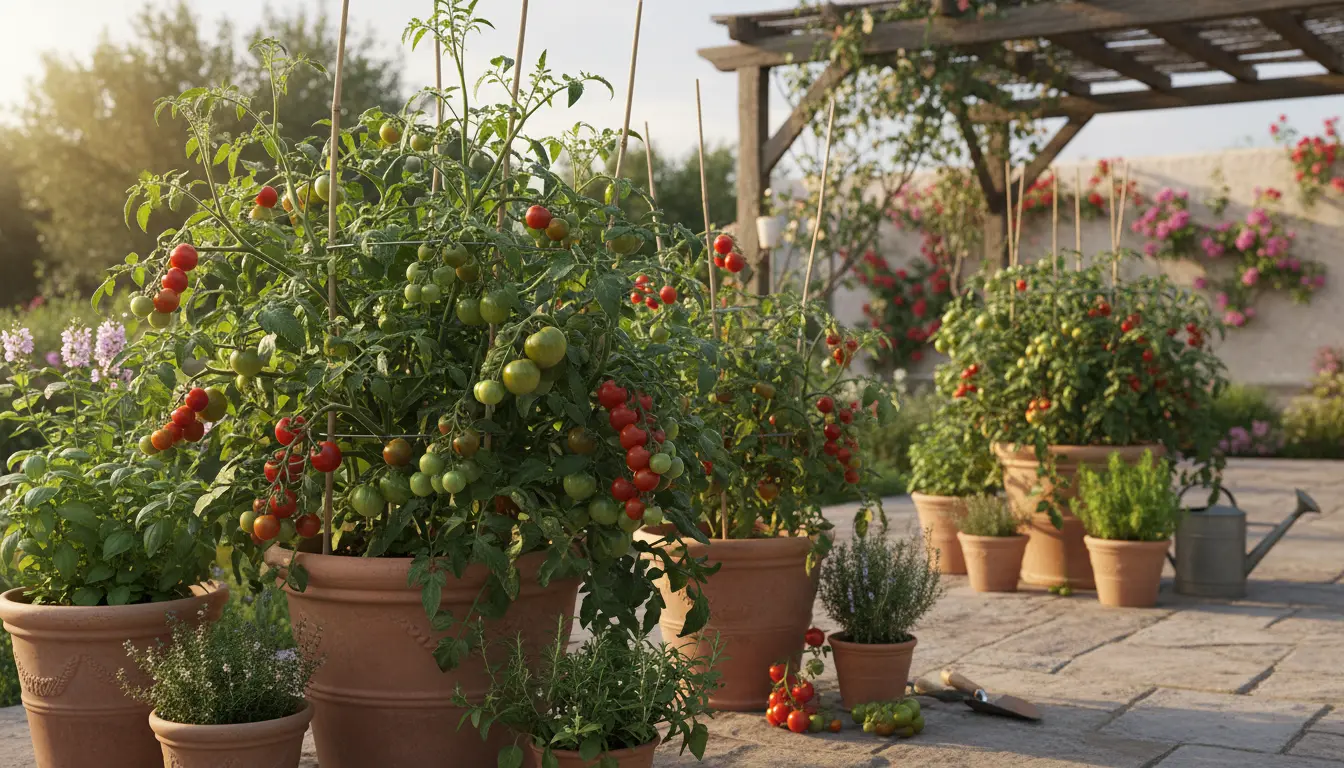
Why grow tomatoes in containers
Growing tomatoes in containers is ideal for small spaces, balconies, and patios. Containers let you control soil, drainage, and placement to suit sunlight and microclimates.
Container tomato growing also reduces soil-borne disease risk and makes harvesting and maintenance easier for beginners.
Choosing varieties for growing tomatoes in containers
Select varieties suited to limited root space to maximize yield and reduce maintenance. The right variety affects pruning, staking, and feeding routines.
Determinate vs indeterminate varieties
Determinate (bush) tomatoes stop growing at a certain height and are good for small containers. Indeterminate (vining) types continue to grow and need larger pots and more support.
- Best for small containers: Patio, Tiny Tim, Bush Early Girl
- Best for large patio pots: Celebrity, Better Boy (compact indeterminate)
- Cherry tomato picks: Sweet 100, Gardener’s Delight
Container size, soil, and placement for growing tomatoes in containers
Container size matters: a single determinate plant does fine in a 5-gallon pot, while indeterminate varieties need 10 gallons or more.
Placement should provide 6–8 hours of direct sun for fruiting varieties and at least 4–6 hours for some cherry types.
Soil mix and drainage
Use a high-quality potting mix formulated for vegetables. Avoid garden soil, which compacts and drains poorly in containers.
- Mix: 60% potting mix, 20% compost, 20% perlite or pumice for aeration
- Ensure drainage holes and a saucer to capture excess water
- Add a slow-release organic fertilizer at planting
Watering and feeding schedule for tomatoes in containers
Containers dry faster than in-ground beds. Water consistently so soil stays evenly moist but not waterlogged.
Check moisture daily. Water deeply until water runs from drainage holes, then allow the top inch to dry before the next watering.
Fertilizer recommendations
Feed container tomatoes regularly because nutrients leach out with frequent watering. Use a balanced liquid feed every 1–2 weeks or a water-soluble tomato fertilizer.
- At planting: mix compost and slow-release fertilizer into potting mix
- Vegetative stage: higher nitrogen feed for leaf growth
- Flowering/fruiting stage: switch to phosphorus and potassium-rich feed
Pruning, staking, and common problems when growing tomatoes in containers
Support and occasional pruning improve air circulation and fruit quality, especially for indeterminate varieties. Use cages, stakes, or trellises anchored to the pot.
Remove suckers on indeterminate plants to focus energy on main stems and fruit. For determinates, minimal pruning is usually best.
- Yellowing leaves: check water and nutrient levels
- Blossom end rot: calcium deficiency and inconsistent watering—maintain even moisture and add calcium if needed
- Pests: hand-pick or use insecticidal soap for aphids and whiteflies
- Diseases: rotate containers, replace potting mix yearly, and avoid overhead watering to reduce fungal issues
Tomato plants grown in containers can produce fruit faster than those in cold ground because pots warm up sooner in spring.
Step-by-step planting and care guide for growing tomatoes in containers
- Choose a sunny location and a container sized for your tomato variety.
- Fill with quality potting mix blended with compost and perlite for drainage.
- Plant seedlings deep—bury stems up to the first true leaves to encourage strong roots.
- Water thoroughly after planting, then water consistently, checking soil moisture daily.
- Install supports at planting time to avoid root disturbance later.
- Fertilize with a balanced feed early, then switch to a bloom/fruit formula once flowers appear.
- Monitor for pests, prune as needed, and harvest regularly to encourage more fruiting.
Real-world example: Balcony gardener case study
Maria lives in a third-floor apartment with a small balcony. She used two 10-gallon fabric pots and planted two determinate tomato plants labeled Patio.
She placed the pots in full sun, used a commercial potting mix with added compost, and watered every morning. Maria added a liquid tomato feed every 10 days and installed small tomato cages.
By mid-summer she harvested several pounds of tomatoes and avoided common issues by keeping consistent moisture and removing lower leaves to improve airflow.
Quick checklist for growing tomatoes in containers
- Pick the right variety for your pot size
- Use quality potting mix and provide good drainage
- Ensure 6+ hours of sun for most varieties
- Water deeply and consistently; check daily in hot weather
- Feed during flowering and fruiting stages
- Provide support and prune selectively
- Watch for pests and signs of nutrient deficiency
Growing tomatoes in containers is a practical way to enjoy fresh produce from limited space. With the right variety, pot, soil, and routine care, container tomatoes reward you with a steady supply of fresh fruit through the season.