
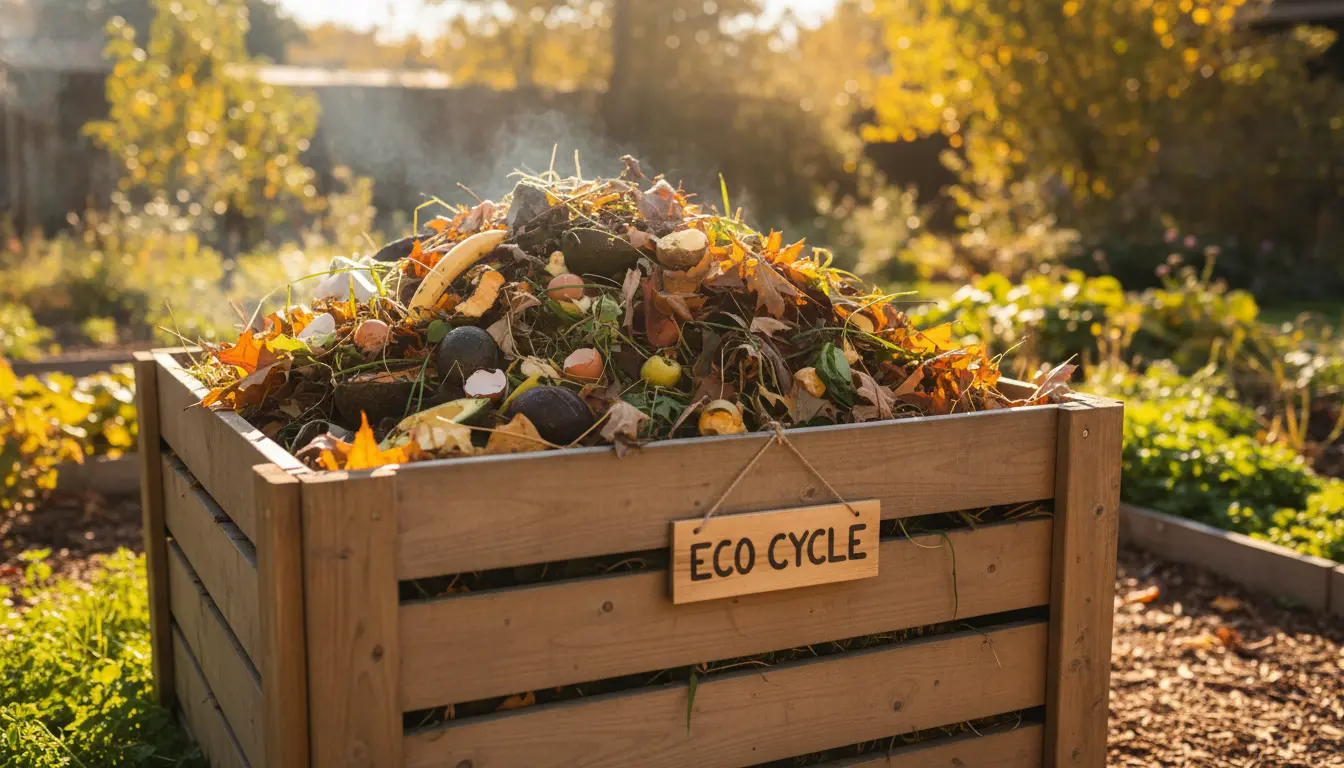
Why Compost at Home
Composting at home reduces organic waste sent to landfills and returns nutrients to soil. It saves money, lowers your carbon footprint, and improves garden health.
Home composting works for gardens, houseplants, and potted vegetables. You don’t need a large yard—systems scale from small bins to tumblers.
How to Start Composting at Home
Starting composting at home is a simple process of collecting organic materials, managing the pile or bin, and harvesting finished compost. Below are clear steps to begin.
Step 1: Choose a Compost System
Select a system that fits your space and routine. Common options include:
- Open compost pile for large yards.
- Compost bin for a neater, contained option.
- Tumbler for faster, low-odor turnover with easy turning.
- Bokashi or worm bin (vermicompost) for apartments and small spaces.
Pick one based on available space, how often you can turn the material, and whether you need indoor or outdoor solutions.
Step 2: Gather the Right Materials
Compost needs a mix of carbon (browns) and nitrogen (greens). Aim for a rough ratio of 25–30 parts carbon to 1 part nitrogen by weight, but practical balancing works well.
- Greens (nitrogen): kitchen scraps, vegetable peels, coffee grounds, fresh grass clippings.
- Browns (carbon): dry leaves, paper towels, shredded cardboard, straw.
- Optional: small amounts of garden soil or finished compost to add microbes.
Avoid meat, dairy, oily foods, diseased plants, and pet waste in typical backyard composts to reduce pests and odors.
Step 3: Build and Maintain the Pile
Start with a 12–24 inch layer of browns to create airflow. Add alternating layers of greens and browns, keeping layers thin for quicker breakdown.
Key maintenance tips:
- Turn or mix the pile every 1–2 weeks for aerobic composting.
- Keep the pile moist like a wrung-out sponge—too dry slows decomposition; too wet causes odors.
- Monitor temperature: a hot pile (120–160°F / 50–70°C) breaks down materials faster.
What to Compost at Home
Most plant-based kitchen and yard waste are excellent for home composting. Use this quick reference:
- Safe: fruit and vegetable scraps, coffee grounds, tea leaves, eggshells, yard trimmings, shredded paper.
- Use with caution: citrus peels and onion skins in moderation (they slow microbes), large woody branches need chipping.
- Avoid: meat, fish, dairy, fats, large bones, diseased plants, and pet feces.
Troubleshooting Common Problems
Problems are usually easy to fix with small adjustments. Match symptoms to solutions below.
- Bad smells: add more browns, increase airflow, and turn the pile.
- Pile not heating: add fresh greens, increase pile size, or insulate with straw/cover.
- Too wet: add dry browns and turn; consider raising the bin off wet ground.
- Pests: avoid meat/dairy, use a closed bin or fine mesh, and bury fresh food under browns.
Compost Use and Harvesting
Finished compost is dark, crumbly, and smells earthy. Typical timelines range from 2 months (hot, actively managed) to 12 months (slow, passive piles).
Use finished compost as:
- Top dressing for lawns and beds.
- Soil amendment mixed into planting holes.
- Potting mix component for container plants.
Food scraps and yard waste make up nearly 30 percent of household trash by weight. Composting those materials at home can cut your waste dramatically and return nutrients to your garden.
Simple Weekly Routine for Home Composting
Consistency beats perfection. Follow this practical weekly routine to keep your system healthy.
- Daily: Add kitchen scraps to a sealed countertop container.
- Twice weekly: Empty scraps into the outdoor bin, add a layer of browns.
- Every 1–2 weeks: Turn pile or rotate tumbler once or twice.
- Monthly: Check moisture and add dry material if needed.
Real-World Example: Small Apartment Vermicompost Case
Case: Sarah, a city apartment renter, started a worm bin under her sink. She fed the bin 1–2 cups of kitchen scraps daily and added shredded cardboard as bedding. Within three months she harvested a small batch of rich worm castings and significantly reduced her weekly trash volume.
Results:
- Reduced trash by 40 percent within two months.
- Produced about 4 liters of rich compost in three months for potted herbs.
- Minimal odor due to balanced feeding and proper bedding.
Final Tips for Successful Home Composting
Start small and build confidence. Choose a system you will maintain, and keep a simple mix of greens and browns on hand.
- Label a kitchen bucket for scraps to make collection easy.
- Chop larger items to speed decomposition.
- Use a thermometer for hot composting, or use visual cues for passive composting.
With a little routine and the right balance, composting at home becomes an easy and rewarding habit that benefits your garden and the environment.