
How Home Battery Backup Systems Work
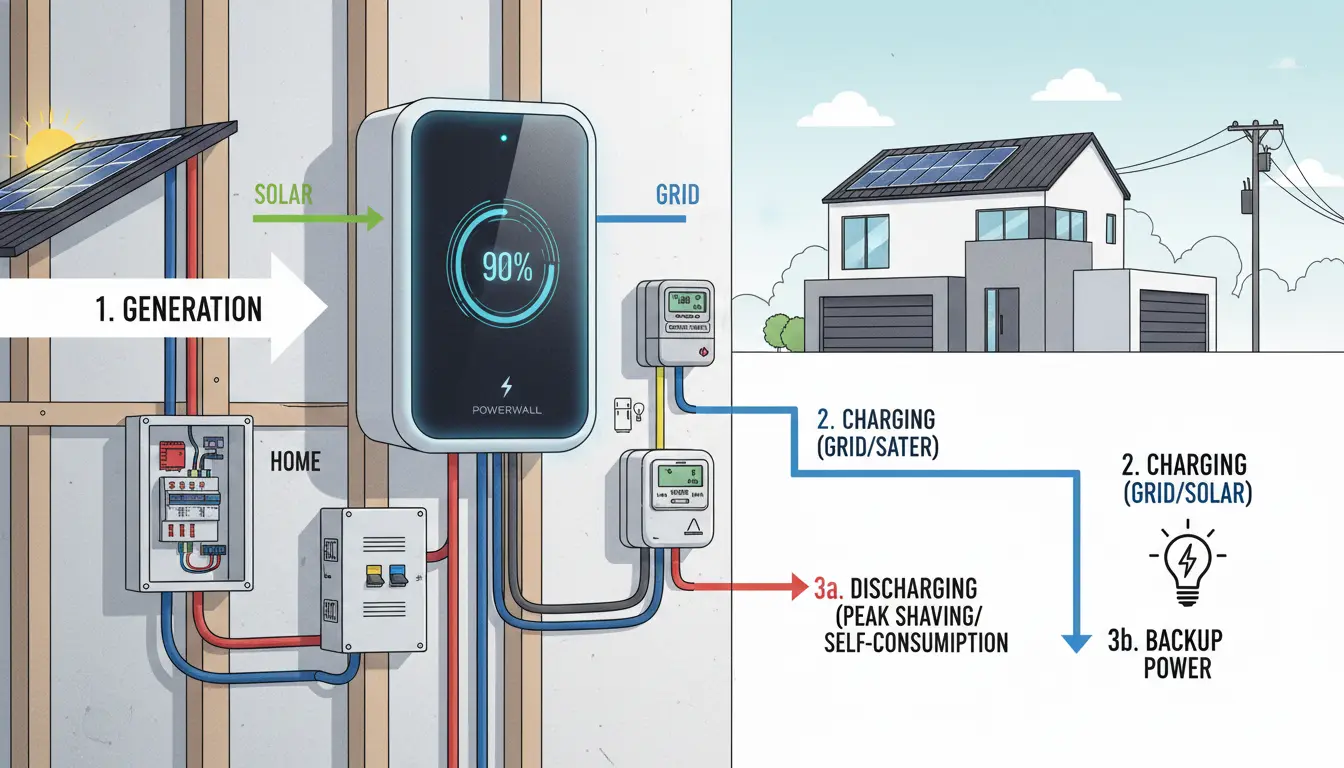
Home battery backup systems store electrical energy for use when the grid fails or when electricity rates are high. They connect to your home electrical panel and, with or without solar panels, supply power to selected circuits or the whole house.
The core parts include the battery bank, an inverter/charger, a battery management system (BMS), and a transfer switch. Each part plays a role in charging, monitoring, and safely delivering power.
Types of Home Battery Backup Systems
Choosing the right system depends on chemistry, capacity, and how you plan to use it. The main battery types are lithium-ion and lead-acid.
Lithium Ion Batteries
Lithium-ion batteries are common for home energy storage because of higher energy density and longer cycle life. They are lighter and take up less space than lead-acid units.
Lead Acid Batteries
Lead-acid batteries are cheaper upfront but require more space and maintenance. They are less efficient and have shorter useful lifespans.
Sizing Your Home Battery Backup Systems
Correct sizing avoids overspending and ensures you have enough backup power. Size is measured in kilowatt-hours (kWh) and kilowatts (kW) for power capacity.
Follow these steps to size a system:
- List essential loads (refrigerator, lights, medical devices) and their wattage.
- Estimate runtime needed (hours) during an outage.
- Multiply power (kW) by hours to get required kWh.
- Add a 20–30% buffer for inefficiencies and future needs.
Installation and Integration with Solar
Installation involves mounting batteries, wiring to the inverter and transfer switch, and setting up the management software. Licensed electricians and certified installers should handle electrical connections and permits.
If you have solar panels, integrate the battery to store surplus solar energy. This reduces daytime export and increases self-consumption for evening use or outages.
Grid-Connected vs. Off-Grid Use
Most home battery backup systems are grid-tied with islanding capability—this allows safe disconnection from the grid during outages. Fully off-grid setups require larger battery banks and a different inverter design.
Costs and Financial Considerations
Costs vary by capacity, battery chemistry, and installer fees. Expect a range from a few thousand dollars for small systems to tens of thousands for whole-home solutions.
Consider the following when calculating cost-effectiveness:
- Upfront equipment and installation costs
- Expected battery lifespan and warranty
- Electricity savings or avoided diesel generator fuel
- Available incentives, rebates, or tax credits
Maintenance and Safety for Home Battery Backup Systems
Proper maintenance extends battery life. For lithium systems, maintenance is mostly software updates and occasional visual inspections. For lead-acid systems, check fluid levels and clean terminals.
Safety tips include installing batteries in well-ventilated areas, ensuring proper mounting, and following manufacturer instructions for temperature ranges. The inverter’s BMS protects against overcharge and deep discharge.
Permits, Codes, and Warranties
Local electrical codes and permitting requirements vary. Before purchase, check local regulations about battery storage installations and required inspections.
Review warranties carefully. Typical battery warranties cover 5–10 years or a certain number of cycles, with performance guarantees down to a percentage of original capacity.
Home battery backup systems can increase resilience during outages and reduce peak electricity costs by shifting consumption to cheaper times.
Choosing the Right Brand and Installer
Compare manufacturers on cycle life, round-trip efficiency, warranties, and monitoring features. Check installer credentials and references.
Questions to ask potential installers:
- Do you provide permits and inspections?
- What is the expected lifespan and replacement cost?
- Can the system be expanded later?
Small Case Study: Suburban Home Outage Preparedness
Jane, a homeowner in a storm-prone suburb, installed a 10 kWh lithium-ion battery with a 5 kW inverter. She prioritized powering a refrigerator, two lights, a sump pump, and her Wi-Fi router during outages.
The installer sized the system for 8 hours of backup for essential loads. During a recent 12-hour outage, Jane managed critical loads on rotation and avoided food loss and water damage. The system also reduced her evening grid use by storing daytime solar energy.
Common Mistakes to Avoid
- Undersizing the battery and expecting whole-home backup when only essential circuits are supported.
- Ignoring ventilation and temperature limits that shorten battery life.
- Choosing the lowest upfront cost without comparing warranties and long-term performance.
Next Steps for Planning Home Battery Backup Systems
Start with a load audit of essential devices and their run times. Get quotes from at least three certified installers and ask for system performance estimates.
Compare lifecycle costs, warranty terms, and how well the system integrates with any existing solar panels. A well-chosen battery backup system improves resilience and can lower energy costs over time.