
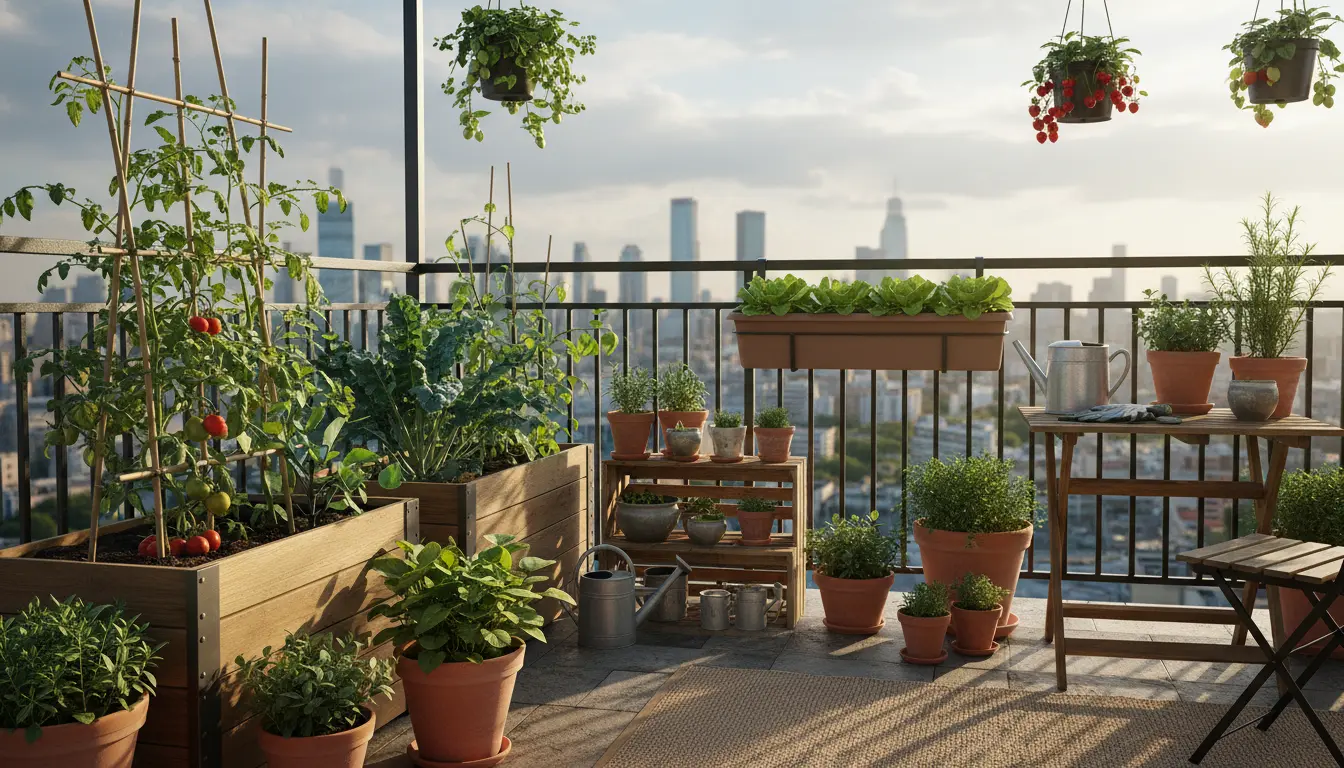
Starting a balcony vegetable garden is a practical way to grow fresh food in small spaces. This guide gives clear steps for planning, planting, and maintaining productive containers on a balcony.
Why Choose a Balcony Vegetable Garden
A balcony vegetable garden saves money and provides fresh produce, even in an apartment. It also improves air quality and gives easy access to herbs and salad greens.
Planning Your Balcony Vegetable Garden
Begin by assessing light, space, and weight limits. Most vegetables need at least 4–6 hours of direct sunlight.
Light and Exposure for a Balcony Vegetable Garden
Observe your balcony at different times of day to see how much direct sun it gets. South- and west-facing balconies usually get the most light.
Space and Weight Considerations
Measure available floor and railing space. Check building rules for heavy loads; saturated pots are heavy. Use lightweight containers and consider wall-mounted planters to reduce floor weight.
Choosing Containers and Soil for a Balcony Vegetable Garden
Pick containers that match your plants and balcony layout. Deep-rooted crops need larger pots, while herbs and lettuce do well in shallower trays.
- Use pots with drainage holes to prevent root rot.
- Prefer lightweight materials like plastic, resin, or fabric grow bags for weight limits.
- Consider self-watering containers to reduce maintenance.
Use a high-quality potting mix, not garden soil. A mix with compost, peat or coconut coir, and perlite gives good drainage and nutrition.
Best Plants for a Balcony Vegetable Garden
Choose crops that suit light and space conditions. Fast-growing, compact varieties work best on balconies.
- Leafy greens: lettuce, spinach, arugula
- Herbs: basil, parsley, mint, chives
- Compact fruiting crops: cherry tomatoes, dwarf peppers
- Root crops: radishes, baby carrots in deep trays
Planting Guide for a Balcony Vegetable Garden
Start seeds indoors or buy seedlings for a faster harvest. Follow seed packet spacing and depth instructions to avoid overcrowding.
Seed Starting and Transplanting
Start seeds in small cells and transplant when seedlings have two to three true leaves. Harden off seedlings by exposing them gradually to outdoor conditions for a week.
Companion Planting on a Balcony
Mix herbs and flowers with vegetables to deter pests and attract pollinators. For example, marigolds near tomatoes help reduce nematode damage.
Care and Maintenance Tips
Consistent care keeps a balcony vegetable garden productive. Watering, feeding, and pest checks should be regular habits.
- Water daily in hot weather; early morning is best to reduce evaporation.
- Fertilize with a balanced liquid feed every 2–4 weeks for fruiting crops.
- Prune and harvest regularly to encourage more growth.
- Monitor for pests and treat with manual removal or organic sprays if needed.
Watering Strategies for a Balcony Vegetable Garden
Use mulch like straw or shredded bark to retain moisture. Self-watering pots or drip systems reduce watering frequency and conserve water.
Harvesting and Winter Care
Harvest vegetables at their peak for best flavor. Regular picking of lettuces and herbs promotes continued production.
In colder months, move sensitive pots indoors or use frost covers. Some crops, such as kale and spinach, tolerate light frost and can extend the harvest season.
Many herbs and leafy greens will produce more if you harvest a few outer leaves each week instead of cutting the whole plant. This encourages continuous growth and a longer harvest window.
Common Problems and Solutions for Balcony Vegetable Gardens
Pests, nutrient deficiency, and inconsistent watering are common issues. Early detection and simple fixes keep plants healthy.
- Yellow leaves: likely nitrogen deficiency—feed with balanced fertilizer.
- Wilting: often under- or over-watering—check soil moisture and drainage.
- Pests like aphids: spray with soapy water or introduce beneficial insects.
Small Case Study: One-Balcony Success
Anna, an apartment resident, converted a 6-foot south-facing balcony into a productive vegetable garden. She used three 12-inch pots for cherry tomatoes, two fabric bags for peppers, and hanging baskets for herbs.
In her first season she harvested weekly basil and enough cherry tomatoes for salads twice a week. Her key steps were choosing compact varieties, using a lightweight potting mix, and installing a simple drip irrigation system with a timer.
This example shows that modest effort and planning can yield fresh produce on a small balcony.
Quick Checklist to Start Your Balcony Vegetable Garden
- Measure light and space for your balcony
- Choose lightweight containers with good drainage
- Select suitable plants for your sunlight level
- Use quality potting mix and appropriate fertilizer
- Set a regular watering and maintenance routine
With these steps, you can transform an unused balcony into a steady source of fresh vegetables and herbs. Start small, learn each season, and expand as you gain confidence.