
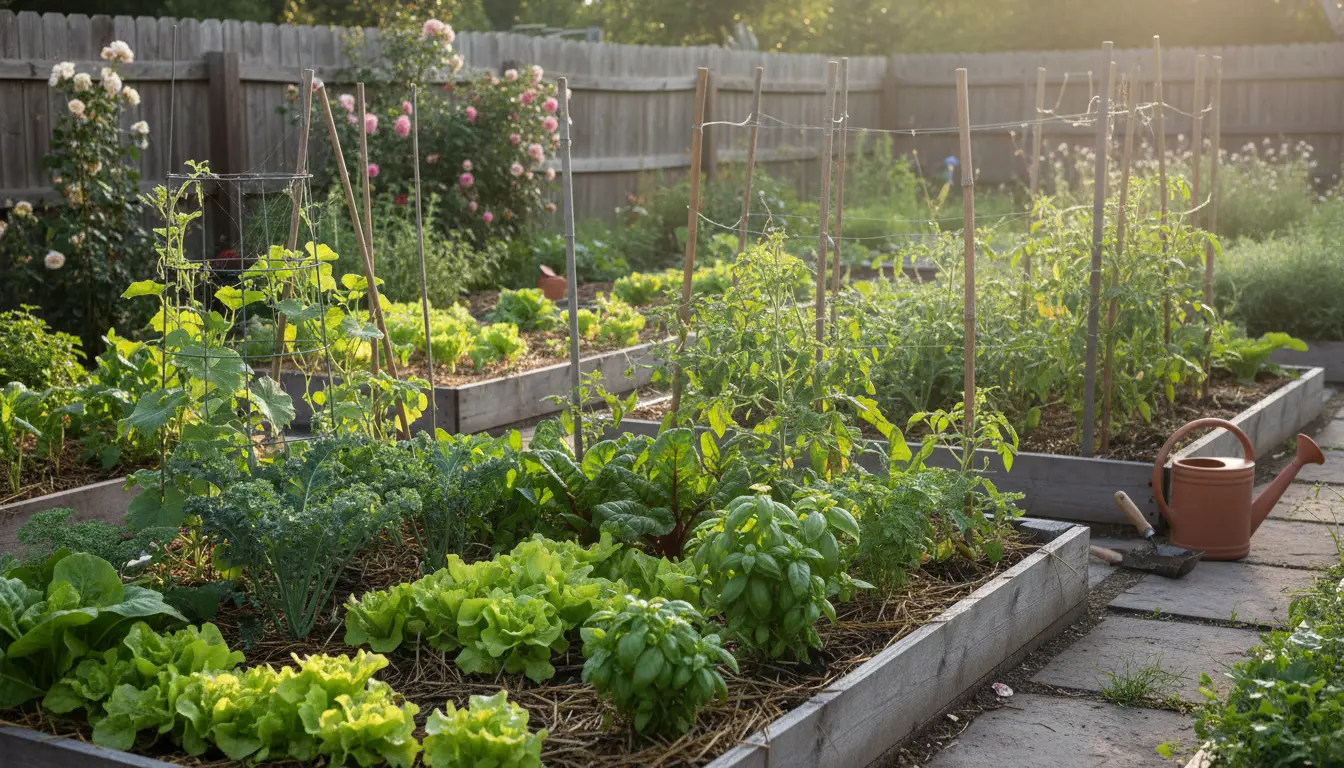
How to Start a Vegetable Garden: Step-by-Step Overview
Starting a vegetable garden is manageable with simple planning and regular care. This guide gives clear, practical steps so you can start a vegetable garden that produces food and fits your space.
Decide Why You Want to Start a Vegetable Garden
Choose goals before digging: fresh produce, saving money, or learning a hobby. Your goals influence crop choices, garden size, and how intensively you care for plants.
Choose the Right Location to Start a Vegetable Garden
Sunlight is the most important factor when you start a vegetable garden. Most vegetables need 6–8 hours of direct sun daily.
Pick a spot with good drainage, easy access to water, and protection from strong winds or animal traffic.
Location Checklist
- 6–8 hours of sunlight for tomatoes, peppers, and squash.
- Partial shade areas for lettuce and spinach.
- Flat or gently sloped ground to avoid erosion.
- Close to a hose or rain barrel for watering convenience.
Soil and Compost When You Start a Vegetable Garden
Healthy soil is the foundation of productive gardens. Test soil pH and texture, then amend as needed.
Add organic matter like compost to improve fertility and structure. Good soil holds moisture and drains excess water.
Basic Soil Preparation
- Test soil pH (ideal 6.0–7.0 for most vegetables).
- Remove weeds and debris.
- Work in 2–3 inches of compost over the surface.
- Till or fork to a depth of 8–12 inches for beds, or use lasagna layering for no-dig beds.
Plan What to Plant When You Start a Vegetable Garden
Choose crops based on climate, season, and kitchen use. Pick easy, reliable vegetables for first-time gardeners.
Beginner-Friendly Vegetables
- Tomatoes and peppers (warm-season)
- Leafy greens: lettuce, spinach, chard (cool or partial shade)
- Radishes and carrots (root crops)
- Zucchini and bush squash (high yield, minimal care)
Planting and Maintenance Tips
Proper planting depth and spacing help plants thrive. Follow seed packet or nursery tag directions.
Regular maintenance includes watering, mulching, and observing for pests or disease.
Watering and Mulching
- Water deeply once or twice weekly rather than light daily watering.
- Use drip irrigation or soaker hoses to reduce leaf wetness and water waste.
- Apply 2–3 inches of organic mulch to conserve moisture and suppress weeds.
Common Care Tasks
- Weed weekly to reduce competition for nutrients.
- Fertilize sparingly with compost tea or balanced organic fertilizer.
- Rotate crops yearly to avoid soil-borne diseases.
Manage Pests and Diseases as You Start a Vegetable Garden
Most pests can be managed with early detection and simple controls. Integrated pest management (IPM) reduces chemical use.
Practical Pest Strategies
- Inspect plants weekly for insects or damage.
- Use row covers to protect seedlings from birds and insects.
- Encourage beneficial insects with flowering herbs and companion plants.
- Handpick larger pests like slugs and caterpillars when visible.
Adding just 1 inch of compost to your garden bed can supply significant nutrients and improve water retention for months.
Harvesting and Saving for Next Season
Harvest vegetables when they reach recommended size for best flavor. Frequent harvesting often encourages more production.
Consider saving seeds from open-pollinated varieties and note what performed well for next season planning.
Simple Storage Tips
- Leafy greens: refrigerate in a plastic bag with a paper towel.
- Tomatoes: store at room temperature away from direct sun.
- Root vegetables: keep in a cool, dark place with good ventilation.
Small Real-World Example
Case study: A renter converted a 6×8 foot balcony into a productive garden using containers. They planted cherry tomatoes, basil, lettuce, and a few peppers.
Using two 20-gallon containers for tomatoes and several 5-gallon buckets for herbs, they harvested weekly fresh salad greens and peppers through the summer. The key was daily checks, consistent watering with a drip bottle, and rotating lettuce into the empty tomato containers after summer ended.
Quick Checklist to Start a Vegetable Garden
- Pick a sunny location near water.
- Test and amend the soil with compost.
- Choose easy vegetables suited to your season.
- Plant with correct spacing and depth.
- Water deeply, mulch, and monitor pests.
- Harvest regularly and take notes for next year.
Starting a vegetable garden is a learning process. Keep records, start small, and expand as you gain confidence. With simple routines and attention to soil and water, you can enjoy fresh produce and the satisfaction of growing your own food.