
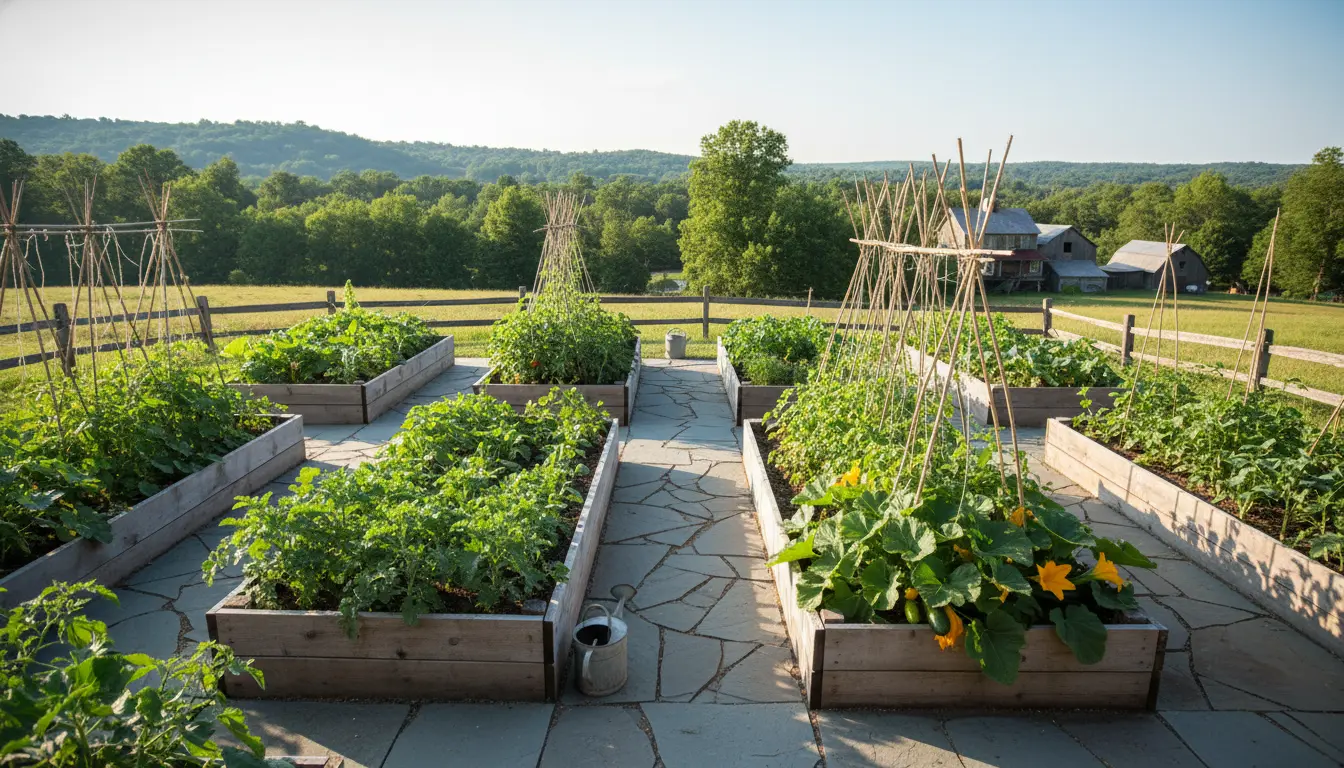
How to Start a Vegetable Garden: Simple First Steps
Starting a vegetable garden is achievable even with limited space. This guide gives clear, practical steps to plan, plant, and maintain a productive garden.
Plan Before You Start Your Vegetable Garden
Good planning saves time and reduces mistakes. Begin by deciding where you will garden and what you want to grow.
Pick the Right Location
Most vegetables need at least 6 hours of direct sun daily. Choose a spot with good drainage and easy access to water.
Avoid low spots that collect water and areas under large tree roots. Consider nearby pests like pets or deer when choosing the site.
Decide What to Grow
Start with easy crops to build confidence: lettuce, radishes, tomatoes, beans, and herbs. Pick varieties labeled “easy” or “beginner friendly” at the nursery.
- Vegetables for fast harvest: radishes, lettuce, spinach.
- Vegetables for beginners: tomatoes, bush beans, zucchini.
- Perennial herbs to add flavor: rosemary, thyme, mint.
Prepare Soil to Start a Vegetable Garden
Healthy soil is the foundation of a productive garden. Test soil if possible, then improve it with organic matter.
Soil Testing and Improvement
Use a basic soil test kit or send a sample to your local extension office. Check pH and nutrient levels to choose amendments correctly.
Mix in 2–3 inches of compost into the top 6–8 inches of soil. Compost improves texture, drainage, and fertility.
Raised Beds or In-Ground?
Raised beds warm faster and drain well, ideal for small yards or poor soil. In-ground beds are lower cost but may need more soil amendment.
- Raised beds: better for compact spaces and mobility.
- In-ground: good for large yards with decent native soil.
Planting: Seeds vs Seedlings
Choose between planting seeds directly or buying seedlings. Both have pros and cons depending on the crop and season.
When to Plant
Check your local last frost date and plant accordingly. Fast crops like lettuce can go in early spring, while tomatoes wait until after frost.
Seed Starting Tips
Start seeds indoors 4–8 weeks before the last frost for warm-season crops. Use a light source and keep soil moist but not waterlogged.
Transplant seedlings when they have 2–4 true leaves and the weather is suitable.
Watering and Feeding Your Vegetable Garden
Consistent watering is more important than frequent watering. Aim for deep, less frequent irrigations to encourage strong roots.
Watering Schedule
Water in the morning to reduce disease risk. Most vegetables need about 1 inch of water per week; adjust for heat and soil type.
Fertilizing
Use balanced organic fertilizers or compost tea during the growing season. Over-fertilizing leads to lush leaves and few fruits.
Pest and Disease Basics for Vegetable Gardens
Monitor plants weekly to catch problems early. Many issues can be managed with cultural controls and simple barriers.
Common Control Methods
- Handpick larger pests like caterpillars and slugs.
- Use row covers to exclude insects early in the season.
- Rotate crops yearly to reduce soil-borne diseases.
Harvesting and Ongoing Care
Harvest vegetables at peak ripeness for best flavor and continued production. Regular harvesting encourages more fruiting for many crops.
After the main season, clean up plant debris to reduce overwintering pests and diseases. Add mulch and compost to prepare for next season.
Home-grown tomatoes can contain up to 40% more vitamin C than store-bought varieties because they ripen on the vine.
Practical Tips to Keep Your First Vegetable Garden Simple
- Start small: a 4×4 or 4×8 bed is enough for beginners.
- Succession plant: sow small amounts of seeds every 2–3 weeks for continuous harvest.
- Mulch around plants to conserve moisture and suppress weeds.
- Keep a garden journal to track planting dates, successes, and problems.
Case Study: Small Balcony Start
Sarah, a city renter, used three 12-inch pots and a sunny balcony shelf to begin. She chose compact tomatoes, basil, and leaf lettuce.
Within three months she harvested enough salad greens weekly and two mid-season tomatoes. Her tips: use quality potting mix, water daily in hot weather, and pinch back tomato suckers for bushy growth.
Summary: Grow Confidence with a Simple Plan
To start a vegetable garden, select a sunny site, improve soil, choose easy crops, and maintain regular watering. Small, steady steps produce steady results.
Track what works in your climate and expand gradually. Gardening skills grow with each season of hands-on practice.