
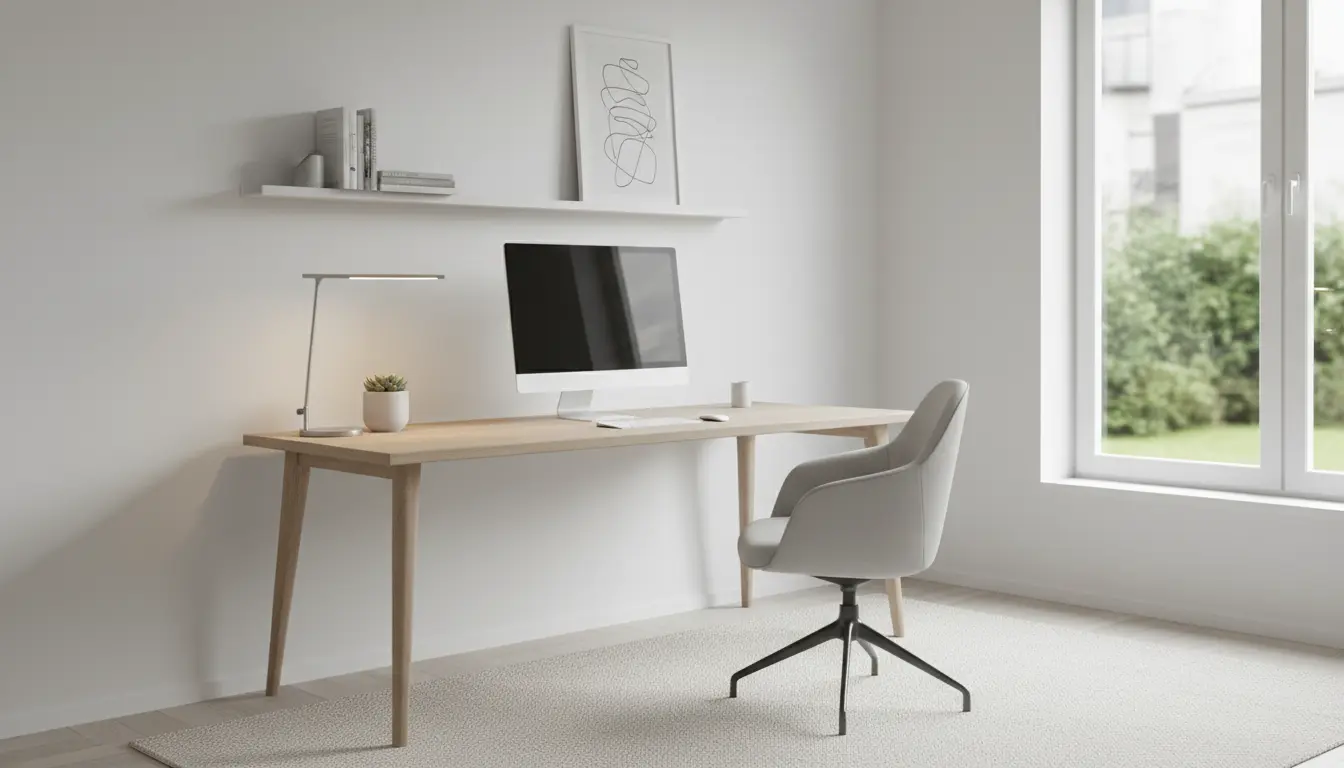
Work From Home Productivity: Start With a Practical Setup
Improving work from home productivity begins with a deliberate workspace. A consistent, comfortable area reduces distractions and signals your brain that it’s time to work.
Focus on three core elements: ergonomics, lighting, and minimal clutter. Small changes in these areas often produce immediate gains in concentration and endurance.
Work From Home Productivity: Ergonomics and Equipment
Use a chair and desk at proper heights to avoid strain. Your screen should be at eye level and your keyboard positioned so your wrists are neutral.
If you cannot afford new furniture, try low-cost adjustments like a laptop stand, external keyboard, or a small cushion to improve posture. These fixes cut physical distractions that reduce productivity.
Work From Home Productivity: Establish Clear Routines
Routines create predictable cues that make starting work easier. Set fixed start and stop times, a morning ritual, and short breaks to maintain consistent output.

Routines are more effective when combined with weekly planning. Spend 10–15 minutes at the end of each Friday or start of each Monday to map priorities for the week.
Work From Home Productivity: Time Blocking and Breaks
Time blocking segments your day into focused periods for specific tasks. Use 60–90 minute blocks for deep work and 15–30 minute blocks for meetings, email, or admin tasks.
Schedule regular breaks using a method like the Pomodoro Technique (25 minutes work, 5 minute break). Breaks prevent decision fatigue and help sustain energy throughout the day.
Work From Home Productivity: Manage Distractions

Identify your common distractions and apply targeted controls. For example, silence notifications, use website blockers, or set family boundaries during work blocks.
Use visual cues to show when you are unavailable. A simple sign at your desk or closing a door reinforces boundaries with housemates and children.
Work From Home Productivity: Digital Tools That Help
Choose a small set of reliable tools and avoid constant switching. Use a calendar for scheduling, a task manager for priorities, and a focus app for distraction control.
- Calendar: Google Calendar, Outlook
- Task manager: Todoist, Microsoft To Do
- Focus tools: Forest, Focus@Will, site blockers like Freedom
Keep tools integrated so your tasks and calendar sync. Overly complex systems create overhead and reduce effective working time.
Work From Home Productivity: Plan Work by Energy and Priority
Match tasks to your natural energy cycles. Put demanding creative work when you are most alert and reserve routine tasks for low-energy periods.
Use the Eisenhower matrix (urgent vs important) to decide what to do, delegate, schedule, or delete. This reduces time wasted on low-value activities.
Work From Home Productivity: Communication and Expectations
Clear communication reduces interruptions and rework. Share your working hours, preferred channels, and expected response times with colleagues.
When working on focused tasks, mark your status as “do not disturb” in team apps and provide a brief note on when you’ll be available. This sets realistic expectations and reduces context switching.
Studies show that people working in tidy, purpose-built workspaces report higher concentration and lower stress. Even a 10-minute midday tidy can improve focus for the afternoon.
Work From Home Productivity: Small Habits That Add Up
Micro-habits are easier to start and maintain than sweeping changes. Examples include a 5-minute desk tidy at the end of each block and writing a one-line plan before lunch.
Consistency matters more than intensity. Track one habit for 30 days, then add another. Over time, these small habits compound into reliable productivity gains.
Work From Home Productivity: Handling Meetings and Collaboration
Limit meetings to clear agendas and defined outcomes. If a meeting can be an email, choose asynchronous communication instead.
Use shared documents for collaborative work so everyone can contribute without real-time interruptions. This preserves deep work windows for complex tasks.
Work From Home Productivity: Case Study
Case: A freelance designer improved output by 30% over two months. She implemented a three-step plan: dedicated workspace, 90-minute creative blocks, and a weekly review.
She blocked mornings for design work, kept afternoons for client calls and admin, and used a simple task manager to track priorities. After eight weeks she met deadlines earlier and reported less evening work.
Key takeaway: A few targeted changes, consistently applied, drove measurable improvement without expensive tools or dramatic schedule alterations.
Work From Home Productivity: Quick Checklist
- Create a dedicated workspace with ergonomic adjustments
- Set fixed start/stop times and a short morning ritual
- Use time blocking and schedule breaks
- Limit tools to a few integrations and avoid multitasking
- Communicate availability and meeting expectations
- Introduce one small habit at a time and review weekly
Work From Home Productivity: Final Practical Steps
Start today with three actions: define your workspace, schedule two focused blocks, and set a visible “do not disturb” signal. Test these for a week and adjust based on what works.
Productivity at home is practical and learnable. With intentional setup, routines, and communication, you can protect deep work and increase output without burnout.