
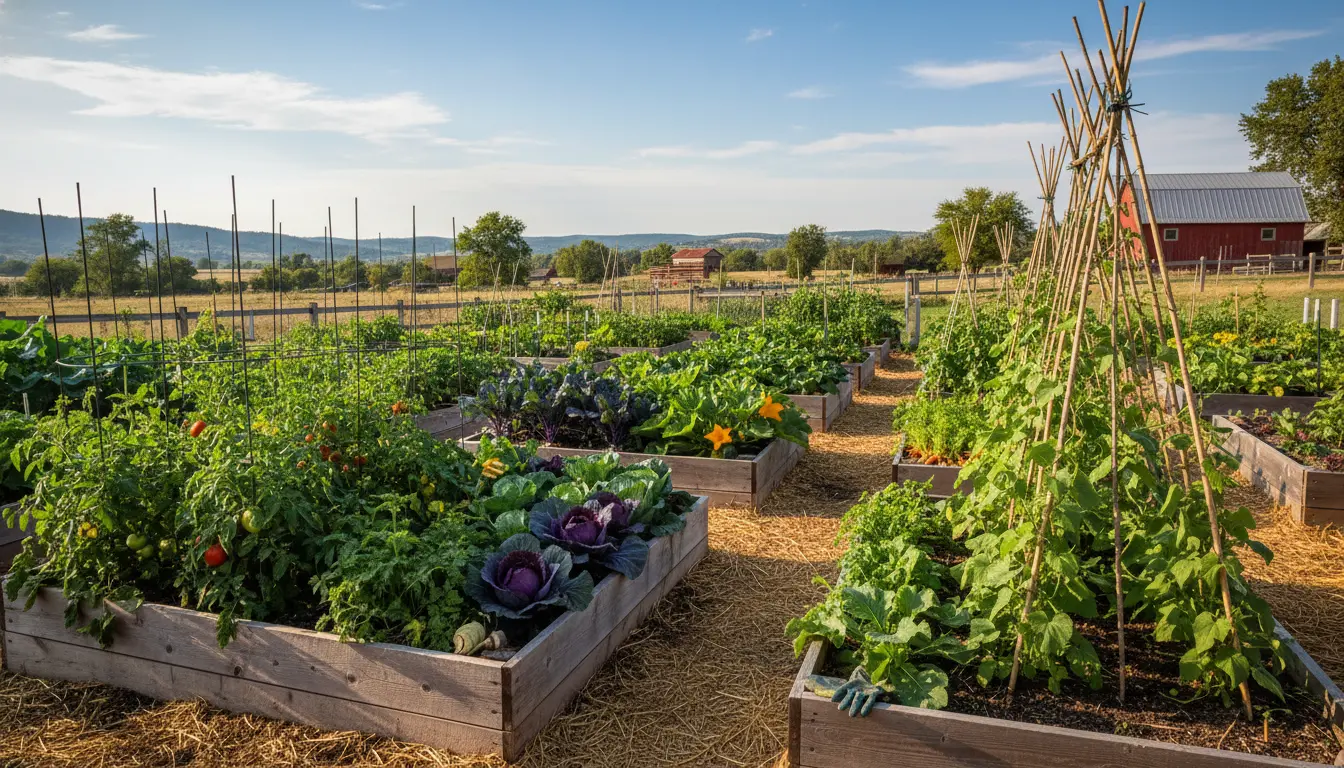
Start Smart with Vegetable Gardening for Beginners
Vegetable gardening can be simple and rewarding when you follow a clear plan. This guide gives practical, step-by-step instructions to help beginners get consistent results.
Vegetable Gardening for Beginners: Choose the Right Site
Picky location choices lead to poor harvests. Pick a spot that gets at least six hours of direct sun daily and has good drainage.
Away from large trees is best to reduce root competition and shade. If space is limited, consider containers or raised beds.
Soil and Beds for Vegetable Gardening for Beginners
Soil quality matters more than fancy tools. Aim for loose, well-draining soil rich in organic matter for steady plant growth.
Use raised beds or containers to control soil mix and reduce weeds. A basic soil mix is one-third compost, one-third topsoil, and one-third coarse sand or perlite for drainage.
Plan What to Plant
Choose vegetables that match your climate, season, and cooking habits. Beginners should start with easy, fast-growing crops.
- Easy starters: lettuce, radishes, spinach, green beans, cherry tomatoes, and herbs like basil.
- Plant according to your hardiness zone and frost dates to avoid seedling loss.
Crop Rotation and Companion Planting
Rotate plant families each year to reduce disease buildup in soil. Keep heavy feeders like tomatoes away from nightshade relatives the following season.
Companion planting can improve yields and deter pests. For example, plant marigolds near tomatoes to reduce certain nematodes.
Practical Planting Steps
Follow a few simple steps when planting seeds or transplants. Proper spacing, depth, and timing matter more than complex care routines.
- Prepare soil: loosen to 8-12 inches and mix in compost.
- Seed depth: plant seeds at their recommended depth on the packet.
- Spacing: give plants room to mature; overcrowding increases disease risk.
- Water gently after planting to settle soil around roots.
Watering and Maintenance
Consistent moisture is crucial for steady growth and flavor. Water deeply once or twice a week rather than light daily sprinkling.
Use mulch to retain moisture, suppress weeds, and moderate soil temperature. Straw, shredded leaves, or bark chips work well for vegetable beds.
Fertilizing for Beginners
Most gardens benefit from an initial application of balanced organic fertilizer or compost. Avoid over-fertilizing nitrogen-hungry plants like leafy greens if you want flavor.
Side-dress tomatoes with compost or a low-nitrogen fertilizer when fruit begins to set.
Pest and Disease Basics
Expect some insect activity. Identify pests early and use targeted, least-toxic controls first.
- Handpick larger pests like slugs and beetles.
- Use insecticidal soap or neem oil for soft-bodied pests like aphids.
- Encourage beneficial insects by planting flowers and avoiding broad-spectrum pesticides.
Common Problems and Quick Fixes
Yellow leaves often indicate watering issues or nutrient deficiency. Check soil moisture and consider a simple soil test.
Powdery mildew can be reduced by improving air circulation and avoiding wetting foliage in the evening.
Many common vegetables can be harvested in under 60 days. Radishes, leaf lettuce, and baby greens mature quickly and give fast rewards for beginners.
Harvesting and Storage
Harvest at peak ripeness for best flavor. Pick early morning when produce is cool for longer shelf life.
Store vegetables properly: leafy greens in a damp cloth in the fridge, root vegetables in a cool dark place, and tomatoes at room temperature away from direct sunlight.
Small Case Study: A Beginner Success
Sarah, a new gardener in a small city yard, used two 4×8 raised beds and followed these beginner steps. She added compost, planted lettuce, cherry tomatoes, basil, and radishes, and mulched well.
By the end of the first 12 weeks she harvested steady salad greens and tomatoes. Her strategy: consistent watering, weekly check-ins for pests, and harvesting young leaves kept plants productive.
Quick Checklist for Vegetable Gardening for Beginners
- Select a sunny, well-drained site.
- Start with raised beds or containers if soil is poor.
- Choose easy crops matching your season.
- Amend soil with compost and maintain proper spacing.
- Water deeply and mulch to conserve moisture.
- Monitor pests and use least-toxic controls first.
- Harvest regularly to encourage more production.
Final Tips
Keep notes on planting dates, varieties, and outcomes to improve next season. Gardening is iterative; small adjustments yield better results over time.
Start small, stay consistent, and enjoy the learning process. With basic planning and care, vegetable gardening for beginners becomes a reliable source of fresh produce and satisfaction.