
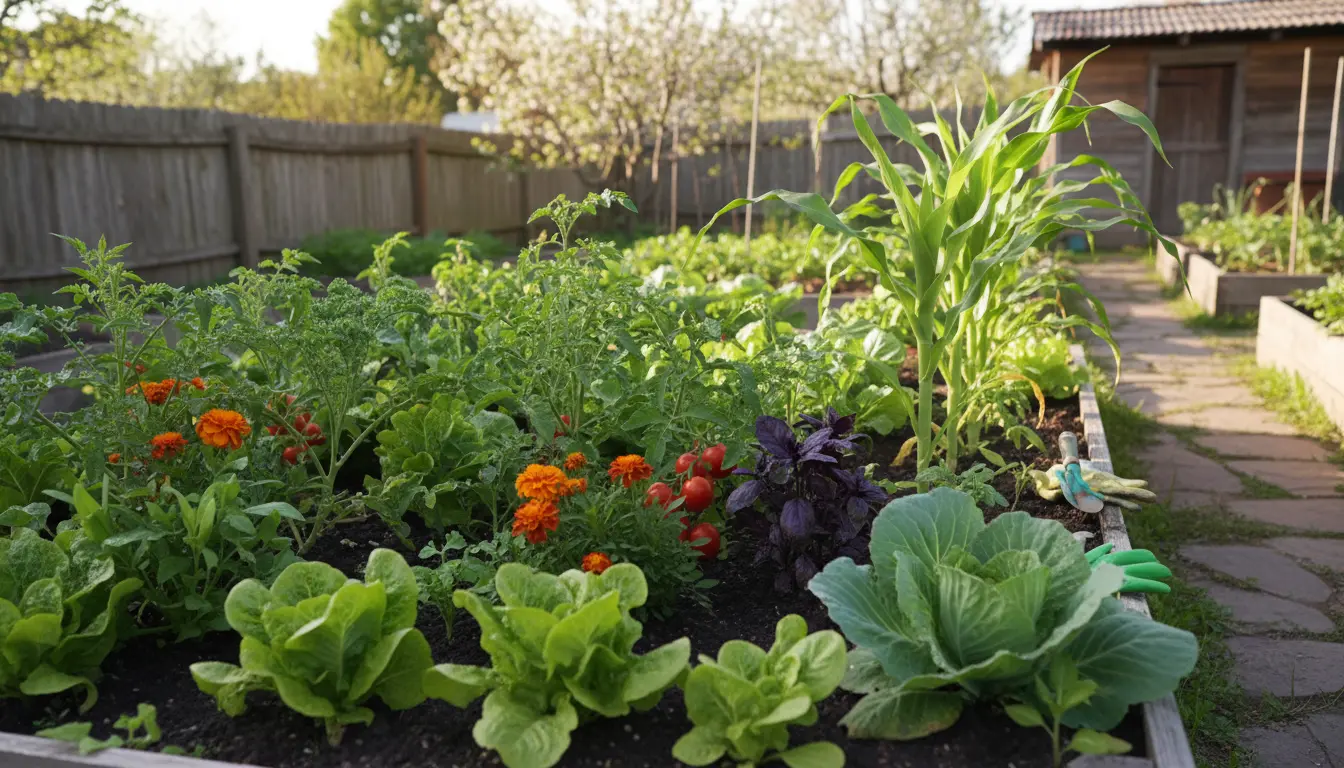
Starting a vegetable garden is practical and rewarding. This guide gives clear, step-by-step instructions to help beginners plan, plant, and maintain a productive garden.
Vegetable Gardening for Beginners: Choose the Right Site
Sunlight is the first priority. Most vegetables need 6 to 8 hours of direct sun daily, so pick the sunniest spot in your yard or on a balcony.
Check for water access and level ground. A nearby hose or drip system saves time and prevents uneven watering.
How to test a site quickly
- Observe sunlight for a full day to note shade patterns.
- Test soil drainage by digging a small hole and filling with water; if drained within 24 hours, drainage is good.
- Note wind exposure; high winds may require a windbreak or protective row cover.
Vegetable Gardening for Beginners: Prepare Soil and Beds
Healthy soil is the foundation of a productive garden. Aim for loose, well-draining soil rich in organic matter.
Raised beds or in-ground rows both work for beginners. Raised beds warm faster and offer better drainage.
Steps to improve soil
- Add 2–4 inches of compost to the topsoil and mix it in well.
- Aim for a slightly acidic to neutral pH (6.0–7.0). Use a home test kit to check.
- Consider a light application of balanced organic fertilizer at planting if soil is poor.
Vegetable Gardening for Beginners: Choose Easy Crops
Start with vegetables that are forgiving and quick to harvest. This builds confidence and reduces early mistakes.
- Lettuce and salad greens — fast, harvestable in 4–6 weeks for baby leaves.
- Radishes — mature in about 3–4 weeks and show quick success.
- Tomatoes (determinate varieties) — reliable summer producers in containers or beds.
- Beans and zucchini — high yield with minimal care.
Vegetable Gardening for Beginners: Planting and Spacing
Follow seed packet or plant tag spacing instructions. Crowding increases disease and lowers yields.
Use succession planting for continuous harvests. Sow new rows of fast crops like lettuce every 2–3 weeks.
Example planting schedule for a small bed
- Early spring: peas, radishes, and lettuce.
- After last frost: tomatoes, peppers, and basil.
- Mid-summer: direct sow beans and more lettuce in shade areas.
Vegetable Gardening for Beginners: Watering and Maintenance

Consistent moisture is more important than frequent shallow watering. Aim to keep the top 2–3 inches of soil evenly moist.
Drip irrigation or soaker hoses deliver water to roots and reduce leaf wetness, lowering disease risk.
Simple maintenance checklist
- Water deeply 1–3 times weekly depending on weather and soil.
- Mulch with straw or shredded leaves to conserve moisture and suppress weeds.
- Remove dead or diseased leaves promptly to prevent spread.
Vegetable Gardening for Beginners: Pest and Disease Basics
Start with prevention: healthy soil, proper spacing, and crop rotation reduce problems before they start.
Scout weekly for pests like aphids and caterpillars. Hand-pick large pests and use mild insecticidal soap for small infestations.
Low-toxicity pest control methods
- Introduce beneficial insects like ladybugs for aphid control.
- Floating row covers protect young plants from flea beetles and cabbage moths.
- Practice crop rotation and avoid planting tomatoes and potatoes in the same spot year after year.
Planting marigolds near vegetable beds can reduce some soil nematodes and attract beneficial insects. A small border of flowers supports pollinators and pest predators.
Vegetable Gardening for Beginners: Harvesting and Storage
Harvest vegetables at peak ripeness for best flavor and continued production. Regular picking encourages more fruiting in many crops.
Store root vegetables in cool, dark places and use greens quickly or blanch and freeze them for longer storage.
Harvesting tips
- Pick tomatoes when they reach full color and give slightly to pressure.
- Harvest lettuce leaves by cutting outer leaves first for ongoing growth.
- Use a sharp knife or scissors to avoid tearing stems and introducing disease.
Small Case Study: A First-Year Raised Bed
Maria, a beginner gardener, built a 4×4 raised bed in her small backyard. She chose a south-facing location and filled the bed with a mix of topsoil and compost.
She planted lettuce, radishes, bush beans, and one determinate tomato. By following a simple watering schedule and mulching, she harvested salad greens within five weeks and tomatoes later in summer.
Her key wins were starting small, adding compost, and learning to harvest often. The modest yields met her family needs and encouraged continued gardening the next season.
Vegetable Gardening for Beginners: Final Practical Tips
- Start small and expand as you gain experience.
- Keep a garden journal: note planting dates, varieties, and problems.
- Learn seasonally — spring and fall gardening techniques differ, so adapt accordingly.
With basic planning, soil prep, and routine care, new gardeners can enjoy fresh vegetables from a small plot. Use these steps to plan your first season and adjust as you learn what works in your yard.