
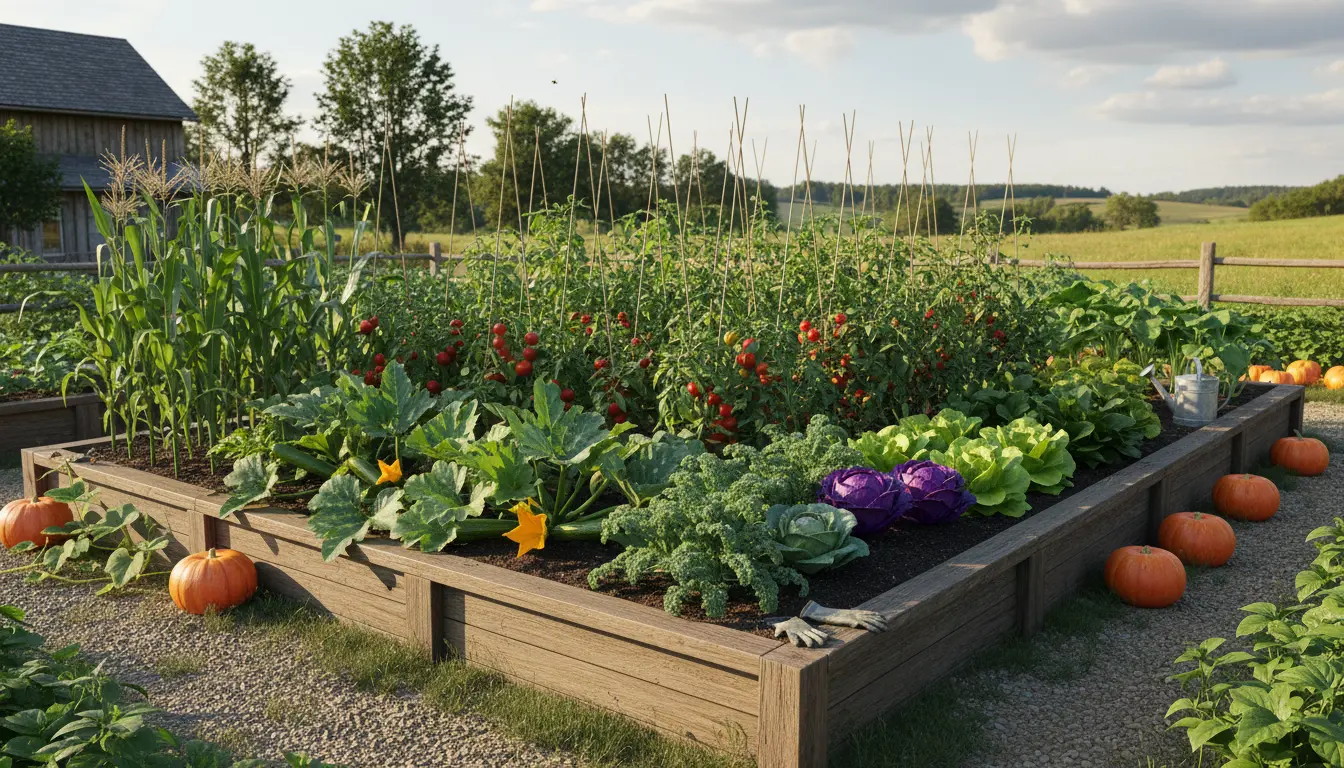
Starting a vegetable garden is a rewarding project that gives you fresh produce and useful outdoor time. This guide breaks the process into clear, practical steps so you can begin with confidence.
Starting a Vegetable Garden: Plan Your Space
Decide what vegetables you want to grow and how much space they need. Many beginners start with a 4×8 raised bed or a few containers to keep work manageable.
Choose crops based on your climate and season. Fast growers like lettuce and radishes are ideal for first-time gardeners.
Choose Plants for Success
- Pick 3–6 easy crops (tomatoes, peppers, lettuce, beans, radishes).
- Consider continuous harvest crops (leafy greens, bush beans).
- Match plant days to harvest with your local frost dates.
How to Choose a Site for Starting a Vegetable Garden
Vegetables need at least 6 hours of direct sun per day. Observe sun patterns for a week to find the best spot.
Also check for nearby water access and good drainage. Avoid low spots that stay wet after rain.
Soil and Light Checklist
- Full sun (6–8 hours) for most vegetables.
- Level area or raised beds for drainage.
- Easy access to a hose or rain barrel.
Soil Preparation for Starting a Vegetable Garden

Good soil is the most important factor for a productive garden. Test or observe your soil before planting.
Work organic matter into the top 6–12 inches to improve structure and fertility.
Steps to Improve Soil
- Test soil pH and nutrients with a kit or local extension service.
- Add compost (2–3 inches) and mix into the top soil.
- Use aged manure or balanced organic fertilizer if recommended.
Planting Tips When Starting a Vegetable Garden
Follow seed packet or plant tag directions for spacing and depth. Crowding reduces yield and increases disease risk.
Plant in blocks instead of long single rows to improve pollination and make harvesting easier.
Starter Plant vs. Seed
- Seeds are cheaper and offer more variety but take longer to establish.
- Starter plants give a quick harvest and are great for tomatoes, peppers, and herbs.
- Mix both: direct sow root crops and use transplants for fruiting crops.
Watering and Mulching for a New Vegetable Garden
Water deeply and less often to encourage strong roots. Aim for consistent moisture, especially during germination and fruit development.
Mulch reduces weeds and holds soil moisture, using straw, shredded leaves, or wood chips around plants.
Watering Best Practices
- Water at the base of plants to keep foliage dry.
- Use drip irrigation or soaker hoses for efficiency.
- Check moisture by feeling soil 2–3 inches deep.
Pest and Disease Control for Starting a Vegetable Garden
Start with prevention: clean tools, proper spacing, and healthy soil. Monitor plants weekly for early signs of trouble.
Use physical barriers like row covers, handpick pests, and choose disease-resistant varieties when possible.
Simple Organic Measures
- Encourage beneficial insects with companion flowers.
- Remove affected leaves; dispose of them away from the bed.
- Apply organic sprays only as a last resort and follow labels.
Harvesting and Crop Rotation
Harvest crops when they reach recommended size to encourage more production. Frequent picking increases yield for many vegetables.
Rotate crop families each year to reduce pest and disease buildup in the soil.
Basic Rotation Plan
- Year 1: Leafy greens and brassicas.
- Year 2: Legumes (beans, peas) to fix nitrogen.
- Year 3: Fruiting crops (tomatoes, peppers, cucumbers).
Adding two to three inches of compost each year can increase soil organic matter and water retention, often reducing the need for supplemental fertilizer.
Real-World Example: Small Urban Raised Bed
Case study: In Portland, a new gardener built a 4×8 raised bed and filled it with a mix of topsoil and compost. They planted tomatoes, basil, lettuce, and bush beans.
After three months of consistent watering and weekly checks for pests, the bed produced steady harvests and required minimal fertilizer. Rotating the bed to legumes the next season improved soil health further.
Final Checklist for Starting a Vegetable Garden
- Choose a sunny, well-drained site.
- Prepare soil with compost and test pH if possible.
- Start with a few easy crops and use raised beds or containers.
- Water deeply, mulch, and monitor for pests.
- Harvest often and rotate crops each year.
Starting a vegetable garden does not need to be complicated. With planning, good soil, and steady care, even a small plot can deliver fresh vegetables and learning that lasts a lifetime.