
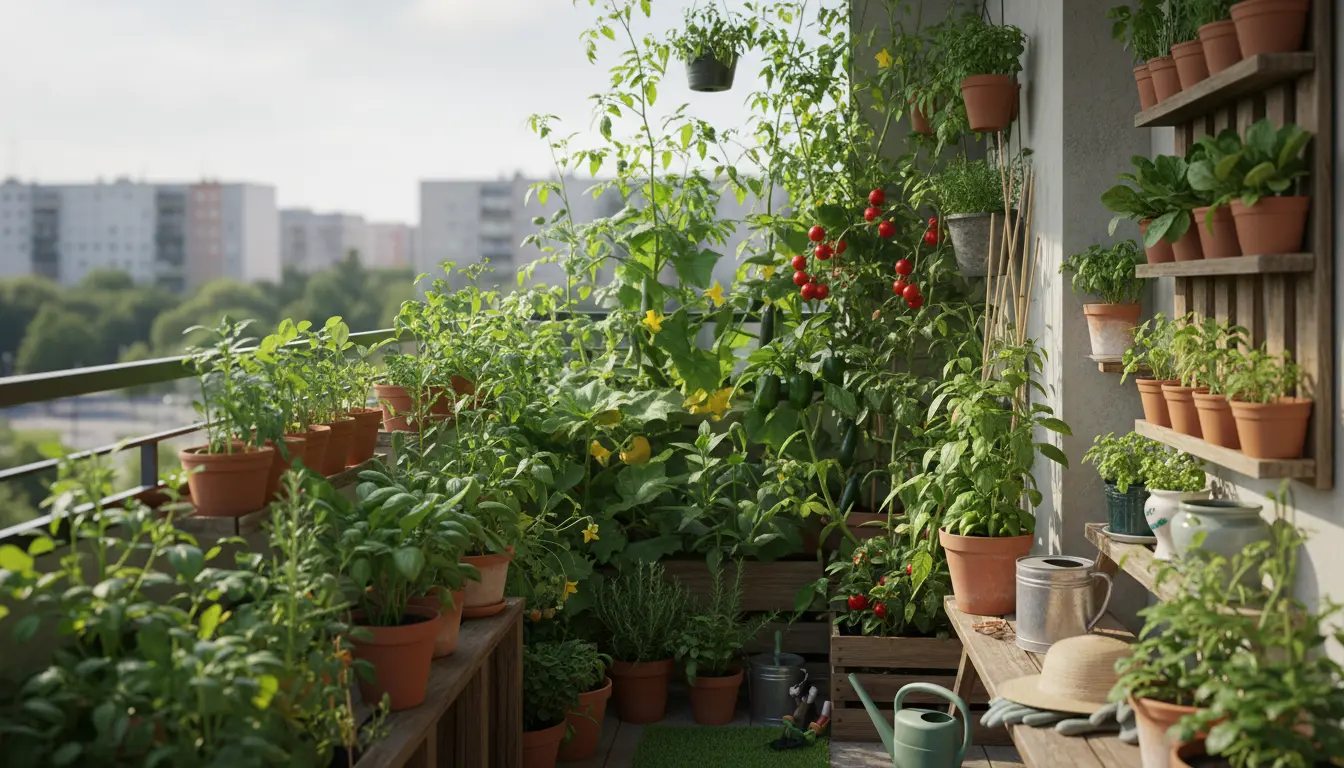
Starting a Small Vegetable Garden: First Steps
Starting a small vegetable garden is an achievable project for any home or balcony. This guide covers site selection, soil, containers, planting, and simple maintenance.
Focus on small, manageable tasks so you build skills and confidence. Use this plan to get harvests in the first season.
Choose the Right Location for Starting a Small Vegetable Garden

Most vegetables need at least 6 hours of direct sun daily. Observe your yard or balcony at different times to find the sunniest spot.
Consider access to water, wind exposure, and how easy it will be to reach the plants every day.
Soil and Containers: Basics for a Small Space
Good soil matters more than garden size. For ground plots, test soil pH and texture or use a commercial test kit.
For balconies or patios, choose containers with drainage holes. Use a high-quality potting mix rich in organic matter.
Choosing Containers When Starting a Small Vegetable Garden
Select containers sized to the plant. Leafy greens need 6–8 inch pots, while tomatoes require 5–10 gallon containers.
Use lightweight options like fabric pots or plastic planters for portability and ease of watering.
What to Plant First: Vegetables for Small Gardens
Start with high-yield, low-maintenance vegetables. These provide good results for beginners.
- Leafy greens: lettuce, spinach, arugula
- Herbs: basil, cilantro, parsley
- Root crops: radishes, carrots (in deep containers)
- Compact fruiting plants: cherry tomatoes, dwarf peppers
Choose varieties labeled “bush” or “dwarf” for limited space.
Timeline and Planting Tips
Check your local frost dates and use them to schedule sowing and transplanting. Start seeds indoors when necessary.
Use succession planting for a steady harvest: plant small batches every 2–3 weeks for lettuce and radishes.
Watering, Fertilizing, and Care
Water consistently. Small containers dry quickly, so check soil moisture daily in hot weather.
Apply a balanced, water-soluble fertilizer every 2–4 weeks for container plants. For ground beds, use compost or slow-release fertilizer at planting time.
Pest and Disease Management for Small Vegetable Gardens
Inspect plants weekly to catch problems early. Remove damaged leaves and use physical barriers for pests when possible.
Encourage beneficial insects by planting flowers like marigolds and alyssum nearby. Avoid broad-spectrum pesticides that kill pollinators.
Season Extension and Success Strategies
Extend your growing season with a simple row cover or small cold frame. These protect tender plants from light frosts and wind.
Rotate crops each year in ground beds to reduce disease build-up. In containers, refresh potting mix every season for best results.
Leafy greens like lettuce can be harvested in as little as 30 days from sowing. Microclimates on balconies often speed growth by a few days.
Practical Tools and Supplies
Keep tools simple. A small trowel, watering can, pruners, and a soil moisture meter are enough to start.
Invest in gloves and a bucket for mixing compost and carrying supplies. Good tools save time and reduce strain.
Small Case Study: Balcony Garden That Fed a Family
Case study: On a 6×3 foot south-facing balcony, a family grew cherry tomatoes, three lettuce varieties, basil, and radishes in containers.
They used five 10-inch containers and two 5-gallon fabric pots. Over a 4-month season they harvested weekly salads and 15 pounds of cherry tomatoes.
Key actions: consistent watering each morning, weekly liquid fertilizing, and staking tomatoes early. Results were steady and low effort.
Common Mistakes and How to Avoid Them
Overwatering is the most common problem. Always check soil moisture before watering to avoid root rot.
A second mistake is choosing the wrong varieties. Select compact types and check mature size on seed packets.
Quick Checklist Before You Start
- Confirm available sunlight and water access
- Choose containers and quality potting mix
- Select easy-to-grow varieties for your zone
- Plan a simple watering and fertilizing schedule
Final Tips for Starting a Small Vegetable Garden
Start small and expand after you succeed with a few crops. This keeps the project manageable and fun.
Record what you plant and when you harvest. A short journal helps improve results year to year.
With modest effort and planning, starting a small vegetable garden can provide fresh food and an enjoyable hobby.