
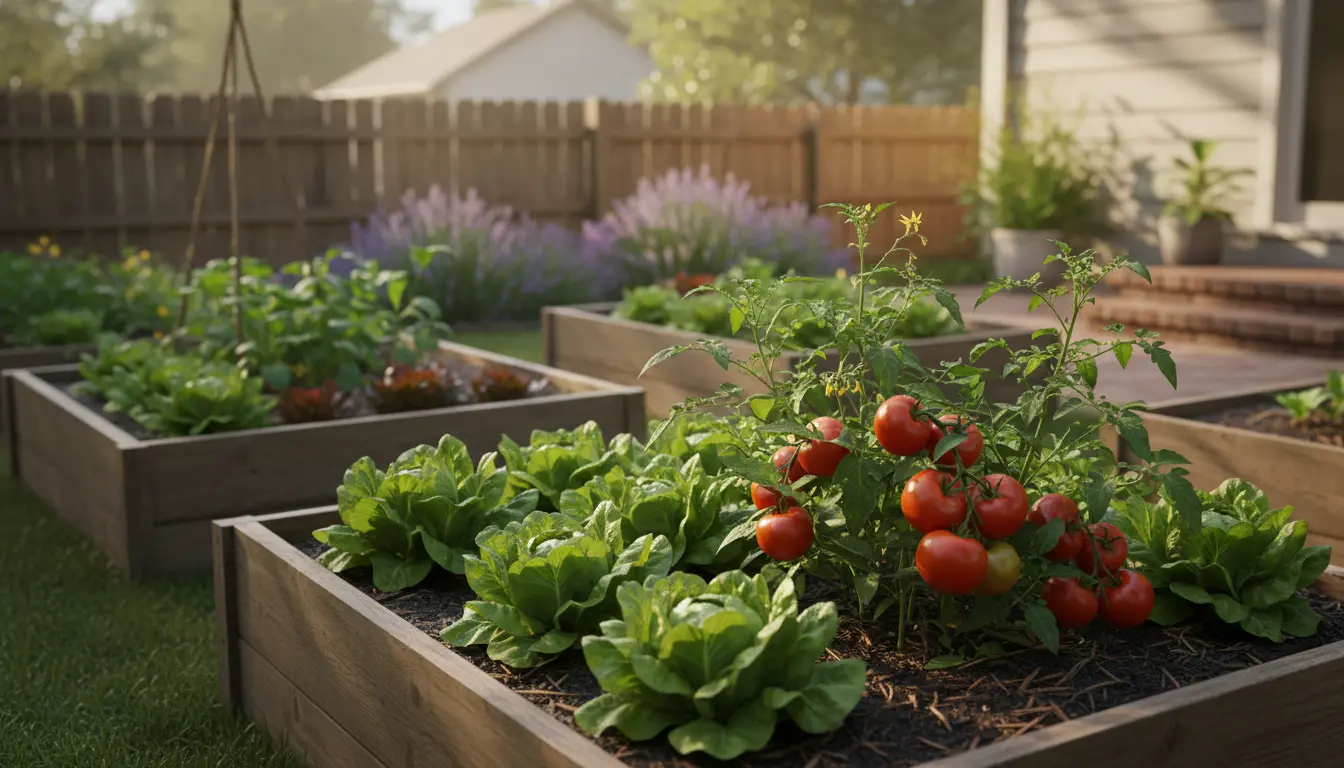
Why start a vegetable garden
Starting a vegetable garden gives you fresh produce, reduces grocery costs, and connects you with seasonal food. This guide breaks the process into practical steps so beginners can get reliable results.
Start a vegetable garden: Planning and site selection
Good planning saves time and prevents wasted effort. Choose a site that gets at least six hours of direct sun each day and has easy access to water.
Consider these factors when planning:
- Sun exposure: Full sun for most vegetables.
- Soil drainage: Avoid low spots that become waterlogged.
- Accessibility: Close to the house and water source for regular care.
- Space: Start small — a 4×8 foot bed is manageable for beginners.
Decide bed type and layout
Raised beds, in-ground rows, or container gardens all work. Raised beds warm faster in spring and give better soil control, while containers are great for patios and balconies.
Start a vegetable garden: Soil preparation and testing
Healthy soil is the foundation of success. Test your soil to know pH and nutrient levels or use a basic home test kit.
To improve soil:
- Add compost to increase organic matter and drainage.
- Work in 2–4 inches of compost into the top 6–8 inches of soil.
- Adjust pH if needed: lime raises pH, sulfur lowers it.
Soil mix for raised beds
A simple mix is 40% topsoil, 40% compost, 20% coarse sand or perlite for drainage. This gives structure and fertility without compacting.
Start a vegetable garden: Choosing plants and timing
Select vegetables that match your climate, season, and cooking preferences. Beginners should choose a mix of easy crops that grow quickly.

Good starter vegetables:
- Leafy greens: lettuce, spinach
- Root vegetables: radishes, carrots
- Fast producers: bush beans, zucchini
- Cold-hardy crops: peas, kale for early spring
Use a planting calendar
Check your local frost dates and use a planting calendar to plan succession sowing. Start fast crops every 2–3 weeks to extend harvests.
Start a vegetable garden: Planting techniques
Follow seed packet spacing and depth instructions. Overcrowding is a common beginner mistake that reduces yields and increases disease risk.
Planting tips:
- Direct sow root crops and beans into prepared soil.
- Start tomatoes and peppers indoors and transplant after last frost.
- Thin seedlings to recommended spacing once true leaves appear.
Start a vegetable garden: Watering and maintenance
Consistent watering is essential. Aim for deep, infrequent watering to encourage strong roots instead of shallow daily watering.
Maintenance checklist:
- Mulch to conserve moisture and suppress weeds.
- Monitor for pests and remove by hand or use targeted controls.
- Fertilize lightly based on soil test recommendations.
Pest and disease basics
Inspect plants weekly. Early detection prevents small issues from becoming major problems. Use crop rotation and companion planting to reduce disease pressure.
Start a vegetable garden: Harvesting and storage
Harvest frequently to encourage continued production. Pick vegetables at recommended maturity for best flavor and texture.
Storage tips:
- Leafy greens: Refrigerate in a plastic bag with a paper towel to absorb moisture.
- Root crops: Remove tops and store in a cool, dark place.
- Tomatoes: Store at room temperature away from direct sun until ripe.
Small real-world example: One-season starter bed
Case study: A beginner converted a 4×8 raised bed and followed this plan. They planted lettuce and spinach along the front, two tomato plants in the middle, and bush beans at the back.
Results after one season:
- Continuous salad greens from May to September via succession planting.
- Two tomato plants produced about 40–50 pounds of fruit combined.
- Beans provided multiple harvests and improved soil nitrogen for fall crops.
This plan required about 15–20 minutes of care most days and delivered fresh produce that reduced weekly grocery trips.
Start a vegetable garden: Common beginner mistakes and how to avoid them
Watch for these pitfalls and use these fixes to stay on track:
- Overwatering — water deeply but less often.
- Planting too much — start small and expand each year.
- Ignoring soil — test and amend before planting.
Final checklist to start a vegetable garden
- Choose a sunny, well-drained site.
- Test and improve soil with compost.
- Select 4–6 easy crops for first season.
- Plan watering, mulching, and pest monitoring.
- Harvest frequently and enjoy fresh produce.
With basic planning and consistent care, anyone can start a vegetable garden and harvest food in the first season. Begin small, learn from each cycle, and expand as confidence grows.