
Start a Vegetable Garden: Plan Before You Plant
Starting a vegetable garden begins with a simple plan. Decide what you want to grow and assess the space and sunlight you have.
Good planning reduces wasted time and improves yields. Focus on a few reliable crops for your first season.
Choose a Location for Your Vegetable Garden
Most vegetables need 6–8 hours of direct sun each day. Observe the site through a full day to confirm sun exposure.
A flat area with good drainage is ideal. Avoid low spots that collect water or places shaded by large trees.
Soil and Drainage for Vegetable Garden Success
Healthy soil is the foundation of a productive vegetable garden. Test soil texture and drainage before planting.
Perform a simple drainage test by digging a 12-inch hole and filling it with water. If it drains within 24 hours, drainage is likely acceptable.
Prepare Soil and Amendments
Vegetables prefer loose, fertile soil. If your soil is heavy clay or very sandy, plan to amend it before planting.
Work in organic matter such as compost, well-rotted manure, or leaf mold. Aim for 2–4 inches of organic material mixed into the top 6–8 inches of soil.
- Test pH with a simple kit; most vegetables prefer pH 6.0–7.0.
- Add lime to raise pH or sulfur to lower pH as needed.
- Use balanced slow-release fertilizer if a soil test shows nutrient deficiencies.
Decide Between Raised Beds and In-Ground Garden
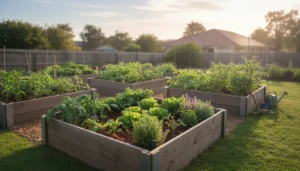
Raised beds warm faster and offer better drainage. They are a good choice for small yards or poor native soil.
In-ground rows take more initial work but require less material. Choose the method that fits your budget and space.
Raised Bed Tips
Build beds 3–4 feet wide so you can reach the center without stepping on soil. Use untreated lumber, stone, or recycled materials.
Fill beds with a mix of topsoil and compost. Keep paths between beds for access and maintenance.
Choose Easy Vegetables for Beginners
Start with vegetables that are forgiving and productive. These crops build confidence and provide quick results.
- Leafy greens: spinach, lettuce, chard
- Root crops: carrots, radishes, beets
- Nightshades: tomatoes and peppers (start from seedlings)
- Legumes: bush beans and peas
Planting: Seeds vs Seedlings
Direct-sow fast crops like radishes, carrots, and beans into prepared soil. For tomatoes and peppers, use nursery seedlings to get a head start.
Follow seed packet depth and spacing recommendations. Thin seedlings to recommended spacing to avoid crowding.
Watering and Mulching Your Vegetable Garden
Consistent moisture is crucial for vegetables. Water deeply and less often to encourage strong roots.
Use mulch to conserve moisture, reduce weeds, and moderate soil temperature. Apply 2–3 inches of organic mulch around plants.
Watering Schedule Example
Young seedlings often need daily moisture until roots establish. Mature plants usually need 1–1.5 inches of water per week, adjusted for rainfall.
Check soil by pressing your finger 1–2 inches into the soil. If dry, water thoroughly.
Simple Pest and Disease Management
Prevent problems with regular inspection and cultural practices. Remove diseased leaves and keep plants spaced for good airflow.
Use row covers to protect young plants from insects and practice crop rotation to reduce soil-borne diseases.
- Inspect plants weekly for signs of pests or disease.
- Handpick large pests like slugs and caterpillars.
- Apply organic controls such as insecticidal soap when needed.
Harvesting and Continuous Planting
Harvest crops when they reach recommended size. Harvesting often encourages more production for many plants.
Plan successive plantings of quick crops like lettuce and radishes every 2–3 weeks for continuous harvest.
Many common vegetables can be grown in containers on a balcony or patio if they get enough sun. Tomatoes and peppers perform especially well in large pots.
Small Case Study: One New Gardener’s First Season
Maria had a 10×4 raised bed and two years of gardening experience. She started with tomatoes, lettuce, carrots, and bush beans.
By testing soil and adding compost, Maria increased her yields and extended harvests by staggering plantings. She reported a strong tomato harvest and continuous salad greens through early fall.
Practical Checklist to Start a Vegetable Garden
Use this checklist to move from planning to planting without missing basic steps.
- Choose location with 6–8 hours sun
- Decide raised bed or in-ground
- Test and amend soil, add compost
- Select easy vegetables for first season
- Plant seeds or seedlings following spacing guidelines
- Mulch and set a watering schedule
- Inspect weekly for pests and disease
- Harvest regularly and replant quick crops
Final Tips for New Vegetable Gardeners
Start small and expand after you learn what grows well in your microclimate. Keep notes on planting dates, varieties, and results.
Join a local gardening group or online forum to share experiences. Practical feedback accelerates learning and reduces costly mistakes.
Follow these basic steps and you can reliably start a vegetable garden that produces fresh food and builds gardening skill each season.